Get Full Government Meeting Transcripts, Videos, & Alerts Forever!
Get email alerts on the Higher Education Funding topic
No spam. Unsubscribe anytime.
College of Western Idaho tells JFAC it is growing fast, cites capacity, EWA limits
Summary
College of Western Idaho leaders told the Joint Finance-Appropriations Committee that academic enrollment rose about 13% this year, creating wait lists in nursing and technical programs and leaving the college constrained by a 3% state cap that reduced its Enrollment Workload Adjustment (EWA) funding.
Kevin Campbell, a budget and policy analyst with the Legislative Services Office, told the Joint Finance-Appropriations Committee that the FY 2024 appropriation to the College of Western Idaho was $20,816,700 and that CWI typically spends 100% of its state appropriation.
College of Western Idaho President Gordon Jones said the college’s academic enrollment increased about 13% this year and that growth is broad-based across dual credit, academic transfer and career-technical education. “At its highest level, we are up this, year 13% in our academic enrollment,” Jones said.
Jones described capacity constraints across three areas: facilities, instructor-to-student ratios dictated by accreditation (he cited nursing as an example), and student support services such as academic advising. “We have, I believe it's almost a hundred people on our nursing waiting list. The statistic I have here is we have a 1,000 students total on wait lists across all of our programs,” Jones said. He identified high-demand programs with wait lists as nursing, automotive technology, welding, cybersecurity and ag sciences.
Committee members pressed for more detail on the nature of the constraints. Jones and the committee agreed CWI would provide a breakdown of how those capacity limits divide among facilities, faculty and student supports to assist lawmakers as they evaluate budget requests.
Members also questioned how the state’s enrollment workload adjustment (EWA) was applied. Jones said the college’s EWA calculation produced about $493,000, but a 3% cap set by the State Board reduced the amount CWI received to $265,000. “For us, it would have been $493,000 but, because of a 3% cap, you're seeing the amount that we were able to put in that allowed us to stay to that 3% cap,” Jones said. He described EWA as state board policy rather than statute.
Committee discussion noted variation across institutions in EWA amounts and asked the Department of Finance and Management and Legislative Services Office to produce a cross‑college analysis showing how the 3% cap and other adjustments were applied. Kevin Campbell and panelists agreed to follow up with the committee.
Jones and committee members discussed compensation and affordability. Jones said CWI’s two‑year programs generally cost no more than $10,000 and that the college has not raised tuition in eight years; he said tuition remains about $139 per credit hour. He also said CWI faculty and staff pay lags four‑year institutions by roughly $10,000–$20,000 depending on title, and that community college instructors typically teach more courses per term than four‑year faculty.
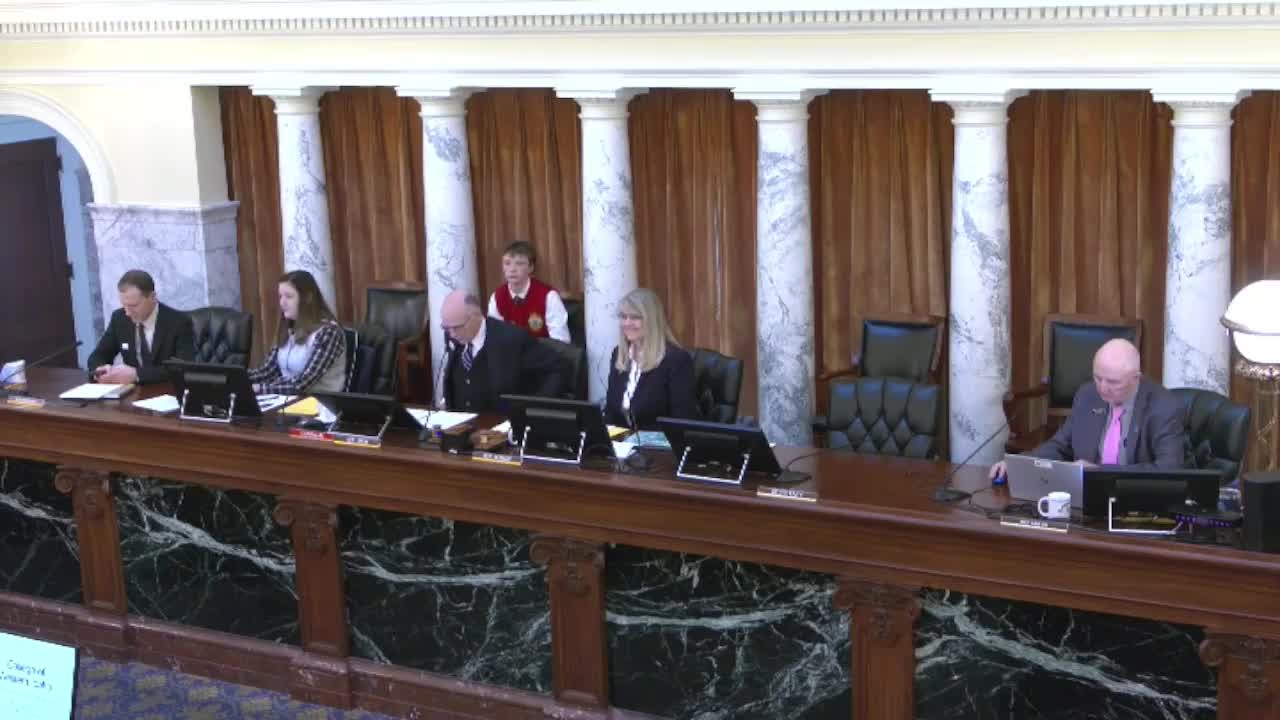
The presentation from campus leadership included trustees and senior staff present for questions. Committee members thanked CWI for program innovations—including partnerships and EV technician training—while pressing for more specific data on wait lists and the precise use of any requested EWA or enhancement funds.
No formal committee actions or votes were taken during the CWI presentation; members requested follow‑up information from the college and Legislative Services Office.