Get Full Government Meeting Transcripts, Videos, & Alerts Forever!
Get email alerts on the Airport Construction topic
No spam. Unsubscribe anytime.
Townsend airport expansion on weather-dependent schedule; county to notify hangar owners
Summary
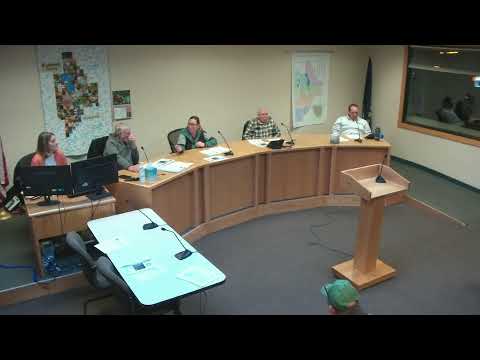
Contractor and consultant briefed the Broadwater County Airport Board on runway, apron and taxi expansion funding and schedule; gravel crushing and thawing needs likely delay an April start; board approved a $7.96 claim and directed staff to notify hangar owners and consider a long-term tie-down fee.
Lance Bowser, representing Robert Pesch and Associates, told the Broadwater County Airport Board on a construction update that the runway, apron and taxi-lane expansion is funded largely by federal grants but remains weather-dependent and could be delayed if materials crushing and thawing do not occur.
Bowser said two federal grants are involved: one that covers about 95% federal/5% local and another that covers about 90% federal/10% local, producing an apparent combined federal share shown as about 90.3% in project outreach materials. He also said the project contract is for 90 calendar days, with a substantial-completion deadline listed at Oct. 1, and that the prime contractor’s internal target is shorter: "Their real goal is 60 days," Bowser said, adding the contractor told him, "if we go beyond 60 days, we're probably losing money." Bowser described April 14 as the scheduled, weather-dependent closure date but said an earlier start would require six weeks of gravel crushing to be completed in advance.
Why it matters: the closure will temporarily prevent normal use of the airport runway and apron. Local agricultural operators who rely on aerial application said earlier openings would lessen summer impacts; airport staff and the consultant said weather and crushing logistics largely determine the start date.
Board members and stakeholders pressed staff about how to alert users and about alternatives during closures. Bowser offered a public-outreach plan that would include a banner at the airport entrance, posted notices at the pilot lounge and fuel island, mail or email to hangar owners, and newspaper advertising reimbursable under the grant. He also said weekly construction reports in FAA format — including percent-complete line items and a short narrative plus photos — can be distributed to anyone who asks.
Stakeholders said the timing is important to spray operators. Isaac Zimmerman of Headwater Flying Service said, "As far as when we start, just like they were talking about, it's dependent on the weather every year and stuff like that," and that his operation typically needs Townsend in June. A grower, Taylor Kim of Kim Brothers Farming, asked whether part of the field could be left available for spray planes during work; Bowser and airport manager Dwight Thompson said it depends on contractor sequencing and safety constraints and could not be guaranteed.
Bowser described specific operational constraints for materials: "They want 6 weeks to crush everything but they think if they had a 4 week, start on it, they'd have 3 quarters of it sitting here," and said crushing cannot proceed in sustained extreme cold (for example, 20 below), nor can loaded semis safely truck material on sheer snowpack.
Other logistical items discussed included stockpiling crushed material near the work area, possible temporary relocation of fences on county-owned corner parcels, use of asphalt millings for access-road work, and coordination with subcontractors such as Helena Sand for asphalt trucking. Bowser said many electrical submittals are approved and that ordering and stockpiling certain materials early is possible under the contract to support a timely start.
Airport manager Dwight Thompson said staff will compile an email distribution list and add hangar owners and other users to receive the weekly reports. Thompson also reported winter snow-removal challenges and noted the county’s limited snow-removal equipment and federal grant-assurance constraints on used federal equipment. He said he will try to contact a hangar owner whose parked aircraft could block construction and that the board will consider a long-term tie-down fee at the next meeting.
Formal action: the board approved a claim to reimburse $7.96 for keys. The motion to approve the claim was moved and seconded; the board voted by voice and the motion carried (vote recorded by voice; names not specified).
The board discussed outreach timing. Bowser said the outreach flyer would be updated at least two weeks before any earlier or revised closure date. He recommended personal notification to hangar owners in addition to posted and emailed notices. Thompson said he will try to contact the owner of the aircraft on the ramp and include hangar owners on the weekly construction-report distribution list.
The board did not set a new closure date at the meeting; Bowser and staff emphasized that start and reopening dates remain weather- and crushing-dependent and that the contractor prefers to start as early as conditions allow.
Ending: staff and the consultant will continue coordination with the contractor, distribute weekly FAA-format construction reports to signed-up users, and return to the board with updates. The board added consideration of a long-term tie-down fee to a future agenda and directed staff to notify the aircraft owner that the construction schedule may require relocation of aircraft.