Get Full Government Meeting Transcripts, Videos, & Alerts Forever!
Get email alerts on the Religion In Schools topic
No spam. Unsubscribe anytime.
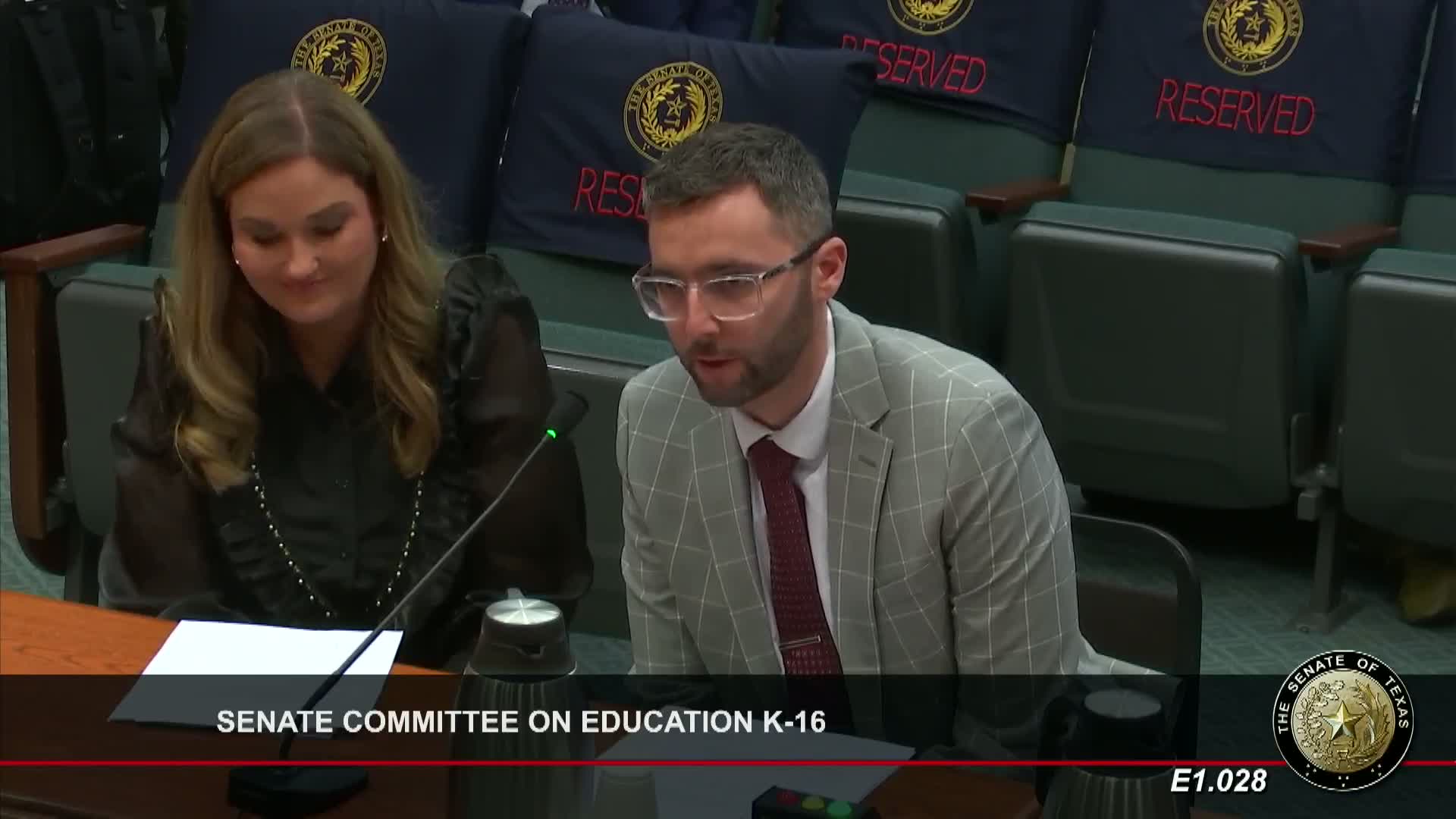
Senate education committee advances bill to display Ten Commandments in classrooms amid legal debate
Summary
Senate Bill 10, which would require a Ten Commandments display in every public school classroom, was reported favorably to the Senate after protracted testimony arguing history-and‑tradition justifications and constitutional objections.
The Senate Committee on Education voted to report Senate Bill 10, a measure requiring display of the Ten Commandments in every public elementary and secondary classroom, to the full Senate after an extended hearing that included historical, legal and policy testimony for and against the proposal.
Sponsor Sen. Brian King framed the bill as a restoration of historical practice, arguing the Ten Commandments and related religious references were long present in public life. "Senate bill 10 would require Texas public elementary and secondary schools to display the 10 commandments in each classroom," King told the committee and said he viewed the measure as a restoration of earlier practice now permitted under recent U.S. Supreme Court precedent.
Supporters — including legal advocates and historians — cited the Supreme Court’s recent shift away from the Lemon test toward a “history and tradition” analysis. Matt Krause of First Liberty Institute said the Kennedy v. Bremerton ruling and related jurisprudential changes give states an opening to permit displays the courts rejected in the 1970s and 1980s. David Barton and Tim Barton of WallBuilders presented historical documents and argued the Ten Commandments have deep roots in early American textbooks and civic tradition.
Opponents warned of constitutional and practical problems. Andrew Hendrickson of the ACLU of Texas said the bill risks unconstitutional coercion because students are required by law to attend public schools and may feel pressured to conform. The Texas Freedom Network and other public‑education and civil‑liberties witnesses said a state mandate favoring a specific religious text would marginalize children and families of other faiths and could prompt costly litigation.
Committee members asked about implementation details including whether a purchase requirement would create an unfunded mandate and whether young children would require classroom instruction about specific language in the text. The bill’s text clarifies that districts are not required to purchase displays with district funds; sponsors said donated displays would be acceptable and the bill specifies the text and font for the display.
After invited and public testimony, the committee voted to report the bill to the full Senate with a roll‑call recorded in the hearing transcript. The committee’s roll call recorded nine ayes, one nay and one present not voting (recorded in the transcript during business proceedings). SB 10 will now be scheduled for consideration by the full Senate.
Why it matters: supporters said the project restores historical recognition of religious heritage; opponents said it risks coercion and legal challenges and could alienate students of non‑Christian faiths. The bill sets up interbranch legal questions that are likely to draw litigation if enacted.