Get Full Government Meeting Transcripts, Videos, & Alerts Forever!
Get email alerts on the Health Policy topic
No spam. Unsubscribe anytime.
Committee advances voluntary non‑opioid advance directive bill to let patients opt out of opioids
Summary
Senate Bill 714 would create a voluntary non‑opioid advance directive form to record a patient's preference to avoid opioids, allow inclusion in electronic medical records, and provide criminal and civil liability protection for clinicians who unknowingly give opioids in emergencies; the committee voted to report the bill favorably.
Senate Bill 714, which would create a voluntary non‑opioid advance directive allowing patients to record a preference not to be offered or administered opioids, advanced out of the Florida Senate Committee on Health Policy on unanimous voice vote.
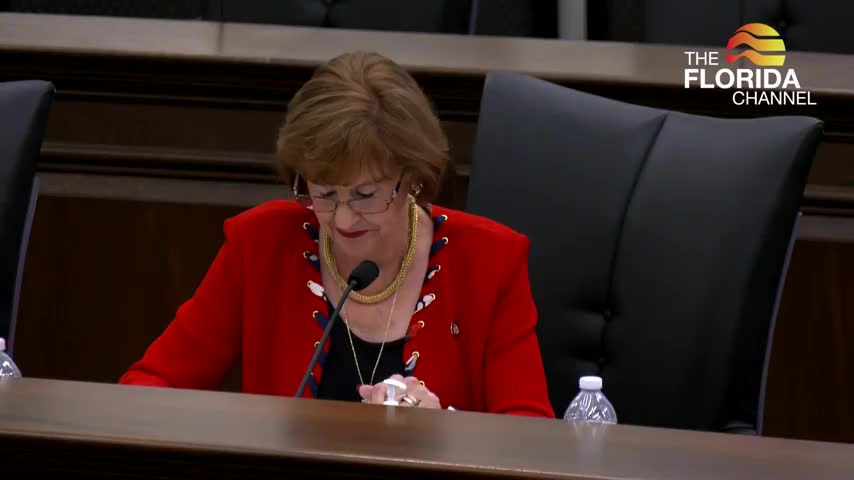
Senator Lori Harrell, the bill sponsor, told the committee the proposed directive would let patients “notify healthcare professionals of their desire not to be offered or administered to administrate, opioids in their treatment, even in situations where the patient is incapacitated or unable to communicate.” The bill asks the Department of Health to develop a form that a patient and physician could sign and, if requested by the patient, file in the patient’s electronic medical record.
Nut graf: Backers described the directive as an additional tool to protect patients who do not want opioids in their care plans; the measure would not alter other advance directives, would be revocable by the patient and would not prevent clinicians from discussing treatment options.
Provisions and protections - The bill directs the Department of Health to develop a voluntary form for patients to record a preference to avoid opioids and authorizes filing it in the patient’s electronic medical record. Sponsor Harrell said that as electronic‑record integration grows, patients should also provide copies to their clinicians.
- Liability shield: The bill includes civil and criminal liability protection for health‑care professionals who administer opioids in emergency situations without actual knowledge of the patient’s non‑opioid directive.
- Scope: Harrell emphasized the measure is voluntary, does not change other advance directives and can be rescinded at any time. “It’s just another toolbox and a tool of Floridians to protect their health and safety,” Harrell said in closing.
Questions and committee action Senator Erin Burman asked how patients would be notified that the non‑opioid directive is available; Harrell said it would be part of the usual materials provided when people consider advance directives and could be offered by attorneys or advisors who handle surrogate decisions.
With no appearance cards for or against and no substantive debate, the committee called the roll and recorded support. The committee clerk reported: “By your vote Senate Bill 7 14 will be reported favorably.”
Ending note: Sponsors and committee members said the bill is voluntary and intended to add a tool for patients and clinicians; no implementation timeline or education campaign was specified during the hearing.