Get Full Government Meeting Transcripts, Videos, & Alerts Forever!
Get email alerts on the Agriculture Chemicals topic
No spam. Unsubscribe anytime.
Senate passes bill limiting failure-to-warn lawsuits against pesticide makers with EPA exception
Summary
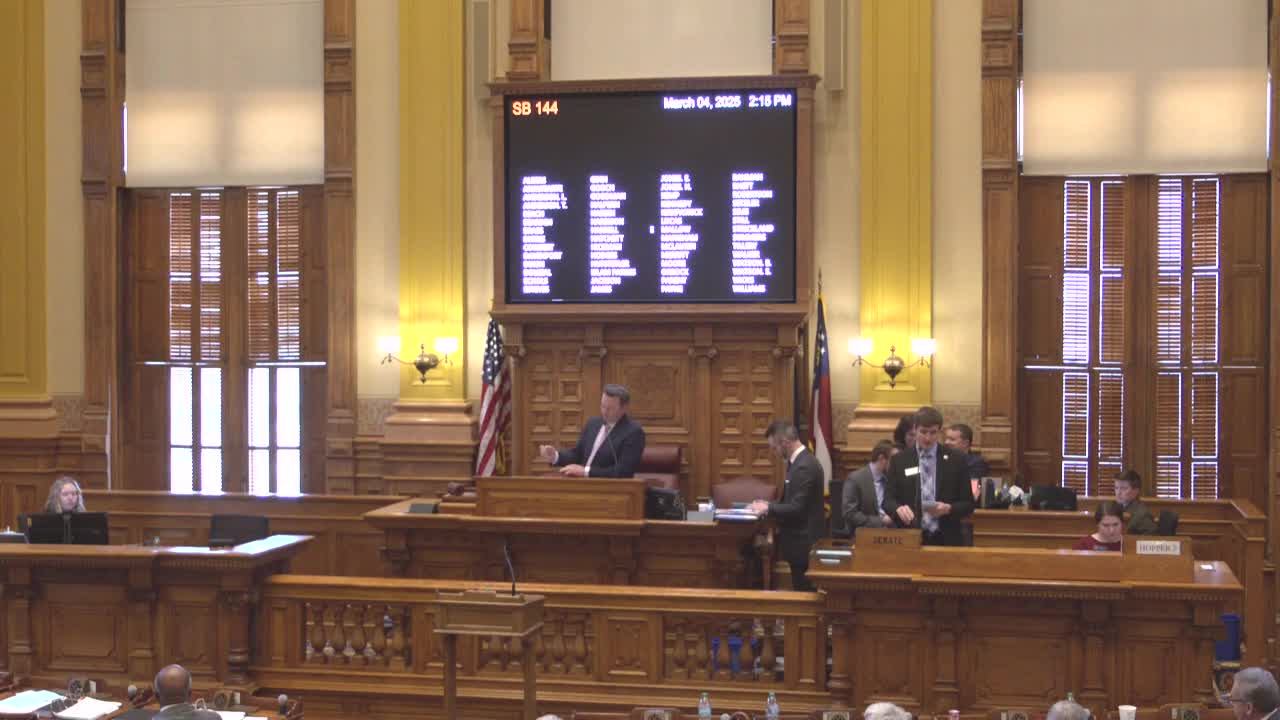
Senate Bill 144 passed after lengthy floor debate. It would bar failure-to-warn liability against pesticide manufacturers when labels were approved by the U.S. Environmental Protection Agency, but an amendment carves out an exception if the EPA determines a company knowingly misled the agency.
The Georgia Senate passed Senate Bill 144 on March 5 after extended floor debate about corporate liability, regulatory oversight and public health. The measure narrows ‘‘failure to warn’’ claims against pesticide manufacturers when the product’s label has been approved by the U.S. Environmental Protection Agency (EPA), but a floor amendment was added to preserve liability when the EPA determines a manufacturer knowingly withheld, misrepresented, concealed or destroyed material information regarding human-health risks to secure or keep EPA approval.
Sponsor Senator Goodman described the bill as a ‘‘label bill’’: under federal pesticide law the label is the controlling regulatory instrument and the EPA undertakes scientific review before authorizing labels. Proponents argued the change protects farmers and agricultural businesses from losing access to crop-protection tools and referenced yield and national food-security concerns.
Opponents raised historical cases in which industry influence affected regulatory outcomes, cited litigation over glyphosate (Roundup) and urged caution about broad liability shields. Several senators described personal or constituent concerns about environmental and health impacts from long-term chemical exposure and questioned whether the EPA would reliably police disclosures.
Floor discussion produced a compromise amendment: the bill’s liability shield would not apply where the EPA has made a determination that a manufacturer knowingly withheld or otherwise concealed material information from the agency to obtain or preserve approval. Sponsor and amendment authors said that preserves a remedy against ‘‘bad actors’’ while protecting compliant manufacturers.
After adoption of the amendment the Senate passed the bill (tally recorded on the floor). The measure will advance to the House.
Floor debate referenced national litigation and regulatory history but did not include a fiscal note for implementation of the amendment. Several senators said they would continue to press for safeguards and oversight mechanisms during House consideration.