Get Full Government Meeting Transcripts, Videos, & Alerts Forever!
Get email alerts on the Donor Endowment Enforcement topic
No spam. Unsubscribe anytime.
Senate committee approves bill giving donors standing to enforce written gift agreements
Summary
The Senate Committee on Retirement and Government Resources advanced Senate Bill 844 on a 5-2 vote after debate over donor standing, the role of the attorney general and a six-year discovery period for claims.
Senator Gillespie, sponsor of Senate Bill 844, told the Senate Committee on Retirement and Government Resources the bill would let donors enforce written gift or endowment agreements in court if the attorney general declines to act. "This bill simply allows donors to have standing to enforce their own gift agreements," Gillespie said during the committee hearing.
The measure, which the committee advanced on a 5-2 vote, responds to what Gillespie and supporters described as a gap in common law that leaves donors without a private remedy when an attorney general decides not to pursue an enforcement action. "Nothing in this act shall affect the authority of the office of the attorney general to enforce any restriction in an endowment agreement," Gillespie said, adding the bill does not remove the AG’s existing powers.
Committee members pressed the sponsor on several points during roughly 39 minutes of discussion. Senators asked about a six-year filing window tied to discovery, language that says courts ‘‘shall not order the return of donated funds to the donor or the donor’s legal representative,’’ and whether the bill would conflict with existing statutory provisions governing institutional funds. Senator Kurt asked how the penalty language would operate; Gillespie replied that remedies would be handled through the courts and that a judge could direct a charity to honor donor intent by reallocating funds within or outside the organization.
Senators raised concerns about long-term enforcement. Senator Kirk said the six-year discovery rule could let heirs pursue actions many years after a gift was made and create uncertainty for nonprofits making program decisions. Senator Bergstrom and others asked the sponsor to work with committee members to tighten statutory language, particularly on limitations and documentation requirements. Amy Chose, who identified herself as representing the Philanthropy Roundtable, said donor agreements can include enforcement clauses but not all do; she described the bill as a helpful additional avenue for donors.
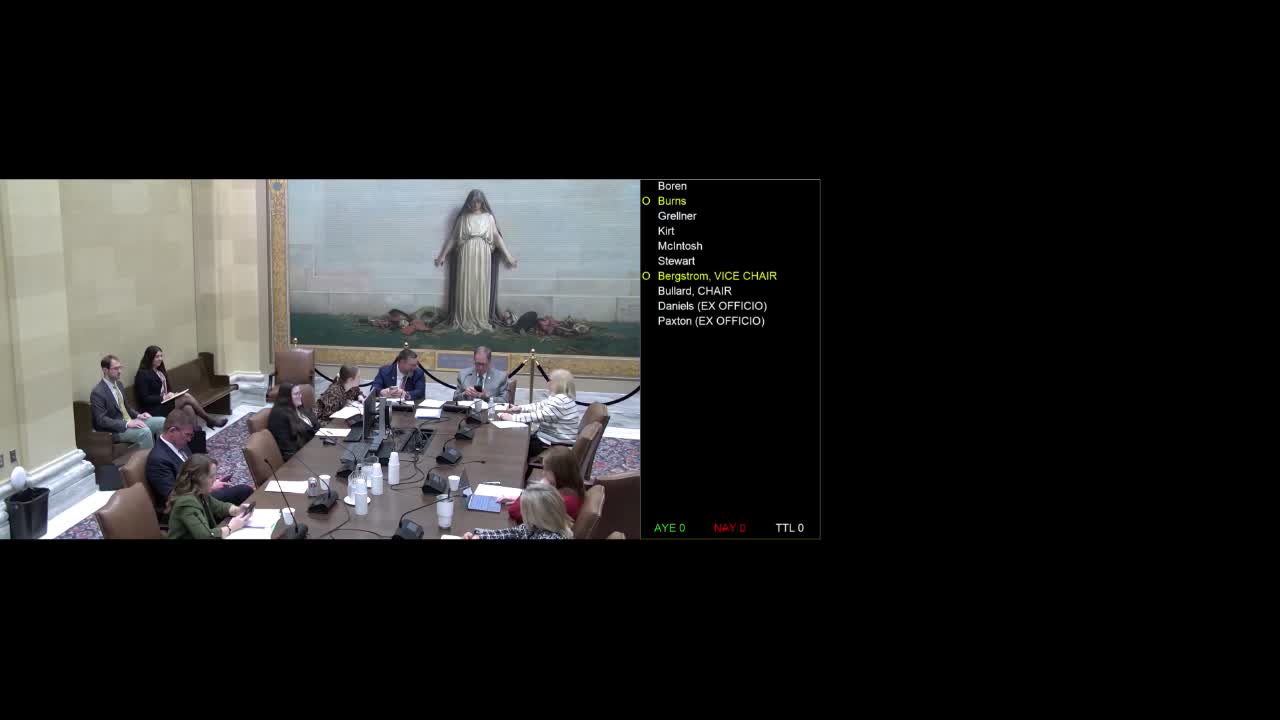
The committee recorded a roll call after debate. The clerk announced votes in which five senators voted aye and two voted no; the chair declared the bill passed out of committee for floor consideration. Senator Gillespie told members he would work with colleagues to refine the language before the bill reaches the floor.
The bill’s text on file with the committee includes definitions for charitable organizations and legal representatives, a six-year limitations provision measured from discovery, and an explicit statement preserving the attorney general’s authority. The measure does not require the return of donated funds to donors or their legal representatives, language the sponsor said addresses tax and public-fund concerns when donors have already taken tax deductions.
Committee members asked the sponsor for statutory cross-checks; Senator Boren (sic) asked whether the proposal displaces the Uniform Prudent Management of Institutional Funds Act. Gillespie said he would confirm and tighten definitions where necessary. Senator Bourne (sic) urged that the sponsor verify how current Title 60, section 300.16 interacts with the proposal.
The committee advanced the bill after the sponsor agreed to work with members on clarifying amendments and statutory cross-checks. The bill will return to the committee or the floor only after those changes are addressed.