Get Full Government Meeting Transcripts, Videos, & Alerts Forever!
Get email alerts on the Nonprofit Governance topic
No spam. Unsubscribe anytime.
Texas Supreme Court Hears Argument Over Whether Church May Challenge SMU’s 2019 Charter Amendments
Summary
The Supreme Court of Texas heard argument in Southern Methodist University v. South Central Jurisdictional Conference of the United Methodist Church on whether the conference has statutory authority to challenge SMU’s 2019 amendments to its articles of incorporation and whether ecclesiastical-abstention doctrine bars courts from deciding.
The Supreme Court of Texas heard argument in Southern Methodist University v. South Central Jurisdictional Conference of the United Methodist Church (No. 23-0703) on whether the conference has statutory authority under the Texas Business Organizations Code to challenge amendments SMU filed with the Texas secretary of state in 2019.
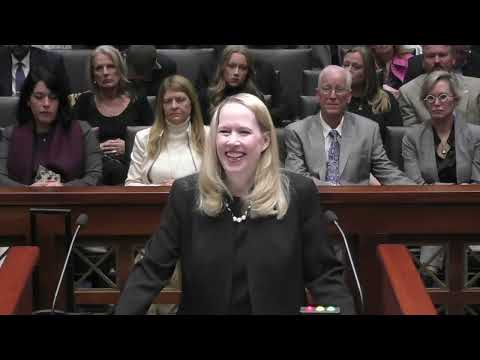
The question presented at argument Tuesday was chiefly whether the conference may proceed under section 22.002 of the Texas Business Organizations Code (often litigated as ultra vires claims) or whether ecclesiastical-abstention and church-autonomy principles require dismissal. Petitioners’ counsel, Miss Ho, argued that SMU is an independent, nonmember nonprofit and that section 22.002 limits the class of parties who may bring these challenges, meaning the conference lacks statutory authorization to sue. Respondent counsel, Sonny McIntyre, said the conference is a controlling or founding entity with enforceable rights under the governing documents and related provisions of chapter 22, and that dismissal would leave the conference without a remedy.
Why it matters: The dispute reaches beyond these parties. A ruling for SMU could leave nonprofit corporations able to amend governing documents without deference to founding religious bodies; a ruling for the conference could allow nonmembers or third parties broader ability to pursue ultra vires-style claims. Several justices pressed both sides on how to apply neutral principles of law versus deferring under ecclesiastical abstention, and whether established statutes such as section 22.207 and section 22.151 preserve any private causes of action tied to documents that describe a church’s control.
During argument Miss Ho told the court that SMU’s board amended its articles in 2019 to bring the charter into conformity with Texas law and the facts on the ground, asserting that a ‘‘nonmember nonprofit’’ cannot be owned by a church and that language in SMU’s 1996 articles describing church ownership would have no legal effect. She urged the court to apply neutral principles—examining the articles of incorporation and the statutory scheme—rather than abstaining on ecclesiastical grounds. Miss Ho also relied on precedent such as Masterson, arguing that corporate-governance disputes are often resolvable without adjudicating religious doctrine.
Sonny McIntyre, arguing for the South Central Jurisdictional Conference, described a different consequence if the court declines jurisdiction: ‘‘SMU will be left without remedy,’’ he told the justices, and he argued the conference has long exercised participatory rights under the 1996 articles, including placement of bishops on the board and involvement in land and governance matters. McIntyre said the conference seeks declaratory relief, breach-of-contract remedies, and a finding that SMU filed a false certificate with the secretary of state in violation of section 4.007. He also argued the court can and should apply neutral principles to determine whether the conference is on the statutory list of authorized claimants under section 22.002 or otherwise is a third-party beneficiary of the 1996 articles.
Several justices tested both sides on process and remedies. One justice asked whether, if the court found ecclesiastical abstention applied, that result would leave SMU free to amend its articles without any judicial remedy for the conference; counsel for the conference answered that a dismissal would effectively leave the church without relief. The bench also asked whether a procedural workaround—such as appointing a board member who could bring a statutory suit under Business Organizations Code section 22.512(a)—would render the jurisdictional dispute moot. McIntyre responded that the conference had limited practical avenues after the 2019 filing and that the court should not require a ‘‘scorched earth’’ remedy to obtain judicial review.
Both sides warned against broad consequences of the opposing rulings. Petitioners’ counsel emphasized the risk of opening the courts to ultra vires-style suits by nonmembers if statutory limits are not respected; respondents cautioned against allowing governance documents to be altered without judicial review where the documents on their face reserved substantial rights to the founding church.
The justices asked multiple questions about statutory interpretation of chapter 22 and the interplay of provisions—section 22.002, which identifies parties authorized to bring certain challenges; section 22.207, which the conference invoked as recognizing church control in some circumstances; and section 22.151, which appeared in argument concerning ownership and member-corporation concepts. The record also includes references to relevant precedent cited by counsel, including Masterson and the U.S. Supreme Court’s Serbian Orthodox decision and the Waffle House line of cases mentioned in argument.
The case was submitted at the close of argument. The court did not issue rulings from the bench. Any decision will address whether neutral principles permit judicial resolution of the parties’ statutory-authority and contract claims or whether ecclesiastical-abstention doctrine bars the courts from deciding some or all of the dispute.
Votes at a glance: none (argument only).