Get Full Government Meeting Transcripts, Videos, & Alerts Forever!
Get email alerts on the Republican Form Clause topic
No spam. Unsubscribe anytime.
Supreme Court of Texas hears challenge to College Station regulation of nonresident property
Summary
At oral argument before the Supreme Court of Texas in No. 23-0767, petitioners Shana Elliott and Lawrence Kalki argued that the City of College Station's regulation of properties in its extraterritorial jurisdiction (ETJ) violates Article 1, Section 2 of the Texas Constitution because nonresident landowners lack a democratic check on the municipal officials who regulate their property.
At oral argument before the Supreme Court of Texas in No. 23-0767, petitioners Shana Elliott and Lawrence Kalki argued that the City of College Station's regulation of properties in its extraterritorial jurisdiction (ETJ) violates Article 1, Section 2 of the Texas Constitution because nonresident landowners lack a democratic check on the municipal officials who regulate their property.
The issue matters because it asks whether municipal regulation of landowners who do not live inside city limits can survive the state's republican-form-of-government pledge and whether more recent legislation, Senate Bill 2038 (SB 2038), which creates a withdrawal mechanism from an ETJ, renders the dispute moot. Petitioners say they must seek permission from a city in which they cannot vote; the city argues procedural and jurisdictional defects, and counsel for both sides told justices the question could hinge on standing, mootness and the political-question doctrine.
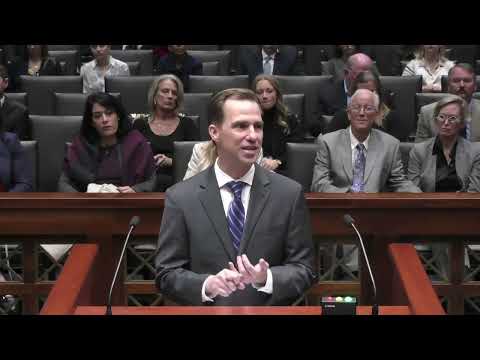
Petitioners' lead counsel argued that the constitutional question goes to subject-matter jurisdiction and therefore cannot be avoided. "They exercise no democratic check over the individuals who regulate their property," counsel said, arguing that while the county, the state or the Texas Legislature are bodies petitioners could check democratically, they have no vote over College Station officials. Counsel noted that, "as we sit here today, my clients are still subject to the very same regulations that they challenged in this case," and added that the city "denied 10 separate applications for individuals seeking to leave" under SB 2038.
Petitioners' position, as presented, drew questions from the bench about constitutional avoidance and whether the existence of SB 2038 might moot the case if petitioners could effectuate withdrawal under the statute. The court asked whether a later statutory remedy or a grant of withdrawal would produce the same practical relief and whether the lower court's ruling on the political question doctrine might need to be vacated under ordinary remedies for changed circumstances.
Respondents' counsel told the court there are multiple jurisdictional obstacles, including standing, mootness and the political-question doctrine. "We don't have that here," respondent counsel said when asked about a live controversy. The city argued that on the statute's face petitioners have a unilateral right to remove their properties from the ETJ under SB 2038 and that remedy could moot the constitutional claim. Respondent counsel said the city also is challenging the withdrawal statute's constitutionality in separate litigation and that, as a factual matter, the city has denied petitions it received.
At argument, respondent counsel framed the question as one of timing and judicial restraint: "It is the petitioners' job to establish jurisdiction, establish standing, establish rightness, and now take the step of trying to get their properties removed from the ETJ, which would forever resolve any possibility of any future controversy that might ever arise out of the city enforcing its regulations there." Counsel emphasized that the city has not been held to have acted unlawfully and that the statute remains valid until a court declares otherwise.
Other argument threads included whether the political-question doctrine bars judicial review of a pledge in the Bill of Rights, whether Article 1, Section 29 and historical practice inform the court's ability to adjudicate the republican-form clause, and whether prior Texas decisions (as cited by counsel) supply judicially manageable standards. Petitioners' counsel cited Bonner v. Firstealing, Ramsey v. Dunlop, and Pasadena v. Smith as authority that the court has applied the clause before; respondents and other counsel pointed to Brown v. Galveston and federal precedents discussing the political-question framework.
Counsel for petitioners and for the city also debated the practical effect of the city's actions denying withdrawal petitions: petitioners' counsel said denial demonstrates the statute does not provide an effective democratic check for those petitioners, while the city's counsel said the plain language of SB 2038 grants a unilateral withdrawal right that petitioners have not used and that petitioners therefore have not exhausted a potentially case-dispositive statutory remedy.
In a later portion of argument, counsel for petitioners highlighted a deposition statement by the city manager saying the city ordinances "apply on their face" in the ETJ and that he had a duty to enforce them, a point petitioners' counsel said supports their claim of a threatened enforcement. The bench asked about exhaustion doctrines common in takings and administrative law and whether those doctrines are jurisdictional or merits-based here.
Multiple justices explored practical and doctrinal questions: whether nonresidents historically have been treated differently in republican-form analysis, whether legislative representation alone suffices for the clause, and whether manageable standards exist for judicial application. Counsel acknowledged those are substantial historical and doctrinal inquiries but emphasized that this stage of the litigation centers on jurisdictional thresholds.
The case was submitted after argument and the court took the matter under advisement. The court did not issue a ruling during the argument session.
Ending note: The Supreme Court of Texas will issue a written decision at a later date resolving whether petitioners may pursue their republican-form-of-government claim against College Station and whether SB 2038 or other jurisdictional doctrines preclude judicial review at this stage.