Get Full Government Meeting Transcripts, Videos, & Alerts Forever!
Get email alerts on the Tax Increment Area topic
No spam. Unsubscribe anytime.
Port of Woodland outlines proposed tax‑increment area; county commissioner warns of revenue impacts
Summary
Port of Woodland presented a proposal to create a Tax Increment Area (TIA) covering port lands; county and city officials discussed potential revenue and service impacts, mitigation requirements for fire districts and public meetings scheduled for late March and April.
The Port of Woodland unveiled a proposal to create a tax‑increment area (TIA) to finance economic development on port property, and county and city officials raised concerns about the proposal’s potential effect on local tax receipts and services.
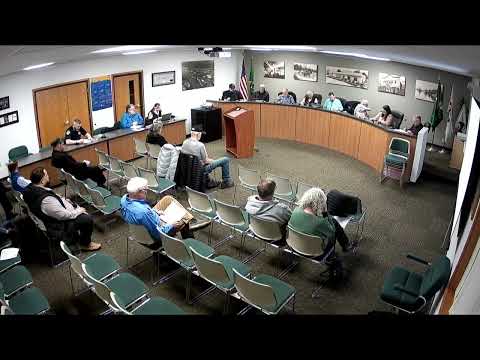
Rob Rich, one of three Port of Woodland commissioners, told the Woodland City Council the port plans public information sessions on the idea and invited city officials and residents to attend. “We want to invite the council as well as any interested public, to either of our two open houses that we are holding at the Port 1608 Guile Road on Tuesday, March 25 from 2 to 4 and on Thursday, March 27 from 5 to 7,” Rich said.
The proposal would use a TIA mechanism created by state law to redirect future tax revenue growth from certain taxing jurisdictions to the port over a fixed period to fund projects inside the defined area. Cowlitz County Commissioner (name given in testimony as) Dahl — identifying himself as speaking from the county commissioner’s office — summarized how the mechanism works and cited the enabling legislation. Dahl said House Bill 1189 (2021) implements these tax increment areas and described the effect as “the tax receipts these entities receive are frozen at the value this goes into effect,” with subsequent growth redirected to the port for the TIA term.
Dahl said the port paperwork describes roughly 5,052 acres of port property, of which 477 acres lie inside Woodland’s city limits. He presented estimates of lost revenues for affected taxing entities over the TIA term as described in port or county materials, saying, “From their documentation over the 25 years, the estimate is ... it’ll cost ... 30 million dollars in lost revenues,” and he cited estimates for local impacts by jurisdiction. He urged residents to register concerns in the public hearing process and with state representatives.
Port staff told the council the law requires mitigation negotiations if a fire district will lose 20% or more of its taxing revenues to the TIA; the port said it would pursue mitigation discussions with affected fire districts even when impacts fall below that threshold. Port and city staff also said that the city’s share of property tax revenue inside the proposed area appears to be below that 20% trigger.
City staff and the council asked for clarification about which proposed or planned developments would fall inside the TIA boundary. The city planner, Travis Goddard, noted the Trammell Crow warehouse project is in plan review and may be counted differently depending on timing. Council members and staff urged outreach and said the port materials are available online and by request.
Why it matters: A TIA can accelerate infrastructure investment in a targeted area by capturing the growth in property tax revenue; it also reduces the share of that growth available to other taxing districts (counties, fire districts and the city) for the TIA term. Council members and county officials said the distribution of impacts, the required mitigation to fire districts and the timing of developments inside the TIA boundaries will determine concrete effects on local services and bonding capacity.
The port and county said formal public hearings are expected in April and the port is holding two informational open houses on March 25 (2–4 p.m.) and March 27 (5–7 p.m.) at 1608 Guile Road. County staff said a workshop with county commissioners was expected in mid‑ to late March to review the proposal in more detail.
Council members encouraged residents and stakeholders to review the port’s materials, attend the open houses, and submit comments at the public hearing when scheduled. No formal council action on the TIA was taken at the March 3 meeting.