Get Full Government Meeting Transcripts, Videos, & Alerts Forever!
Get email alerts on the Assistive Technology topic
No spam. Unsubscribe anytime.
Committee tables bill to expand wheelchair users’ access to repair tools, parts and documentation
Summary
House Bill 828, which would require manufacturers to make documentation, parts and diagnostic tools available to wheelchair users and independent repair providers, drew support from disability-rights and independent-living advocates and opposition from medical-equipment suppliers and insurers; the committee tabled the bill.
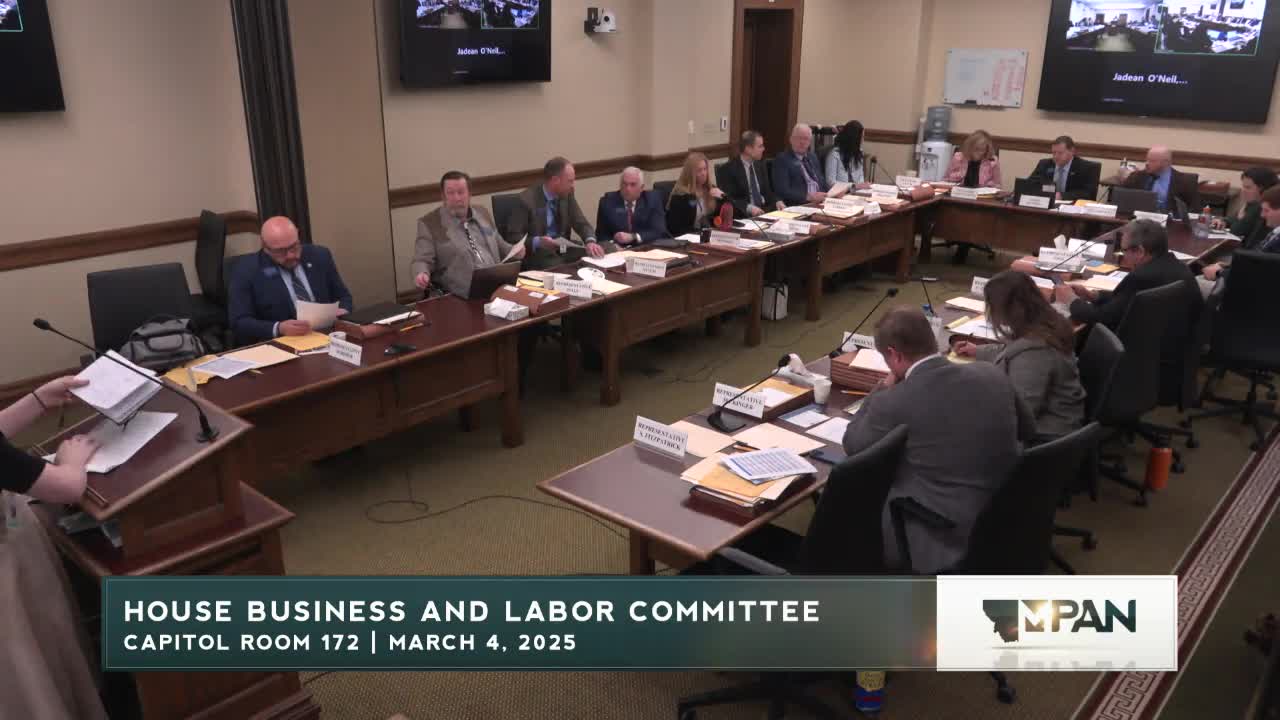
The House Business and Labor Committee tabled House Bill 828, a proposal to guarantee powered wheelchair users and independent repair providers access to parts, documentation and repair tools. Sponsor Representative Zoe Zephyr said the bill is meant to protect mobility and independence for Montanans who rely on powered wheelchairs.
"Powered wheelchairs are not like someone's shoes. They are their legs," Representative Zephyr told the committee. The bill would require original equipment manufacturers to provide documentation, parts and tools and, in specific situations, to make access available for security locks used to protect diagnostic interfaces. It also includes a clause protecting trade secrets and intellectual property from compelled disclosure.
Proponents included disability-rights organizations and centers for independent living. Kona Franks Ongoy of Disability Rights Montana said the bill safeguards "dignity of risk" and self-determination, adding that a mobility device’s long repair waits can effectively isolate users. The sponsor cited national survey results during testimony: she said two-thirds of powered-wheelchair users waited more than a month for repairs, 40% waited nearly two months, and 93% reported at least one device failure per year.
Ability and independent-living advocates offered accounts of people who rely on a wheelchair daily and described cases where a simple adjustment — such as a change in speed settings via a manufacturer app — restored a user’s ability to travel with family. Testimony stressed the state's rural geography and limited availability of trained complex-rehab providers outside major cities.
Opponents included the Home Medical Equipment Association of Medical Equipment Providers and regional suppliers. Mike Alcaterra, president of the HME association, said many common maintenance items (batteries, wheels) already can be changed by users, but cautioned that complex rehab devices are class II medical devices regulated by the Food and Drug Administration and that modifications can affect safety and therapeutic fittings. Suppliers and trade representatives also raised reimbursement and prior-authorization concerns under Medicare and Medicaid, noting warranty, coverage and billing processes that can lengthen repair timelines.
Witnesses described the common delivery model for powered wheelchairs as a capped rental with clinical fitting, physician orders and home evaluation; suppliers said those clinical steps and payer rules account for many repair delays. Opponents also raised questions about liability if non‑licensed individuals perform complex repairs that affect a user’s safety.
Committee members debated those tradeoffs in testimony and questioned whether insurance and prior-authorization rules — rather than statutory access to tools — drive repair delays. Representative Zephyr and other proponents said they would welcome follow-up work to address payer coordination and liability questions.
On executive action the committee adopted a substitute motion to table House Bill 8 28. The roll-call tally on the motion to table was recorded as 13 in favor and 6 opposed, and the bill was moved to the table for further work.