Get Full Government Meeting Transcripts, Videos, & Alerts Forever!
Get email alerts on the Petroleum Storage Tanks topic
No spam. Unsubscribe anytime.
Senate panel approves directing petroleum cleanup fund to pay for preventive inspections and small repairs
Summary
The Senate Finance and Claims Committee approved Senate Bill 315 to allow the petroleum tank release cleanup fund to pay for preventive inspections and minor repairs, a change sponsors and agency staff say could reduce future contaminated-site cleanup costs; the fiscal note estimates about $874,000 per year for the new uses.
A Montana Senate committee voted to approve a bill that would let the state’s petroleum tank release cleanup fund pay for preventive inspections and limited repairs at fuel storage facilities.
Senate Bill 315, which the Senate Finance and Claims Committee approved by voice vote, would add “prevention” to the fund’s statutory uses. Sponsor testimony and the fiscal note estimate the change would cost about $874,000 a year, paid from the existing petroleum tank cleanup fund rather than from the general fund.
Sponsor testimony described the bill as expanding an existing statutory mechanism that allocates fuel-fee revenue to a cleanup fund so it can also support measures meant to prevent future releases. “What Senate Bill 315 does is add another use for those funds to do preventive work,” the sponsor said during opening remarks.
Supporters told the committee they expect preventive work to be cheaper than cleanup. Brad Longcake, representing the Montana Petroleum Marketers and Convenience Store Association, said the measure would help members stay in compliance and avoid releases. Amy Steinmetz, administrator of the Montana Department of Environmental Quality’s Waste Management and Remediation Division, told the committee, “Preventing releases is much cheaper and more effective at protecting the environment than cleaning up petroleum releases.”
Terry Wadsworth, executive director of the Petroleum Tank Release Compensation Board, which administers the cleanup fund, answered technical questions about how the prevention program would be administered. He told senators inspections for regulated facilities occur on roughly a three‑year cycle and the bill is intended to encourage facilities to complete those inspections on a staggered schedule so not all requests arrive in the same year. Wadsworth described the bill’s intent as encouraging inspections and enabling small corrective actions — for example, replacing a cracked sump or some piping — to reduce the chance of a future subsurface release.
Committee members asked about program design and limits. Wadsworth said the work group that drafted the proposal settled on a $2,000 maximum reimbursement per facility because many rural “mom and pop” facilities typically spend about that amount for inspections every three years; the cap was intended both to help small owners and to limit the annual fiscal impact on the cleanup fund as the state “gets our feet wet” on prevention. The sponsor and witnesses emphasized that the cleanup fund is a state special revenue account financed by fees paid by tank owners and operators rather than by the state general fund.
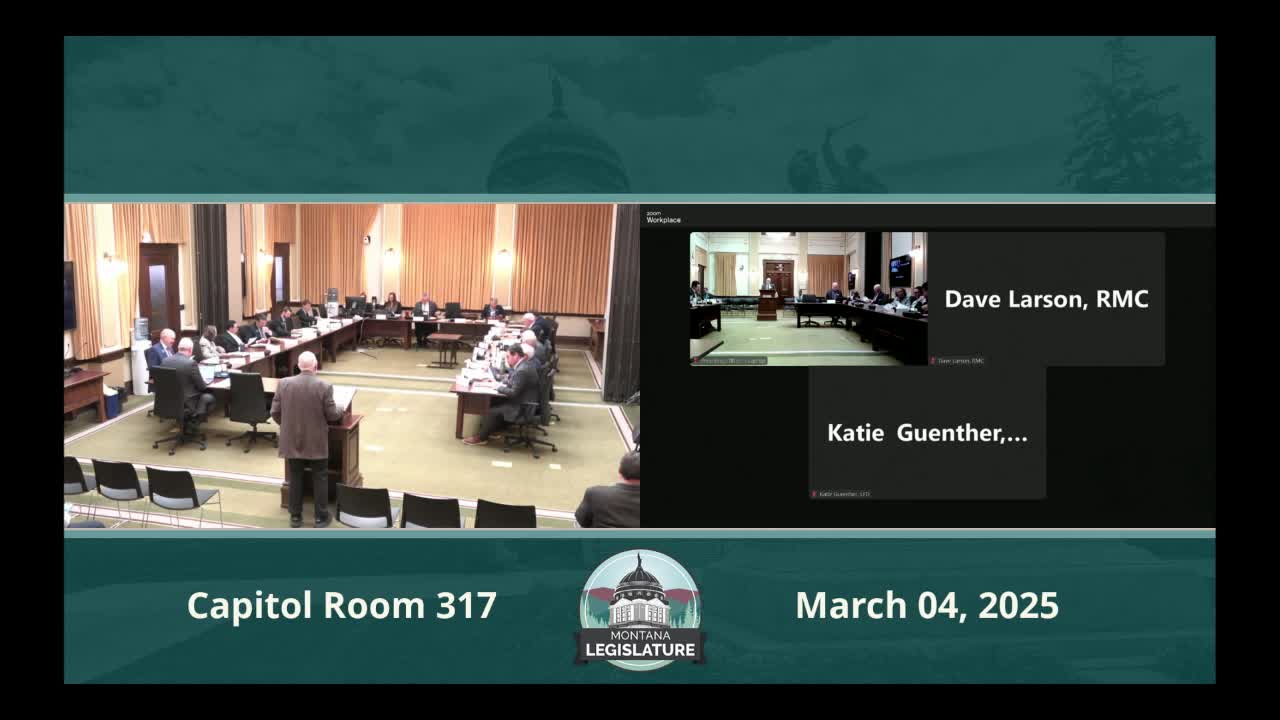
The committee took executive action and a member moved to pass the bill. The motion carried by voice vote; the transcript records no roll-call tally. The committee recorded the motion as passed and closed the hearing on SB 315.
The bill now moves on with the committee’s recommendation.