Get Full Government Meeting Transcripts, Videos, & Alerts Forever!
Get email alerts on the Labor Worker Rights topic
No spam. Unsubscribe anytime.
Wage-transparency bill draws split testimony; committee tables Senate Bill 313
Summary
Supporters said pay-range disclosure and bans on asking wage history would help close pay gaps and aid worker recruitment; business groups warned of litigation risk and harms to small employers. The Senate Business and Labor Committee ultimately tabled SB 313.
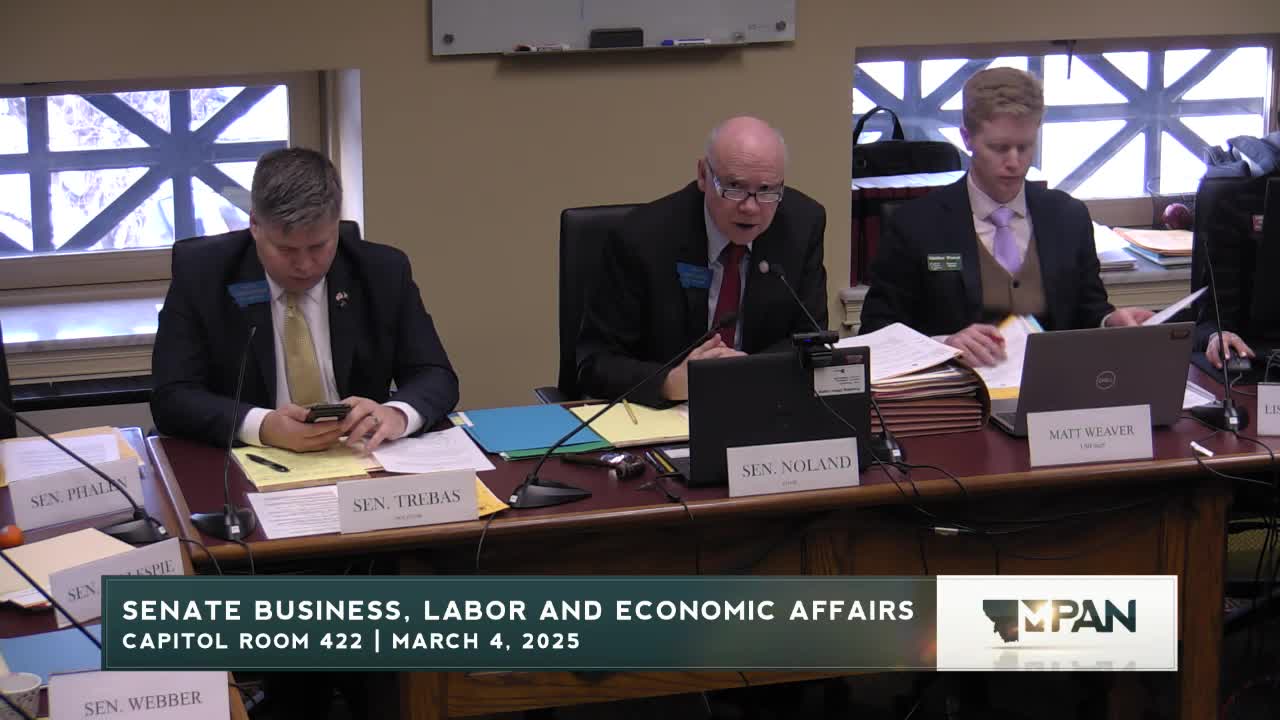
Senate Bill 313, a wage-transparency measure, drew a broad set of proponents and opponents at the Business and Labor Committee hearing before the committee voted to table the bill.
The bill, offered by Sen. Shane Morigeau, would prohibit employers from seeking an applicant’s wage history and require job postings to include an hourly or salary range and a general description of benefits. Supporters argued the change reduces pay discrimination and improves recruitment and retention. Opponents cited administrative burden, potential litigation and harms to small employers.
Why it matters: Supporters said wage-transparency measures reduce the gender and racial pay gap by preventing employers from basing offers on prior pay. Opponents said similar laws in other states triggered repeat plaintiffs and could harm small businesses' flexibility.
Proponents included Amanda Frickle of the Montana AFL-CIO, who said collective-bargaining agreements embody transparency and that the bill’s posting requirement will save time and reduce wasted interviews. John Bazant of Forward Montana said the bill would help retain young workers by making pay and promotion paths clearer.
Business groups made the principal case against the measure. David Smith of the Montana Contractors Association and Kerry Hegreberg of the Montana Chamber of Commerce urged a no vote or rejection, pointing to Washington state's experience with a wave of lawsuits after a similar law and warning of a cottage industry of plaintiffs who “troll” postings for violations. Greg Rodefer of Associated Employers explained companies rely on pay differentiation for high performers and said the bill could limit an employer’s ability to reward merit without complex justification systems.
The committee ultimately moved to table SB 313; the motion to table carried following a committee vote. The transcript shows stakeholders from labor and youth organizations, and multiple chambers of commerce and employer groups testified in person and online. Several senators questioned whether the law would spur litigation and sought more analysis of unintended consequences.
Next steps: Because the committee tabled the bill, SB 313 will not advance from Business and Labor unless it is later resurrected by the sponsor or the committee.