Get Full Government Meeting Transcripts, Videos, & Alerts Forever!
Get email alerts on the Privacy And Technology topic
No spam. Unsubscribe anytime.
Committee advances trespass bill for drones with exceptions for utilities and licensed commercial operations
Summary
Senate Bill 4-93 would make it a misdemeanor to operate an unmanned aerial vehicle (drone) at 200 feet or lower over private property without authorization. The committee advanced the bill after proponents and telecommunications and utility companies agreed an amendment should exempt licensed commercial and infrastructure flights.
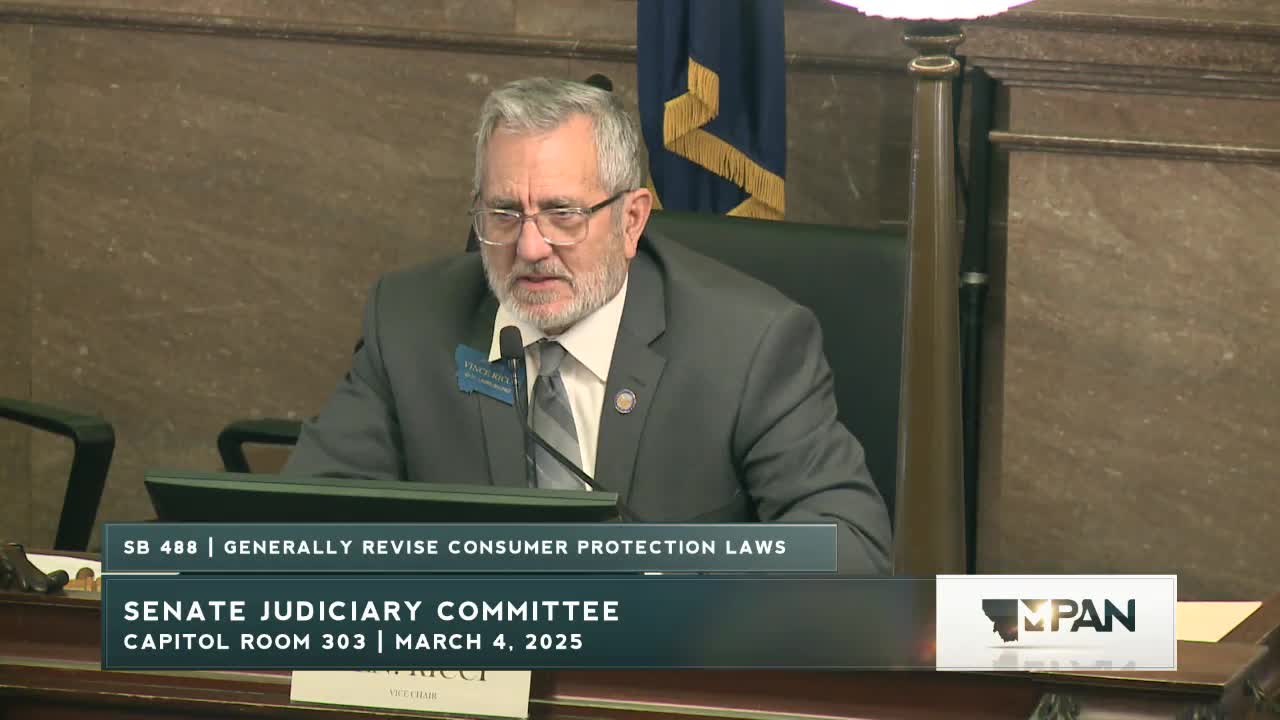
The Senate Judiciary Committee advanced Senate Bill 4-93, a bill that would create a state trespass offense for unmanned aerial vehicles flown at 200 feet or lower over private property without authorization. The sponsor said the measure is intended to protect Montanans’ privacy and property rights while allowing essential public‑safety and utility operations to continue under defined exemptions.
Why it matters: Proponents said the rise of consumer and commercial drones has increased the risk of privacy invasions, property surveillance, and public‑safety incidents when aircraft fly at low altitude over private property. Supporters suggested the change would provide a clear state‑level remedy where property owners feel exposed.
Testimony and debate: Testimony included property‑rights groups, capital security personnel and representatives of wireless carriers and utilities. Industry witnesses asked for and received a draft amendment that narrows the offence: the measure would not apply to federal, state or local agencies acting under contract for public‑safety or environmental missions, to licensed FAA commercial operations flying at higher altitudes, or to work within easement areas for utilities and telecommunications. Insurance and industry representatives said their commercial operations are FAA‑certified and asked for exemptions to avoid disrupting critical infrastructure inspections and insurance claims work.
Committee action and next steps: The sponsor withdrew a committee amendment after staff confirmed the industry‑negotiated amendment was a floor amendment; the bill was advanced with the understanding that a floor amendment clarifying exemptions will be available. Supporters said the approach balances property rights with infrastructure and emergency needs.
Ending: The committee advanced the bill and encouraged the sponsor to carry the negotiated amendment on the floor.