Get Full Government Meeting Transcripts, Videos, & Alerts Forever!
Get email alerts on the Wrongful Convictions topic
No spam. Unsubscribe anytime.
Proponents say DOJ fiscal assumptions overstate costs for proposed exoneration program; advocates urge delayed payouts until claims succeed
Summary
Supporters of a bill to create or expand an exoneration compensation program disputed the Department of Justice's fiscal assumptions, arguing the state need not appropriate funds until a claim is successfully completed and that prior bills’ experience shows few payouts to date.
Representative Carrie Seakins Crowe, sponsor, said House Bill 93 revises Montana’s approach to compensation for wrongfully convicted people and that the fiscal note prepared by the Department of Justice used assumptions tied to an earlier version of the program.
SK Rossi spoke for the Montana Innocence Project as a proponent and urged the committee to read a rebuttal to the fiscal note. Rossi told lawmakers the department’s estimate assumed seven eligible exonerees would be paid under the program, but said past experience under the 2021 statute produced no payouts; appropriations would only be required if a claim is successful.
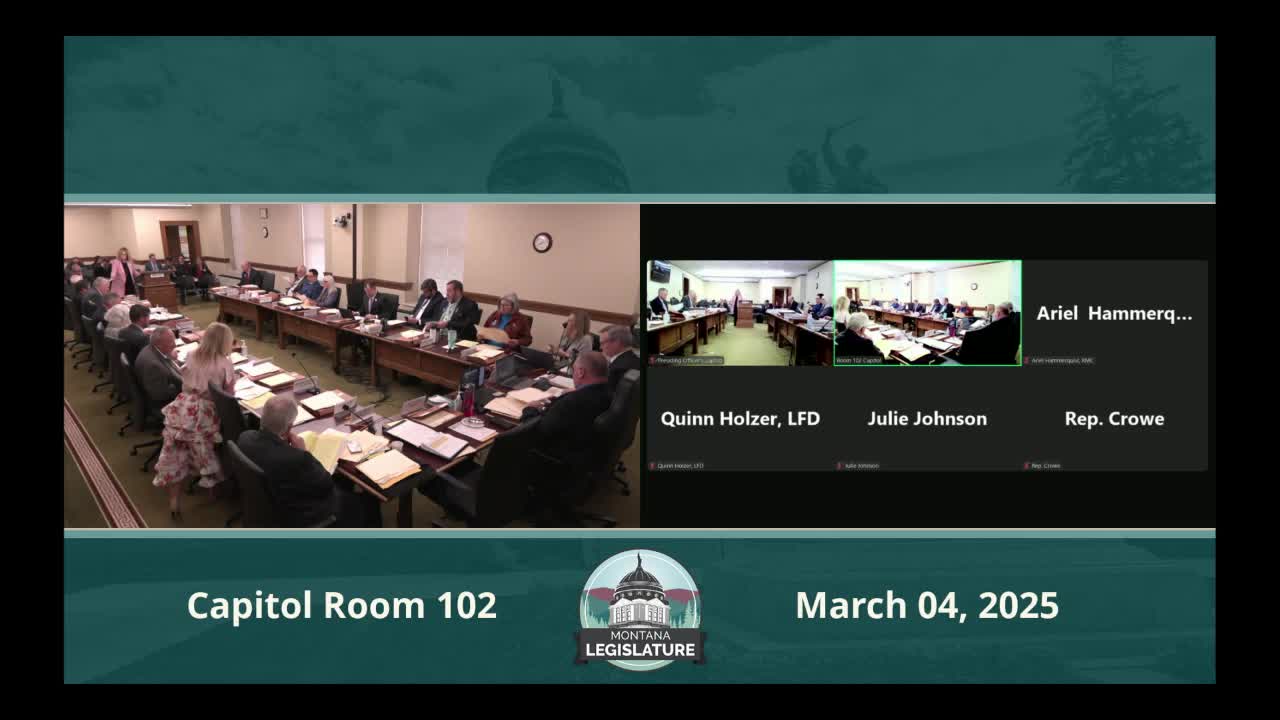
Representatives on the committee asked whether the Department of Justice had staff available to defend the assumptions in the fiscal note; the committee was told DOJ did not have a witness in the hearing. Kristen Reynolds, an informational witness from the Department of Administration, appeared to answer procedural questions.
The sponsor closed by urging the committee to move the statute forward so the state can establish procedures and protections for exonerees. Proponents argued civil lawsuits over wrongful convictions have already cost state and local governments large sums in other cases, and that a defined exoneration process would both protect exonerees and provide clarity on exposure.
Ending: Proponents asked the committee to consider the sponsor’s rebuttal to the fiscal note and to proceed with the bill so a program is in place if future claims are granted.