Get Full Government Meeting Transcripts, Videos, & Alerts Forever!
Get email alerts on the Bridge Weight And Fines topic
No spam. Unsubscribe anytime.
Committee rejects bill to raise bridge weight limit and extend fine payment window
Summary
House Bill 770, which proposed increasing allowable truck weight on bridges from 80,000 to 85,000 pounds and extending fine payment timelines to 90 days, failed in the subcommittee after members cited roadway safety and possible federal funding consequences.
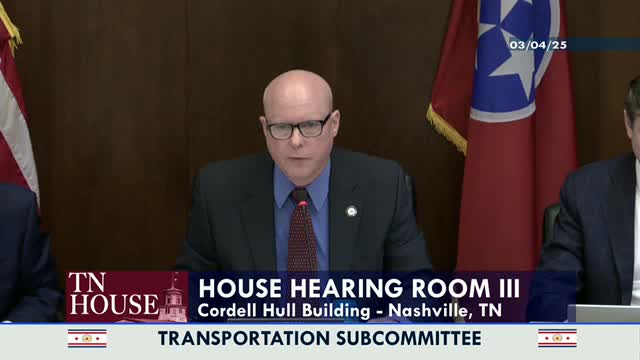
On March 4, 2025, the Tennessee House Transportation Subcommittee rejected House Bill 770, a proposal to change state bridge-weight rules and extend the payment window for fines. The motion to advance the bill failed with a committee vote of 9 noes.
Representative Crawford, sponsor of HB 770, told the subcommittee the bill was prompted by small local trucking companies that face severe fines and short payment windows. He described the measure as an attempt to ease burdens on those businesses and said the bill would raise the allowable combined weight from 80,000 to 85,000 pounds and increase the time allowed to pay certain fines from 30 days to 90 days.
Committee members raised concerns about public safety and compliance with federal requirements. Representative Butler warned the change could "potentially cut off 60,000,000 of federal funding for Tennessee," and Representative Howell said that weight limits exist to protect bridges and roads, noting "If you got a 30 ton truck going over a 20 ton bridge, that's a serious" safety issue. Chairman Crawford said he sought to "fight for the little man and make sure they have a say" and argued the change would reduce burdens on small gravel haulers, but he also acknowledged the committee's federal funding concern.
Other members said they had not seen studies on the impact of the additional 5,000 pounds on bridge infrastructure. Chairman Russell said he would be open to the proposal after a study. Multiple members said they could not support the bill as written because of safety and federal-compliance risks.
After debate, the subcommittee voted 9-0 to not advance HB 770. Chairman Crawford was urged by colleagues to work with the committee and department staff on potential future changes.