Get Full Government Meeting Transcripts, Videos, & Alerts Forever!
Get email alerts on the Gender Definitions topic
No spam. Unsubscribe anytime.
Senate Judiciary advances bill to define “male” and “female” in Montana code after heated hearing
Summary
Senate Bill 4-37, which would add statutory definitions of “male,” “female” and related terms across Montana code, advanced from the Senate Judiciary Committee on a 5–3 vote after hours of testimony from medical, legal and civil-rights witnesses.
The Senate Judiciary Committee voted 5–3 to advance Senate Bill 4-37, a measure that would add uniform statutory definitions for the words “male,” “female” and related terms across Montana’s code. Proponents said the bill brings clarity to state law; opponents argued it would harm transgender, intersex and nonbinary Montanans and likely trigger continued litigation.
The measure’s sponsor opened by telling the committee that “judges resolve disputes, but the legislature defines terms,” and said the bill’s purpose is to ensure the same definition of biological sex is used wherever the term appears in state law. The sponsor said the definitions largely mirror a bill considered last session that was later enjoined in court and that the current draft responds to judicial rulings and drafting critiques.
Why it matters: Backers framed the bill as a public-safety and record‑keeping fix — they said uniform definitions would reduce legal uncertainty in schools, prisons, medical records and sports. Opponents said the statutory language would erase legal recognition for transgender and intersex people, would jeopardize access to services and could conflict with Montana constitutional protections for privacy and equal protection.
Testimony and debate: Supporters included doctors and medical‑policy witnesses who testified about biological differences in clinical care and growth charts, and legal advocates who said federal guidance and recent court decisions support definitions linked to reproductive biology. Opponents included civil‑rights groups, health‑care providers and transgender Montanans who warned the bill would force people to carry identity documents that do not match their lived identity and said the change duplicates prior statutory language that courts struck down as unconstitutional in two cases.
Committee questions focused on how the bill would treat people with disorders of sex development (intersex conditions), how the definitions would interact with health care and criminal statutes, and whether passing the bill would expose the state to further costly litigation. Several members said they wanted clearer drafting and an amendment on the Senate floor to address the most recent court rulings.
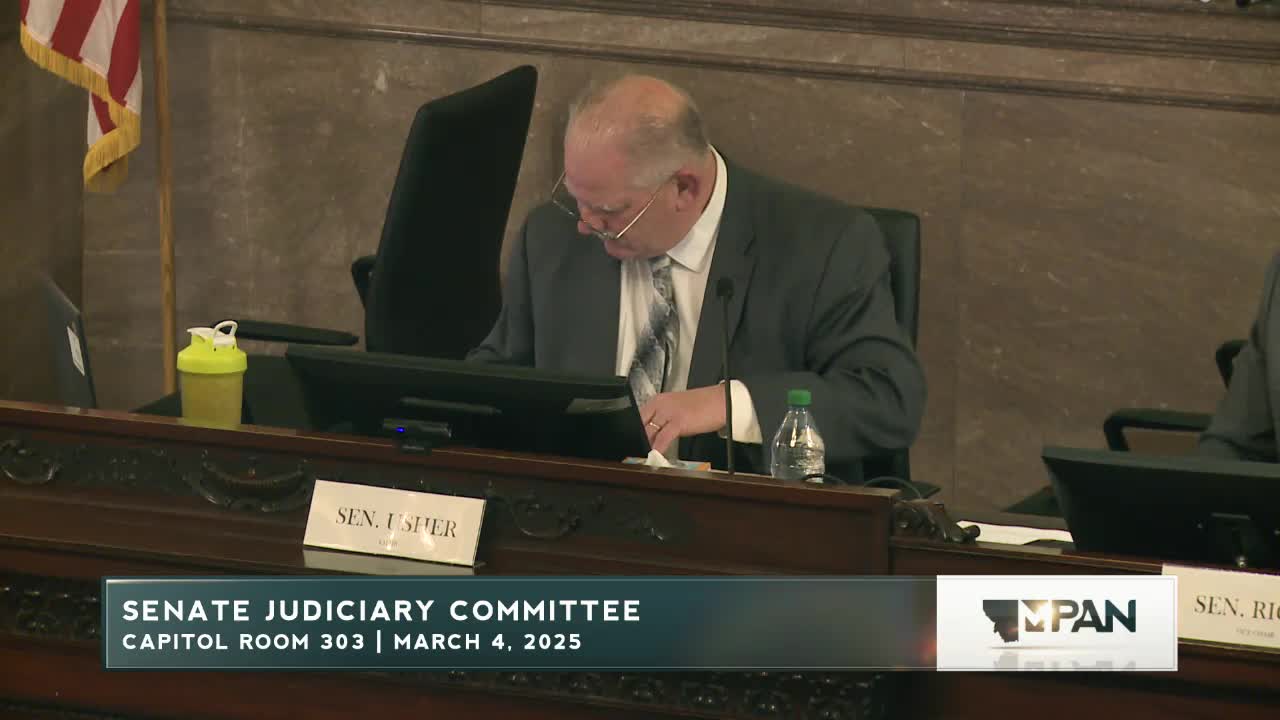
Committee action and next steps: The committee’s executive action recorded a 5–3 roll‑call vote to advance the bill (Vice Chair Ricky — yes; Vice Chair Olsen — no; Senator Emrich — yes; Senator Mansella — yes; Senator Newman — no; Senator Smith — no; Senator Vinton — yes; Chair Usher — yes). The sponsor indicated a floor amendment was expected before the bill reaches the full Senate.
Ending: The bill remains likely to face courtroom challenges if enacted; committee supporters said they intend to refine the language on the floor and pursue final passage before transmittal.