Get Full Government Meeting Transcripts, Videos, & Alerts Forever!
Get email alerts on the Exoneration Compensation topic
No spam. Unsubscribe anytime.
Subcommittee advances bill to let Tennessee exonerees — and in limited cases their children — seek state compensation
Summary
House Bill 592, sponsored by Representative Doggett, was advanced out of the Departments & Agencies Subcommittee Wednesday after testimony from an exoneree and the Tennessee Innocence Project.
House Bill 592, sponsored by Representative Doggett, was advanced out of the Departments & Agencies Subcommittee Wednesday after testimony from an exoneree and the Tennessee Innocence Project.
The bill would let a person whose conviction has been overturned by a Tennessee court and whose charges are dismissed by the state go directly to the Tennessee Board of Claims to seek compensation. Under current state practice, Representative Doggett said, an exoneree must first obtain a certificate of exoneration from the governor before filing with the board.
Representative Doggett, the bill’s sponsor, told the committee the measure “makes the process simpler for innocent people to receive compensation after they have been exonerated.” He said the bill also allows children of an exoneree to bring a claim if the exoneree is deceased, where current law limits recovery to minor children.
The committee heard testimony from Joyce Watkins, who described spending 27 years in prison before she was exonerated. “My name is Joyce Watkins. I’m from Franklin County, Decherd, Tennessee. I went to prison and I served a term of 27 years,” Watkins said. She described difficulty getting help after her release and said she has been trying to receive compensation for about three years.
Jason Gishner, executive director of the Tennessee Innocence Project and the attorney who represented Watkins, answered technical questions from committee members. Gishner explained that, under the bill, both of two steps must occur for someone to pursue a claim: the conviction must be vacated by a Tennessee court and the state must dismiss the charges. He also said the bill includes a one-year statute of limitations for adult children to file a claim if the exoneree is deceased, meaning the practical effect is that most eligible people themselves would still be alive to bring claims.
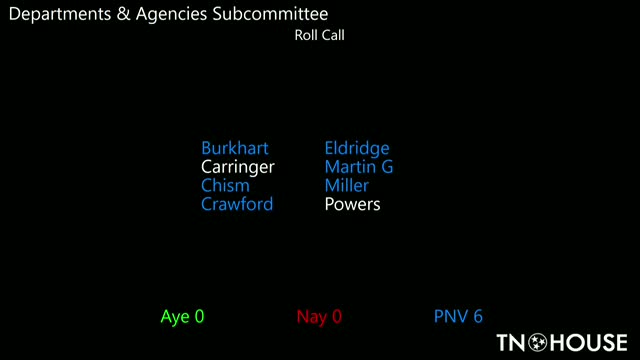
Committee members expressed support after hearing Watkins’ account. Representative Carringer said Watkins was “an inspiration” and that the committee should support the bill. Representative Miller said he supported the legislation as well. After debate, the committee voted to move the bill to the full committee; the clerk recorded eight affirmative votes and no recorded opposition.
Why it matters: The bill changes the procedural path by which exonerees can seek compensation from a state claims process, removing a gubernatorial certificate requirement and clarifying which relatives may seek recovery when the exoneree has died. Committee discussion identified that exonerations are rare in Tennessee — Gishner said there have been 36 in state history — and that the bill is intended to address problems faced by people like Watkins who have been cleared after long incarcerations.
Votes and next steps: HB 592 was approved to move out of subcommittee to the full committee on an 8–0 voice vote. If advanced and enacted, the bill would change eligibility and timing rules for Board of Claims petitions from exonerees or their qualifying heirs.