Get Full Government Meeting Transcripts, Videos, & Alerts Forever!
Get email alerts on the Public Employment Law topic
No spam. Unsubscribe anytime.
Appeals court weighs whether union’s town‑meeting warrant article bypassed mandatory bargaining
Summary
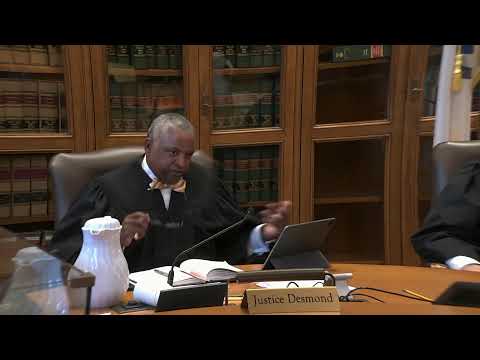
The Massachusetts Appeals Court heard argument in 24P0465 about whether an education union’s town‑meeting warrant article bypassed the statutory bargaining process under Chapter 150E and whether that conduct is constitutionally protected.
The Massachusetts Appeals Court heard argument in 24P0465, Andover School Committee v. Commonwealth Employment Relations Board (CERB), over whether a union’s route to town meeting for an appropriation article constituted bad‑faith bargaining under Chapter 150E and whether that conduct is constitutionally protected petition or political speech.
Ryan Quinn, counsel for the Andover Education Association, told the panel he sought a narrow statutory ground to resolve the case but argued the constitutional question would require strict scrutiny if Chapter 150E effectively restricts petitioning by a certified union. “This is a case of first impression with respect to the constitutional issue,” Quinn said, arguing that a town‑meeting appropriation is a different form of petition than bargaining and that Anderson v. Board of Selectmen of Wrentham left room for a narrower resolution.
Kathleen Good Burlet, representing the Commonwealth Employment Relations Board, asked the court to affirm CERB’s finding that the union bargained in bad faith by bypassing the school committee and introducing a warrant article at town meeting. She framed the statutory bargaining framework (Chapter 150E, sections cited during argument) as a structured process in which legislative bodies make appropriations and the school committee serves as the employer’s bargaining representative. Good Burlet told the panel the statute’s structure and CERB precedent support limiting direct dealing that would undermine labor peace and the exclusive‑representation regime.
John Foskett, representing the Andover schools, told the panel that certification as an exclusive bargaining agent carries statutory limits and that the state can prescribe the procedures a certified union must follow; Foskett said the union “give[s] up” some bargaining conduct by opting into exclusive representation.
Judges pressed the parties on whether the appropriate constitutional standard is strict scrutiny or the “exacting” standard from Janus and related cases and whether the union’s petition to town meeting can be treated as political speech or a bargaining substitute. Counsel also debated whether CERB’s factual finding of bad faith (in connection with a memorandum of agreement and an amendment) provided a ground on which the court could affirm without deciding the constitutional question.
Why it matters: The court’s decision could define the line between a union’s First Amendment petition rights and the statutory protection of exclusive representation and bargaining‑in‑good‑faith obligations, affecting school districts, municipal budgets, and union tactics across Massachusetts.