Get Full Government Meeting Transcripts, Videos, & Alerts Forever!
Get email alerts on the Workers Compensation topic
No spam. Unsubscribe anytime.
Appeals court hears dispute over waiver and alternate‑employer immunity in Rosa workplace‑injury case
Summary
The Massachusetts Appeals Court panel heard argument in 24P0540 over whether an alternate‑employer endorsement and a worker’s signed waiver bar a temp worker’s tort claim after a workplace injury; attorneys debated the scope of Molina and whether the superior court’s summary‑judgment allowance is the only issue before this court.
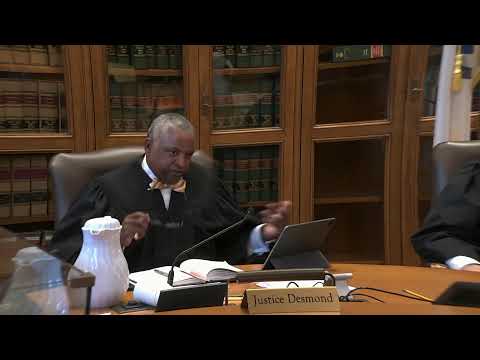
A three‑judge panel of the Massachusetts Appeals Court heard oral argument in 24P0540, Alexander Santiago Rosa v. Affordable Interior Systems, over whether an alternate‑employer endorsement in an insurance policy and a signed waiver bar a temporary employee’s tort suit after a workplace injury.
The dispute centers on whether the trial judge properly allowed summary judgment for the employer after discovery and whether two separate legal defenses—statutory exclusivity under the workers’ compensation scheme and a separate private waiver—both must be found to block the plaintiff’s negligence claim.
Attorney George Leahy, for Alexander Santiago Rosa, told the panel the case returns after an earlier procedural reversal and that the superior court later permitted additional discovery and allowed summary judgment based on deposition evidence. Leahy argued the waiver question matters for whether Rosa, a worker who “doesn’t read or write English,” adequately understood giving up tort rights. “How is somebody like Alexander Santiago Rosa, who doesn’t read or write English … possibly gonna understand that he’s giving up his right to the lawyer that represents him in the workers’ compensation case,” Leahy said.
Defense counsel Ethan Ryder for Affordable Interior Systems said the case aligns with Molina and the key question is whether the special employer qualifies as an insured alternate employer under the policy’s endorsement. Ryder told the panel that neither Molina nor Lang makes a valid waiver a requirement for the statutory immunity test and that the alternate‑employer endorsement named AIS as an insured, supporting dismissal of the common‑law negligence claim.
Panel members pressed both sides on granular points from Molina, Horner v. Boston Edison, and the Lang line of cases and queried whether courts should treat the statutory exclusivity defense and the contractual waiver as separate or merely alternative bases for the same result. Attorneys also discussed practical consequences for experience‑mod adjustments, possible Section 28 (serious and willful misconduct) arguments, and whether a failure to disclose the special employer endorsement to counsel below undercuts the waiver analysis. Ryder told the court the alternate‑employer endorsement was drafted to make the special employer “insured” for employer‑liability coverage and pointed to a lump‑sum settlement and lien figures in the record: the settlement approved in December 2021 was $189,365 and a lien reported at about $220,000 (of which counsel said roughly $19,000 was medical).
There was no decision from the panel at argument; counsel acknowledged time limits and submitted the case to the court.
Why it matters: The panel’s resolution will guide whether employers that function as a special employer under an insurance endorsement retain the immunity of the workers’ compensation system, and whether separate private waivers may operate independently to bar tort claims, affecting temp workers, staffing agencies, and insurers.