Get Full Government Meeting Transcripts, Videos, & Alerts Forever!
Get email alerts on the Arts Grants topic
No spam. Unsubscribe anytime.
Wisconsin Arts Board panel recommends four Woodland Indian Arts grants, sets scoring floor at 85
Summary
A Wisconsin Arts Board review panel evaluated five Woodland Indian Arts grant applications and agreed to recommend four to the full board, setting a funding floor of an average score of 85; one application received substantially lower scores and will not be recommended.
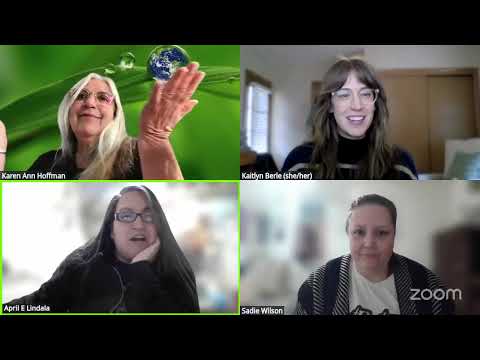
A Wisconsin Arts Board advisory panel reviewed five applications for the Woodland Indian Arts grant program and agreed to recommend four projects for funding to the full board at its next meeting. Panel chair Karen Ann Hoffman said she would present the panel’s recommendations to the board when it meets next week.
The panel evaluated five proposals ranging from a new Menominee pageant and a Woodland fashion show to drum-teaching and sustainable-harvest workshops. Four applicants requested the program’s full award of $6,000; one requested $4,809. After discussion of written reviewers’ comments and applicant materials, the panel set a recommended funding “floor” of an average score of 85 and concluded that the single lowest-scoring application did not meet the panel’s threshold for recommendation.
Panelists said the top four applications demonstrated clear timelines, budgets and community reach. April Lindela, a reviewer and member of the panel, said, “If we were looking for a floor, I would think at least a point average of 85 or above would be” appropriate. Sadie, Oneida Nation arts program coordinator and reviewer, added, “I agree with April’s recommendation of the 85 or above.”
The four projects the panel discussed positively were: - College of the Menominee Nation (Keshena), requesting $6,000 to produce a new full-length pageant at the historic Woodland Bowl timed for the Menominee Contest powwow; reviewers called the application thorough but urged a slightly longer rehearsal timeline than the under-two-month plan proposed. - St. Croix (St. Croix Chippewa Indians of Wisconsin, Webster), requesting $6,000 for drum teachings that include reintegration elements for formerly incarcerated participants and community feeding; reviewers praised the healing focus and asked for clarity on participant roles. - Umagwa (De Pere), requesting $4,809 for sustainable-harvest-centered traditional-arts workshops drawing instructors from multiple tribal nations; reviewers noted strong collaboration and questioned why the applicant did not request the full $6,000. - Woodland Indian Arts, Inc. (Oneida), requesting $6,000 to expand the Woodland Indian Art Show and Market with an indigenous fashion show; reviewers called the proposal clear and cited potential economic benefit to vendors.
Reviewers raised questions about the Institute of Indigenous Teaching and Learning (WIITL, Lac du Flambeau), which also requested $6,000. Panelists said the narrative lacked detail on the proposed creative space, the timeline for securing space in a tribal mini-mall and specifics about who would use the space and how upkeep would be handled. One reviewer said the WIITL application produced “more questions than answers” and both reviewers gave it substantially lower scores.
Panel staff said they will forward the ranked recommendations and written reviewer comments to the full Wisconsin Arts Board for ratification; applicants will be notified after that meeting. Karen Ann Hoffman said, “Got it. I’ll take that to the board when we meet next week.”
Panelists also discussed outreach and barriers to applying. Staff noted the Arts Board distributes Woodland Indian Arts funding from gaming compact monies and has adjusted program rules in recent years—such as loosening match requirements—to lower barriers; panelists recommended renewed outreach, possible town-hall technical-assistance sessions and short examples or videos of prior grantees to encourage future applicants.
The panel’s review session was recorded and streamed publicly; staff said they will include the panel’s written comments in applicant notifications so applicants can use the feedback to strengthen future proposals.