Get Full Government Meeting Transcripts, Videos, & Alerts Forever!
Get email alerts on the Municipal Budget topic
No spam. Unsubscribe anytime.
Budget committee approves $117,944 town office budget after debates over planning consultant, pay and new locks
Summary
The Rangeley Budget Committee voted to approve a $117,944 town office building budget and spent much of its meeting debating a $20,000 planning consultant carryover, code-enforcement pay scales, new locks and janitorial frequency. The committee approved several motions and deferred others for further clarification from staff.
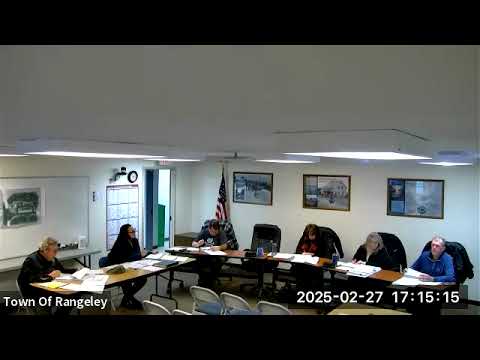
The Rangeley Budget Committee approved a $117,944 budget for the town office building and debated several line items affecting planning, staffing and building security during a meeting that ran through the town’s general government budget.
The budget approval was the meeting’s main formal action: the committee voted to recommend the $117,944 town office building line as presented. Committee members spent most of the session discussing whether to carry additional consultant funding for the comprehensive plan, how to set pay for code‑enforcement deputies, and proposed lock and janitorial cost increases for the town office and public safety buildings.
Joe, a town staff member who presented the department budgets, told the committee the planning consultant line covers the remaining work to finish the comprehensive plan and to start ordinance or codification work if recommended by the plan. He said the consultant is billed monthly and that any unspent funds could be carried forward. "This is to cover the remainder of the comprehensive plan," Joe said, noting the plan likely won’t be finished until next year and that some ordinance work or implementation tasks may require consultant time beyond the plan’s completion.
Committee members focused on two consultant-related numbers in the planning budget: a $20,000 amount proposed to be raised in the current budget and an existing carryforward shown in the financials of roughly $15,500. One member said those figures together appear to create about $35,500 available in the consultant account. A motion was made at the meeting to reduce the consultant line to $10,000 but committee members did not adopt that change; the proposal was deferred pending accounting confirmation of the carryforward and billing status.
Pay for the planning and code‑enforcement staff drew discussion. Committee members noted the current code‑enforcement officer is paid roughly $31 per hour; deputies were shown at similar or slightly lower rates. Joe clarified certification requirements for code‑enforcement deputies: the law requires deputies be certified to the same level as the acting code‑enforcement officer within 12 months of appointment. "The law doesn't differentiate between deputies," Joe said, explaining deputies must obtain the same certification within a year.
Several members pressed for a five‑year pay history for nonunion positions and asked staff to provide clearer line‑by‑line comparisons between the approved budget and the proposed figures; Joe said he would supply that information at the committee’s next meeting.
On building and facilities, the committee discussed a proposed increase tied largely to installing new electronic locks and stepped‑up janitorial service. Committee members noted a $3,000 grant intended to offset part of the town office lock cost; the total lock work for the town office was described at roughly $4,600, with other building‑maintenance items (furnace duct cleaning, minor repairs) also included in the proposed increase. Joe said the lock grant will be applied in the next fiscal year when funds are raised and the purchase is made.
The committee also examined janitorial contract costs after the town moved to more frequent cleaning. Presenters said the contractor will clean more often and the town is now fully staffed, increasing consumption of supplies and paper products. Committee members asked for clarification about what the cleaning contract covers and whether the contractor uses their own equipment.
Personnel and staffing in the town clerk/treasurer area were another point of discussion. A speaker identifying themself as the town clerk, tax collector and treasurer explained the current staffing arrangement and why the deputy position was budgeted under the town clerk line. Committee members asked for a clearer budget note that identifies which wages are for deputy positions and which cover the clerk/treasurer role, and requested confirmation of whether newly hired staff were brought on at the same pay rate as long‑tenured incumbents.
Public safety and the fire‑rescue budget drew several motions. The committee debated cutting part‑time wages in the fire‑rescue budget from $38,000 to $28,000 because recent actuals showed the town had not spent the full amount in prior years. After discussion, the committee approved that reduction recommendation (committee vote: 5 in favor, 0 opposed, 1 abstention). Members also discussed training and certification funding for volunteers and career staff; a later motion to reduce the training line from $7,000 to $3,500 was tied and failed, and the committee asked staff and the fire chief for more detail on training plans before revisiting that line.
Votes at a glance: • Accept minutes of Feb. 25 (motion approved unanimously) • Motion to reduce planning consultant line to $10,000 (moved; deferred/pending accounting confirmation, no final action) • Approve Town Office Building budget of $117,944 (approved unanimously) • Recommend casualty/property insurance at $73,751 (approved unanimously) • Reduce Fire Rescue part‑time wages from $38,000 to $28,000 (committee recommendation approved; tally 5–0–1) • Motion to cut fire training line to $3,500 (tied; motion failed)
Committee chair and members requested that staff return with clarified accounting details for carryforwards, a five‑year pay history for nonunion positions and a written breakdown showing which wages cover which statutory duties in the town clerk/treasurer area. The committee set its next meeting for 5:30 (date discussed as March 4) and adjourned after approving the motions on the floor.
The article summarizes discussions and formal actions recorded in the meeting; several proposals remain open pending staff follow‑up and accounting confirmation.