Get Full Government Meeting Transcripts, Videos, & Alerts Forever!
Get email alerts on the Utilities And Infrastructure topic
No spam. Unsubscribe anytime.
Pataskala advances $3M water-treatment plan, AMI meter pilot and multiple road and drainage projects
Summary
Council heard utility and streets committee reports about a planned $3,000,000 iron-filter project at Water Treatment Plant 1 with a $500,000 OVWC grant, a pilot to install 1,000 cell-based AMI meters, projected water-rate increases, and funding/design steps for several bridges and drainage projects.
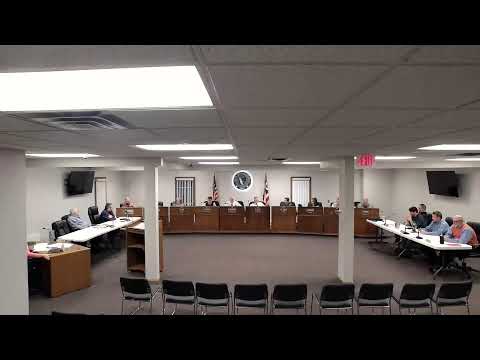
Pataskala City Council members received updates on a range of utility and streets projects at a regular council meeting, including a planned $3,000,000 iron-filter replacement at Water Treatment Plant 1 and a $500,000 Ohio Valley Water Cooperative grant to help fund the work.
The city’s utility representative, Joe (Utility department staff), said, “we've been awarded an OVWC grant for $500,000 to help with the funding for that project,” and described the grant as part of the financing for the iron-filter replacement at Plant 1. The treatment-plant work was described in committee as a major capital project for the utility department; the full project budget and contract details were not specified in the meeting record.
The council also heard a utility-committee report that recommended holding the sewer rate steady for now while planning for water-rate increases. Committee members reported staff and the committee agreed “not to increase the sewer rate at this time” but said water rates likely will need to rise in coming years to maintain target fund balances; the committee said it is evaluating a multi-year, stepped-percent approach similar to prior adjustments. Specific rate-change percentages and effective dates were not specified.
Council members and staff discussed a phased smart-meter (AMI) project. Staff said the city will pilot a cell-based reading module for about 1,000 customers as the first phase, followed by a multi-year in-house deployment. The AMI system is intended to provide near-real-time usage monitoring so the city and customers can detect spikes and potential leaks earlier.
The utility report also covered a sewer and manhole lining project in final stages and noted that additional lining work increased unit costs; committee members said the added work came after coordination among three funding agencies, which raised per-unit costs in the utility budget. No contractor names or final costs beyond the previously noted projects were provided.
On streets and capital projects, committee reports said the Brown Boulevard Bridge design is being prioritized and that the committee recommended transferring funds to design the bridge pending a finance-committee decision on the timing and amount of the transfer. The Key Boulevard Bridge was reported as fully funded and in scoping with the Ohio Department of Transportation. Additional projects discussed included Mill Street (bridal) work expected this summer, a Pataskala Safe Travel Plan with ODOT bidding in May and likely construction into 2026, Summit Ridge drainage Phase 1 with resident easement donations expected, and Hollow Greenhollow Drive drainage improvements budgeted for 2025.
Committee members said some intersection and drainage funding priorities are being reevaluated; for example, funds originally budgeted for drainage may be reallocated toward the Taylor Road/Havens Corners roundabout given higher priority for that intersection. In several cases, the committee and staff discussed contingency planning and scheduling but did not present final bids or contract awards at the meeting.
Why it matters: the water-treatment and AMI plans affect utility operations, customer billing and long-term system resiliency; bridge and intersection projects affect traffic and safety planning across Pataskala. Many of the items discussed require later approvals, design work and funding transfers before construction begins.
What’s next: staff and standing committees will return with draft rate recommendations, design contracts and supplemental budget items for council consideration at future meetings. When available, staff indicated they will present the individual project budgets, RFQ/RFP results and specific effective dates for any rate changes.