Get Full Government Meeting Transcripts, Videos, & Alerts Forever!
Get email alerts on the Waterfront Development topic
No spam. Unsubscribe anytime.
Council approves formation of North Coast Waterfront New Community Authority to finance lakefront development
Summary
The committee approved Ordinance 1061-2024 (as amended) to create a North Coast Waterfront New Community Authority (NCA), set initial board appointments and authorize a geographically constrained financing tool intended to fund lakefront infrastructure and public space.
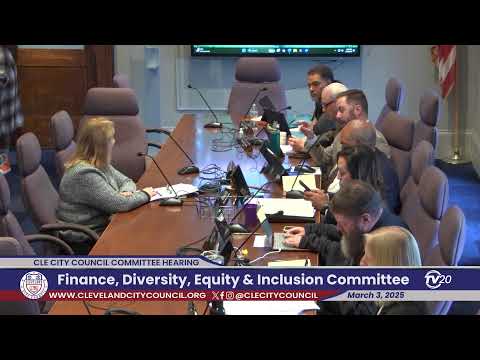
The Finance Committee approved Ordinance 1061-2024, as amended, to form a North Coast Waterfront New Community Authority (NCA). The committee read a set of technical amendments into the record and approved the ordinance and initial appointments by voice vote.
The NCA is a state-authorized, quasi-governmental entity that can collect charges and fees from property owners and lessees within a narrowly defined geographic district and use those revenues only inside that district. The committee's ordinance creates an initial NCA boundary (land north of Cleveland Browns Brown Stadium and adjacent municipal lots and parkland) and appoints initial board members. Council and the developer (the city) will appoint board seats under the state statutory model; the chief corporate counsel read a set of names into the record as the initial appointees and noted some technical changes required because of conflicts related to serving on multiple boards.
Scott Skinner, executive director of the North Coast Waterfront Development Corporation, presented the plan and said the organization's priorities include advancing funding and project management for the North Coast Connector, building the organization's long-term sustainability, cultivating public-private partnerships, stakeholder engagement and near-term activation of publicly owned waterfront land. Skinner said the waterfront group has raised $150 million in grant funds for the Shoreway realignment and land bridge'$20 million from the state and $130 million in federal funding, including INFRA and Reconnecting Communities grants'and that federal funds require construction to start in 2027.
Skinner said the NCA is intended to be a financing and operating vehicle for shared infrastructure and public space on the lakefront and presented a conservative projection that existing users could generate about $800,000 annually through fees such as special-event parking charges; that figure could rise if new development participates and the district captures additional revenue sources. He described the NCA tool as "a way to fund both operations and as a way to fund key public space and shared infrastructure." (paraphrase)
Chief corporate counsel Stephanie Melnick read into the record an amendment to the ordinance that sets specific initial citizen and developer appointees and clarified roles for local government representation. The amendment also identified that some appointments could not proceed immediately because of statutory limits on serving on multiple boards; those seats will be addressed in subsequent legislation.
Committee members asked detailed questions about: whether charges are mandatory (they are not; property owners/lessees must opt in), whether charges would be disclosed on receipts (yes), limits on geographic use of funds (funds may be spent only within the defined NCA), how the NCA interacts with other tools (TIF, SID, DORA can coexist), and whether the Browns, Rock & Roll Hall of Fame or other institutions could be asked to participate (they would need to opt in). Skinner said the North Coast Waterfront Development Corporation will manage NCA operations but that the NCA board makes spending and contractual decisions.
Council members who voiced support said the NCA is a tool to finance publicly accessible waterfront space without drawing on the general fund; some members expressed concerns about ceding authority to quasi-independent entities and asked for regular reporting and community benefits protections. The committee voted to approve the ordinance as amended; the approved document establishes the NCA, names initial board members and authorizes future petitions to expand the district to include submerged land and other lakefront parcels at a later date.
Why it matters: The NCA creation is an early step in a multipart financing approach that includes federal and state grants, potential federal TIFIA loans and private participation; council supporters said it can fund public space and shared infrastructure while protecting the city's general revenue.