Get Full Government Meeting Transcripts, Videos, & Alerts Forever!
Get email alerts on the Natural Area Preservation topic
No spam. Unsubscribe anytime.
Natural Area Preservation lays out 30-year strategic plan focused on climate resilience, volunteerism
Summary
City staff presented a strategic plan for Ann Arbor’s Natural Area Preservation Division that emphasizes climate adaptation, expanded volunteer engagement and pursuing external funding to supplement millage support.
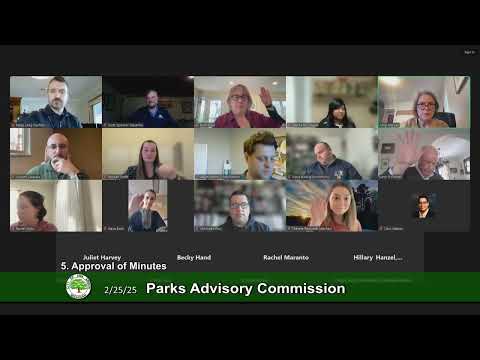
Remy Long, a Natural Area Preservation (NAP) leader with the City of Ann Arbor Parks & Recreation, presented the division’s strategic plan during the Parks Advisory Commission meeting, describing it as a 30‑year look forward following NAP’s 30th anniversary in 2023.
The plan, Long said, aims to “protect and restore Ann Arbor’s natural areas and foster an environmental ethic within the community,” centering on stewardship and restoration, ecological assessment and inventory, volunteerism, and education and engagement.
NAP staff told commissioners the division manages about 1,400 acres of designated natural areas within the city’s roughly 2,200 acres of parks, runs a prescribed‑burn program, and maintains species inventories (birds, reptiles, amphibians, butterflies) that staff and volunteers have collected for up to three decades. Becky Hand and Rachel Maranto, NAP supervisors in attendance, will lead inventory and stewardship work cited in the plan.
Remy Long said the plan emphasizes preparing for climate change—examples discussed included piloting “assisted migration” concepts and shaping emerging ecological management practices—and reinvigorating community participation through expanded volunteer opportunities and education programs.
On funding, Long said NAP’s baseline support comes from the city millage but staff are pursuing outside funds and partnerships. She said a 2024 U.S. Department of Agriculture grant award to a partnership that includes the city allocated $375,000 for NAP work over four years, but access is paused by broader funding freezes.
Commissioners asked about time horizon, implementation and deer management. Long said the plan was intended as a long‑range North Star and could reasonably serve more than a decade; she said no current funding or active city program exists for deer management and that surveillance and research declined when dedicated funding ended.
NAP leaders said staff will use the plan to prioritize restoration, monitoring and community engagement and to guide future grant and partnership opportunities.