Get Full Government Meeting Transcripts, Videos, & Alerts Forever!
Get email alerts on the Transparency And Redaction Policy topic
No spam. Unsubscribe anytime.
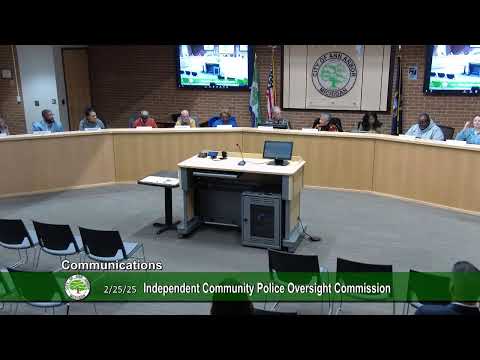
Oversight commission approves redaction-policy revision and new in‑person transparency reviews with police
Summary
The Ann Arbor Independent Community Police Oversight Commission voted to submit a revised redaction policy to the police department and described a new bi‑monthly process by which information managers may view unredacted reports and body‑worn video inside the police department.
The Ann Arbor Independent Community Police Oversight Commission voted to approve a revision to its redaction policy and to submit that draft to the Ann Arbor Police Department for consideration, the commission said during its February meeting.
The vote follows an update from commissioners about a new transparency procedure worked out with the police department that allows information managers to review unredacted reports and body‑worn camera videos on site at the police department every two months. Commission members said the session they attended included command staff and produced training‑relevant observations beyond the complaint findings.
Chair Carter said the in‑person sessions let commissioners “see the unredacted materials” rather than be told what happened, and Commissioner Green described the meetings as “eye opening,” noting the value of a second pair of eyes for both officer and civilian safety. Lieutenant Petterly, who identified himself as the department staff in charge of the professional standards section, clarified that FOIA (the Freedom of Information Act) standards govern redactions on materials that leave the department and that the in‑person reviews are deliberately kept in‑house to avoid triggering public release.
Commissioners pressed for clarity about how the oversight commission will learn whether corrective actions recommended after a sustained complaint were actually implemented, noting personnel privacy rules that place discipline records in personnel files. Commissioners said they want the commission to be able to tell complainants not only that a complaint was sustained, but that the commission reviewed the discipline and considered it appropriate. The commission’s policy committee agreed to pursue adjustments that would allow the commission to review discipline outcomes while respecting privacy and legal limits.
The motion to approve and submit the redaction‑policy revision to the police department carried. Commissioners said the new in‑person review cadence (every two months) will continue alongside efforts to craft a redaction policy that provides sufficient context for complaint reviews.
The commission recorded no numerical vote tallies in the transcript for this motion; minutes show the motion was moved, seconded and approved.