Get Full Government Meeting Transcripts, Videos, & Alerts Forever!
Get email alerts on the Stormwater Rain Gardens topic
No spam. Unsubscribe anytime.
Washtenaw County program has helped build more than 2,000 residential rain gardens; 1,400 are in Ann Arbor
Summary
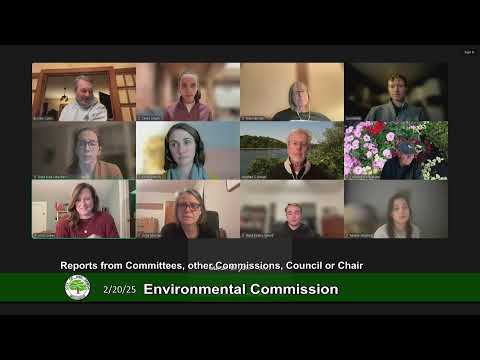
Susan Bridal, who runs the Washtenaw County rain garden program, told the Ann Arbor Environmental Commission the county has supported more than 2,000 residential rain gardens overall and that about 1,400 are in Ann Arbor.
Susan Bridal, who runs the Washtenaw County rain garden program for the Washtenaw County Water Resources Commissioner’s Office, told the Ann Arbor Environmental Commission that the county’s residential program has produced more than 2,000 rain gardens over 15 years, with about 1,400 located inside Ann Arbor.
Bridal said the program recorded 89 rain gardens built through county assistance in 2024 and that landscapers trained by the program built 53 more. “So it's really crowdsourcing rain gardens, getting everyone to do it so that, government doesn't have to do as much of it,” Bridal said, describing the county’s effort as behavior-change and community-building work that aims to slow, soak and cool stormwater.
The program offers a free on-demand Master Rain Gardener class, individual yard consultations, plant swaps, volunteer opportunities, free design assistance for businesses and maintenance of many public rain gardens. Bridal said the City of Ann Arbor’s stormwater utility fee provides funding that helps run these services and that the county reports results to the Michigan Department of Environment, Great Lakes and Energy as part of the MS4 stormwater permit. She added that homeowners who install rain gardens may receive a small credit on their stormwater fee — “it's, like, $10 or something,” she said.
Why it matters: rain gardens are a green-infrastructure tool that captures runoff, reduces flooding downstream, recharges groundwater and supports pollinators. Bridal pointed to a range of sizes — from small curb-capture gardens to larger installations in Mary Beth Doyle Park — and said the program also seeks to normalize vegetative infiltration in everyday landscaping decisions.
Barriers and outreach: Bridal said the main barriers residents report are labor — the digging is hard — and a confidence issue about whether a rain garden will work or look acceptable in a front yard. She described program tactics to overcome those hurdles: live and online training, site visits to sketch solutions, neighborhood outreach and garden tours. Bridal said failed rain gardens are uncommon; she recalled “probably 3 or 4” that ultimately didn’t succeed but said the office follows up to try to repair installations.
Equity and distribution: Bridal shared maps and an analysis produced in partnership with the University of Michigan School of Information showing dense adoption in mid-priced neighborhoods of Ann Arbor and high concentrations in the city overall. She said receipts to landscapers are not geocoded in her data, so contractor-built gardens may be underrepresented on her map. She also noted that apartment residents and multifamily properties rarely install rain gardens, and that outreach to landlords and large property owners remains a challenge.
Public and roadside gardens: Bridal described several public installations — along Miller and Madison avenues and at Gallup Park — and said her colleague Katie Wojticek administers maintenance contracts for many public rain gardens. She cautioned that small, distributed roadside gardens can be costly to maintain and that larger park projects capture substantially more water per site.
Volunteer models and next steps: Commissioners and council representatives raised the idea of “barn-raising” builds and matching volunteers who can do physical work with residents who can’t. Bridal said the county’s Master Rain Gardener class sometimes produces volunteers who will help neighbors, and she pointed to Detroit’s “Rain Gardens to the Rescue” model as one example where class participants build gardens together. Commissioners suggested connecting programs such as SnowMatch, homeowners associations, varsity crews and local youth teams to provide labor.
Data and reporting: Bridal showed a public map that documents rain garden photos and locations; she said the map is a useful reporting tool for EGLE and for public engagement. She also said she plans to pursue neighborhood-targeted outreach where upstream installs would most reduce downstream flooding.
What was not decided: the commission discussion identified volunteer-matching, landlord outreach and further neighborhood targeting as priorities but did not produce a formal directive or vote. Bridal offered to continue coordinating with City of Ann Arbor staff and commissioners on next steps and to provide contact information for maintenance and city coordination.
Ending: Bridal invited commissioners to suggest program improvements during her winter planning period and offered free consultations for residents who contact the county.