Get Full Government Meeting Transcripts, Videos, & Alerts Forever!
Get email alerts on the Planning Processes topic
No spam. Unsubscribe anytime.
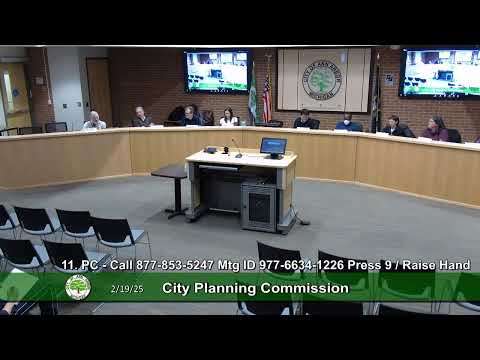
Planning Commission recommends removing Design Review Board and shifting design review to staff; approves proposed changes to downtown materials rules
Summary
The Ann Arbor City Planning Commission voted 7–2 on Feb. 19 to recommend that city council eliminate the Design Review Board, move its advisory review into planning staff’s administrative process, and revise downtown material standards to permit additional energy‑efficiency materials including EIFS under proposed rules.
The Ann Arbor City Planning Commission on Feb. 19 recommended that city council eliminate the separately appointed Design Review Board (DRB), make DRB review an administrative function of planning staff, and revise downtown building material regulations to allow additional materials including exterior insulation and finish systems (EIFS) under proposed standards.
The proposed amendments originated from an April 2024 city council resolution and a city administration report, “A New Approach to Economic Development,” which recommended process changes to speed project review and reduce time and uncertainty for development. Manager Leonard told commissioners the proposal preserves the downtown design guidelines but shifts the advisory DRB conversation into staff review to shorten review timelines; the design guidelines themselves would remain as guidance rather than a binding standard.
Staff also proposed changes to downtown material standards to permit certain energy‑efficiency building systems such as EIFS. Leonard said the change was a deliberate tradeoff to allow more energy‑efficient options though EIFS has a mixed reputation in design practice.
Public comment included a written letter from current and former DRB members (names listed in the meeting packet) and in‑person remarks from Ken Garber (28 Haverhill Court). Mr. Garber and the letter writers cautioned that DRB review, while advisory and nonbinding, has improved some projects through collegial early feedback and has raised public awareness of design choices. The DRB letter argued the forum allowed petitioners to present formative design ideas before extensive consultant fees were incurred and cited projects (letter included “before and after” renderings) they said were improved by the DRB process.
Commissioners were split in deliberation. Supporters said the DRB step adds roughly two to four weeks to the review process because of Open Meetings Act notice requirements and staff workload; staff reported an average of about four DRB applications per year over the last decade (two per year over the last four years). Supporters framed the change as one of several process adjustments aimed at reducing friction and cost for development. Detractors, including Commissioner Mills and Commissioner Abrams, said the advisory board provided valuable, diverse professional perspectives that sometimes produced demonstrable design improvements and public education about architecture.
The motion—moved by Councilmember Disch and seconded by Commissioner Wyche—carried 7–2 (Commissioners Mills and Abrams voting no). Leonard said the material‑standards changes were staff‑driven and could be separated from the DRB action if the commission wished; several commissioners asked that the design guidelines themselves be revisited by experts to preserve useful elements. The recommendation now advances to city council for consideration; staff reminded the commission that building and fire safety codes would continue to apply to large theaters or other assembly uses regardless of zoning changes.