Get Full Government Meeting Transcripts, Videos, & Alerts Forever!
Get email alerts on the K12 Education Academic Performance topic
No spam. Unsubscribe anytime.
Beacon City School District reports elementary literacy gains, plans K–12 RTI expansion and new math interventions
Summary
The district’s assistant superintendent of curriculum and student support reported measurable gains in elementary reading after a multi-year literacy initiative and outlined plans to expand its K–12 Response to Intervention (RTI) model, add math specialists and pilot targeted secondary interventions.
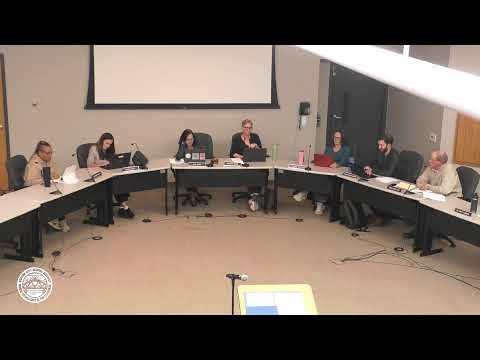
The Beacon City School District Assistant Superintendent of Curriculum and Student Support presented district academic data and a multi-year strategy during the Sept. 22 board meeting, reporting increased elementary literacy proficiency and outlining steps to expand interventions through middle and high school.
The presentation said district literacy efforts launched after the COVID-era disruption — including retraining AIS (Academic Intervention Services) staff in LETRS (Language Essentials for Teachers of Reading and Spelling), expanding Foundations to third grade, and coaching models for classroom teachers — coincided with gains at elementary grades. The assistant superintendent said the district reduced the number of students scoring at the lowest level on state ELA assessments and increased students scoring at Level 3 (proficient) and Level 4 (exceeding).
The district framed literacy as foundational to all content areas and emphasized teacher efficacy, small-group instruction and consistent assessments across buildings. The presentation named Science 21 as the elementary science curriculum chosen in part because it aligns with nonfiction literacy standards. The assistant superintendent noted state science assessments are text‑heavy, making literacy important for science performance.
Board members and the assistant superintendent discussed participation rates on state 3–8 assessments: the elementary grades meet the district’s target participation (about 95 percent), while the middle school had roughly a 50 percent participation rate, which the assistant superintendent said makes middle‑school results harder to interpret. The district plans a communications push to raise middle‑school participation before upcoming tests.
On intervention staffing and programs, the assistant superintendent said the district has retrained AIS literacy teachers through LETRS (a two‑year intensive program) and expanded math AIS staffing. The presentation said the district previously hired two math AIS teachers shared across elementary buildings and this school year will place a math specialist in each school. The district will also use a coach (RTI specialist) focused on math tier‑1 interventions and curriculum mapping to address gaps such as geometry and number fluency.
For secondary supports the district described pilots of evidence‑based programs: MATH 180 is slated for a targeted cohort of seventh graders (about 25 students) and a ninth‑grade pilot (about 30 students) to support both math and reading where needed. The assistant superintendent said the district wants AIS to move beyond Regents test prep toward supporting broader academic needs in anticipation of future Regents changes.
The district also highlighted tools used for progress monitoring: iReady and DIBELS at elementary levels, and ongoing benchmark windows. The assistant superintendent said iReady’s proficiency indicator closely correlates with state outcomes and provides downloadable lesson resources and grouped small‑group recommendations for teachers.
The presentation included two district SMART goals for the year: sustain literacy work (with a targeted vocabulary goal anchored around tier‑2 academic words used as questions) and a concerted push on math fluency and progressions. Specific classroom practices discussed included daily numeracy drills, increased use of manipulatives (renamed “tools”), small‑group math instruction in secondary grades, and scripted handwriting (cursive) instruction being reintroduced as a writing support and to help with access to historical documents.
Board members and students in attendance asked clarifying questions about the designations for state scoring levels (the assistant superintendent defined Level 1 as not at grade level, Level 2 approaching, Level 3 proficient and Level 4 exceeding), the role of AIS staff (AIS teachers work directly with students while the RTI coach coaches teachers), and why certain middle‑school advanced students do not appear in the 3–8 math results (they take Algebra I/Regents instead). The assistant superintendent said the district will continue to use multiple data points and provide principals with the district data to develop building SMART goals.
The assistant superintendent and board members described next steps: increase middle‑school participation rates through regular family messaging, continue LETRS and Foundations supports, implement math coaching and fluency drills, pilot MATH 180 in targeted secondary cohorts, and expand the RTI model into middle and high school to create a K–12 RTI system.
The board did not take any formal action on these instructional items at the meeting; the presentation served as an informational workshop and the district plans follow‑up reporting and targeted implementation work.