Get Full Government Meeting Transcripts, Videos, & Alerts Forever!
Get email alerts on the Strategic Plan topic
No spam. Unsubscribe anytime.
Board hears staff draft to merge strategic plan with board goals; literacy and math initiatives highlighted
Summary
District staff presented a draft framework to align board goals and the district’s strategic work under four focus areas and outlined academic priorities for 2025–26, including full K–5 rollout of the HMH reading program, expanded literacy coaching, a district math initiative, and pilots for middle- and high-school intervention.
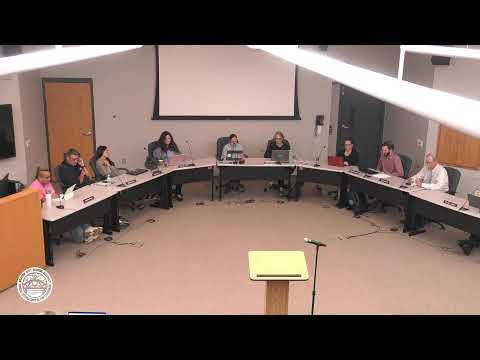
District staff presented a first draft of a consolidated strategic framework at the Beacon City School District Board of Education workshop on Aug. 25, proposing four focus areas — academic excellence, culture of care, communications and operations — with equity and sustainability reframed as beliefs to be infused across those areas.
Superintendent Matt Bridal described the document as a working draft and asked the board for feedback before an expected October check-in. “Tonight is just kind of a first attempt at that,” he said, asking trustees for reactions and edits. Board members expressed support for the approach but asked that belief statements (equity, diversity and sustainability) be clearly defined and consistently integrated with measurable metrics.
Staff laid out several district academic priorities for the coming year.
Literacy: The district is expanding HMH’s interreading program across K–5 after piloting it in grades 3–5. Administrators said they chose the program because it includes a phonics component aligned to the science of reading. The district is also continuing Wilson interventions at upper elementary grades and plans “Just Words” groups for older students who need more sophisticated phonics and vocabulary supports. Staff added a literacy specialist (coach) focused on teacher efficacy and small‑group instruction.
Math: District presenters described efforts to strengthen math instruction across K–12. The district said it began implementing Thinking Mathematics (a “thinking-building” classroom model) for grades 6–8 and is extending related professional development to grades 6–12. Elementary math staff will be based in each building this year rather than shared among schools. The district will pilot a high-school intervention program (HMH’s “Math & Reading 180”) for roughly 30 rising ninth graders identified for extra support.
Assessment and MTSS: The district will continue universal screeners across K–5, pilot DIBELS screening at grades 6–8, and expand RTI/MTSS coaching to create a consistent K–8 model.
Board members asked staff to present classroom‑level evidence (for example, classroom word walls and lesson artifacts) alongside outcome data in later presentations so the board can track how pedagogy aligns to student results. Several trustees recommended clearer, district‑level measures of how the K–12 pieces (literacy, algebraic concepts, graduate expectations) combine into a “portrait of a graduate.”
Superintendent Bridal and staff said they will bring more detailed metrics and principal presentations in subsequent meetings to show how initiatives are implemented in classrooms and how they feed districtwide indicators.