Get Full Government Meeting Transcripts, Videos, & Alerts Forever!
Get email alerts on the English Language Instruction topic
No spam. Unsubscribe anytime.
Sen. Rafferty presents LD 471 to pilot full‑time intensive English programs for newcomers
Summary
The Joint Standing Committee on Education and Cultural Affairs heard testimony on LD 471, a bill to create a two‑year pilot providing full‑time intensive English instruction and wraparound supports to new Mainers, designed to speed entry into in‑demand jobs; lawmakers asked for more budget and implementation details at work session.
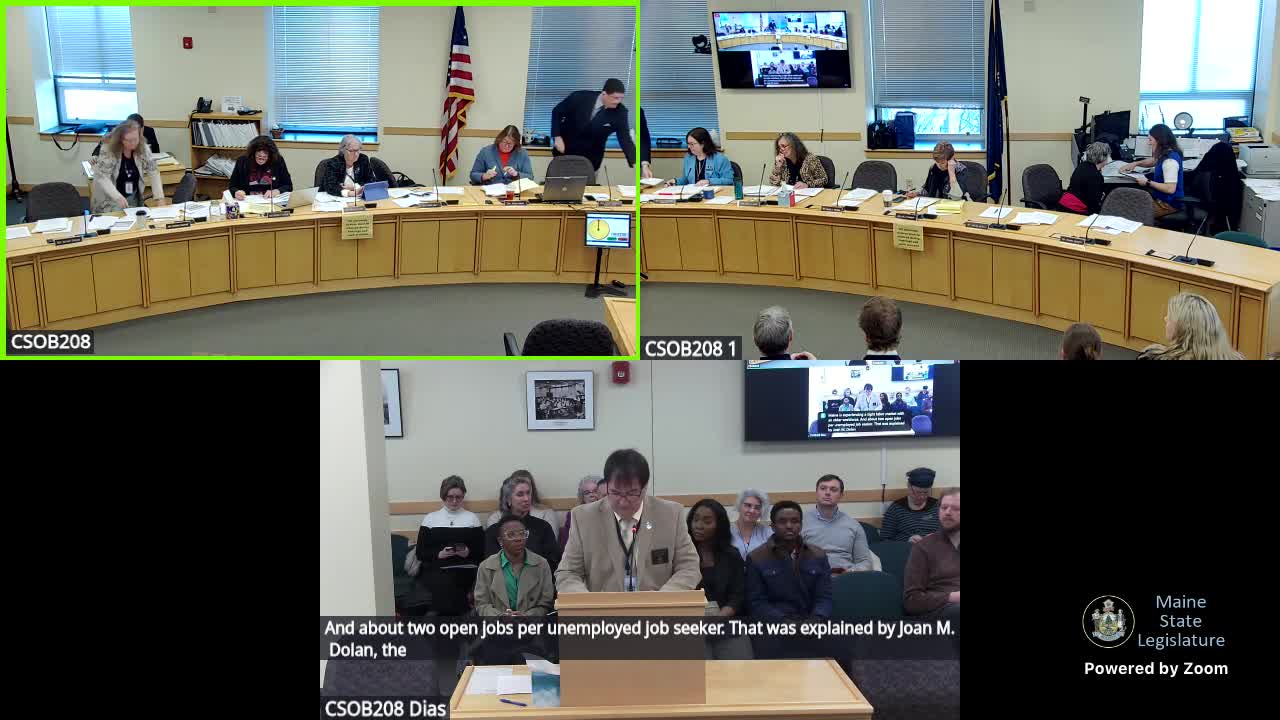
Sen. Joe Rafferty, Senate chair of the Joint Standing Committee on Education and Cultural Affairs, presented LD 471, a bill to establish a pilot program expanding full‑time intensive English language instruction for adult newcomers to Maine. Rafferty said the program would “accelerate language acquisition and prepare participants to fill critical workforce gaps” as the state faces persistent labor shortages.
Rafferty framed the bill around state workforce data, saying Maine has “42 available workers for every 100 open jobs,” and citing about 41,000 job openings with roughly 17,148 unemployed workers. He told the committee the pilot aims to provide full‑time language instruction, teacher training, childcare, transportation, living stipends and connections to employers through Maine Career Centers and workforce navigators.
The bill proposes serving up to 780 students over two years, Rafferty said, and would expand intensive English capacity already housed at the University of Maine system. He described the measure as a “strategic investment” that could increase participants’ earnings, expand the labor pool for employers and reduce reliance on public assistance if outcomes materialize as expected.
Christina Mitchell, a House member who testified in her capacity as an educator of English learners with more than three decades of experience, described a range of professions held by former students and said LD 471 would help “ensure that working people have access to the high quality education they need to succeed.” Mitchell told the committee the bill’s reporting requirements would allow the state to assess whether wages and tax revenue increase and whether the pilot should be expanded.
Committee members pressed for budget and operational details. Rep. Barbara Bagshaw questioned the bill’s funding trajectory, saying, “It just seems like a big jump and not sure where we're gonna come up with this money from,” after noting an apparent increase from approximately the low‑millions in the first year to about $3.5 million in a later year as shown in the amendment language.
Sen. James Libby and others asked about timing and program intensity. Libby noted that section 2 refers to “full‑time instruction” and said committee materials indicated 18–20 hours per week; he asked how the program schedule would work for adult learners who also hold jobs. Rafferty and witnesses said some implementation details would be developed with participating institutions and reported to the committee.
Rep. Sheila Lyman asked for comparative data to evaluate equity, requesting at work session information on how many other Maine residents might seek similar supports (childcare, transportation, living stipends) and how the program would be prioritized. Rep. Holly Sargent and others emphasized that adult learners often require more intensive, immersion‑style instruction than typical once‑or‑twice‑weekly adult education offerings.
No formal motions or votes on LD 471 were recorded during the hearing. Committee members signaled that they expect further detail at work session, including budget breakdowns, the proposed schedule of instruction, and information on how university and adult education programs would coordinate with employers and workforce navigators.
The hearing continued with additional bills on the committee’s public hearing agenda.