Get Full Government Meeting Transcripts, Videos, & Alerts Forever!
Get email alerts on the State.sovereignty.unesco topic
No spam. Unsubscribe anytime.
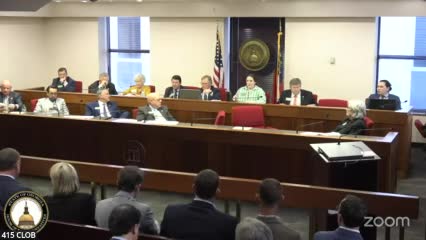
House subcommittee considers bill to bar U.N. and WHO authority over Georgia policy
Summary
Representative John Corbett presented HB 570, a bill that would codify limits on United Nations and World Health Organization jurisdiction in Georgia. Supporters said international agreements and UNESCO designations threaten state sovereignty; opponents questioned overlap with federal treaty powers and existing charter language.
Representative John Corbett presented House Bill 570 to the subcommittee and described it as a sovereignty measure: "House bill 5 70 codifies that the World Health Organization and the United Nations shall have no jurisdiction or power to implement or enforce any rule, regulation, fee, tax policy, or mandate in this state," he said. The measure would expressly prohibit state and local compliance with UN or WHO policies.
The hearing drew a string of witnesses who argued the bill is needed to block international influence. Alex Newman, senior editor at The New American magazine, supported the measure and described several U.N. initiatives as overreaching. "The UN’s sustainable development goals ... they called this the master plan for humanity," Newman said, arguing that U.N. programs influence domestic policy even when treaties are not ratified by the U.S. Senate.
Several speakers urged caution about UNESCO World Heritage listings and the potential for broader land-use constraints. A witness cited UNESCO guidance documents and cited past World Heritage cases as examples where nomination later yielded stronger planning influence on adjoining lands, including discussions about buffer zones and cooperative management. Proponents of the bill also noted other states have pursued similar statutes or resolutions, and they urged legislative action to prevent perceived encroachment on private property and local control.
Opponents and some committee members raised legal questions about overlap with federal treaty power and the U.S. Constitution. One representative noted the U.N. Charter itself contains a nonintervention principle that limits the organization from intervening in a nation’s domestic jurisdiction; that point was used to question whether the state statute would address an actual legal gap.
Testimony included claims about U.N. influence in areas such as education and public health. Newman and other proponents pointed to UNESCO materials and the U.N.’s Sustainable Development Goals as examples of "soft law" that can be used to shape policy. Other witnesses described UNESCO guidance on cultural and historic sites and warned local land-use controls could face pressure from international advisory bodies if sites are inscribed.
Committee members asked for clarification about whether existing federal and state legal frameworks already block the actions the bill targets, and several asked for specific examples of any legally binding agreement that would override state law without Senate ratification. Supporters urged the committee to place a statute on the books to preempt future pressure, while some members signaled skepticism about the bill’s scope and enforceability.
No committee vote was taken on HB 570 during the hearing. Representative Corbett thanked members and adjourned the meeting after the public testimony concluded.