Get Full Government Meeting Transcripts, Videos, & Alerts Forever!
Get email alerts on the School Budget Fy26 topic
No spam. Unsubscribe anytime.
Fall River committee reviews $274 million FY26 foundation budget; PACE Center move delayed, $1 million request to city fails
Summary
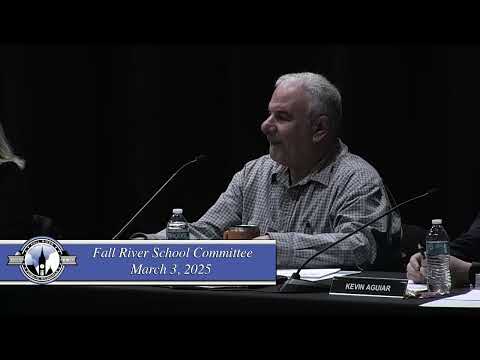
The Fall River School Committee on March 3 reviewed a proposed fiscal year 2026 budget that officials said meets net school spending but leaves capital work for early childhood facilities unfunded and predicts rising non-school-city costs such as transportation.
The Fall River School Committee on March 3 reviewed a proposed fiscal year 2026 budget that officials said meets net school spending but leaves capital work for early childhood facilities unfunded and predicts rising non-school-city costs such as transportation.
Resident Rachel Martin urged the committee to fully fund early childhood programming and to build a “state of the art early childhood building” with accessible outdoor space, a sensory room and separate therapy spaces, saying “early childhood education is not just an expense, it's… an investment in the future success of the city's children.”
Superintendent Tracy Curley presented the budget overview, calling a budget “not just a collection of numbers but an expression of our values and aspirations,” and CFO Kevin Almeda said the district’s foundation (net school spending) budget for FY26 is about $273–$274 million, with an average per-pupil figure the administration described as roughly $20,904.
Why it matters: The proposal reflects a 12–13% year‑over‑year jump in net school spending driven in part by the Student Opportunity Act funding cycle and a rise in enrollment the presentation said was about 673 students. The committee must weigh staffing requests, rising transportation and retirement costs, and one-time capital needs while preparing an adopted budget to send to the mayor and city council later this spring.
Key facts and figures - Foundation/net school spending: approximately $273–$274 million for FY26, presented by the administration as the district’s target. CFO Kevin Almeda said the district is “right at net school spending.” - Per-pupil: the administration cited an average of about $20,904 per student. - Enrollment: presenters said foundation enrollment increased by about 673 students year over year. - New positions: the proposed operating budget included 16 added positions with a net increase of seven after conversions. - Unallocated funds: the administration left $500,000 unassigned in the proposed operating budget to allow later adjustments after follow-up discussions. - Transportation: the superintendent warned that maintaining current transportation patterns could raise costs by more than $2 million year over year; transportation is a city expense and sits outside net school spending.
Early childhood and PACE Center status Committee members pressed administration officials about plans to relocate pre-K programs to the PACE Center (the “PACE Building”). Dr. Curley and other administrators said the district has delayed the planned move because required work — notably auditorium fire suppression and roof/other repairs — have not been completed and the capital funds to pay for the work are not built into the FY26 proposed School Department budget.
One committee member said funds previously earmarked for the PACE project were spent on other items, including a playground overage. The administration said programs will remain hosted at Connolly for the coming year and that the district extended Connolly’s lease so no enrolled children would lose spots. A lease amount mentioned during committee discussion was $110,000 for a roughly 10‑month term (speaker: administrator), with a note that lease terms have varied.
Committee debate and a failed motion to ask the city for $1 million Committee member Mister Dias moved that the committee formally ask the city to provide an additional $1,000,000 toward net school spending for FY26. Dias said the motion was intended to give the administration lead time and to signal the committee’s advocacy.
Opponents said it was premature to ask the city for more money before committee members had time to review the document and before the administration finalizes details; one member called the motion “poorly thought out” and a “political stunt.” The motion failed on a roll-call vote: Mister Agnes and Mister Dias voted yes; Mister Bailey, Mister Corey, Miss Larrivee, Miss Pereira and Mayor Cougar voted no. Outcome: failed (2–5).
Other topics raised - Legal/outside counsel: members asked for a breakdown of the budget line for outside legal services (listed in the presentation materials as approximately $300,000) and asked staff to provide recent spending detail and the portion charged to special education or other accounts. - Contracts and retroactive pay: members asked whether retroactive contract payments were included and scheduled for payroll; administration said retroactive items are scheduled for the upcoming payroll cycle. - Redistricting and facilities: several members pressed for a districtwide redistricting plan to address space, English‑learner placement and transportation inefficiencies; the superintendent said internal work had begun but that any reconfiguration large enough to affect assignments for the coming fall would require additional time and family notification. - Human resources/recruitment: members recalled a 2018 human resources audit that recommended expanded recruitment capacity and asked administrators to respond about how recent hires and reorganizations address that need; the superintendent said a human resources coordinator position has been added and staff are beginning to fill it.
Next steps The administration said the budget binder and the presentation would be posted online and that the committee will hold additional budget meetings and a public hearing in April before adopting a budget to send to the mayor and city council. Committee members identified two budget-review dates (March 18 and 19) for follow-up discussions and requested additional, itemized data in advance.
Ending The committee closed the special meeting after the roll-call vote and continued the FY26 budget process; administrators said they will distribute principal- and department-level budget presentations and answers to members’ specific questions ahead of upcoming sessions.