Get Full Government Meeting Transcripts, Videos, & Alerts Forever!
Get email alerts on the State Legislation topic
No spam. Unsubscribe anytime.
Arizona House advances wide package of measures on taxes, water, public safety, elections and veterans
Summary
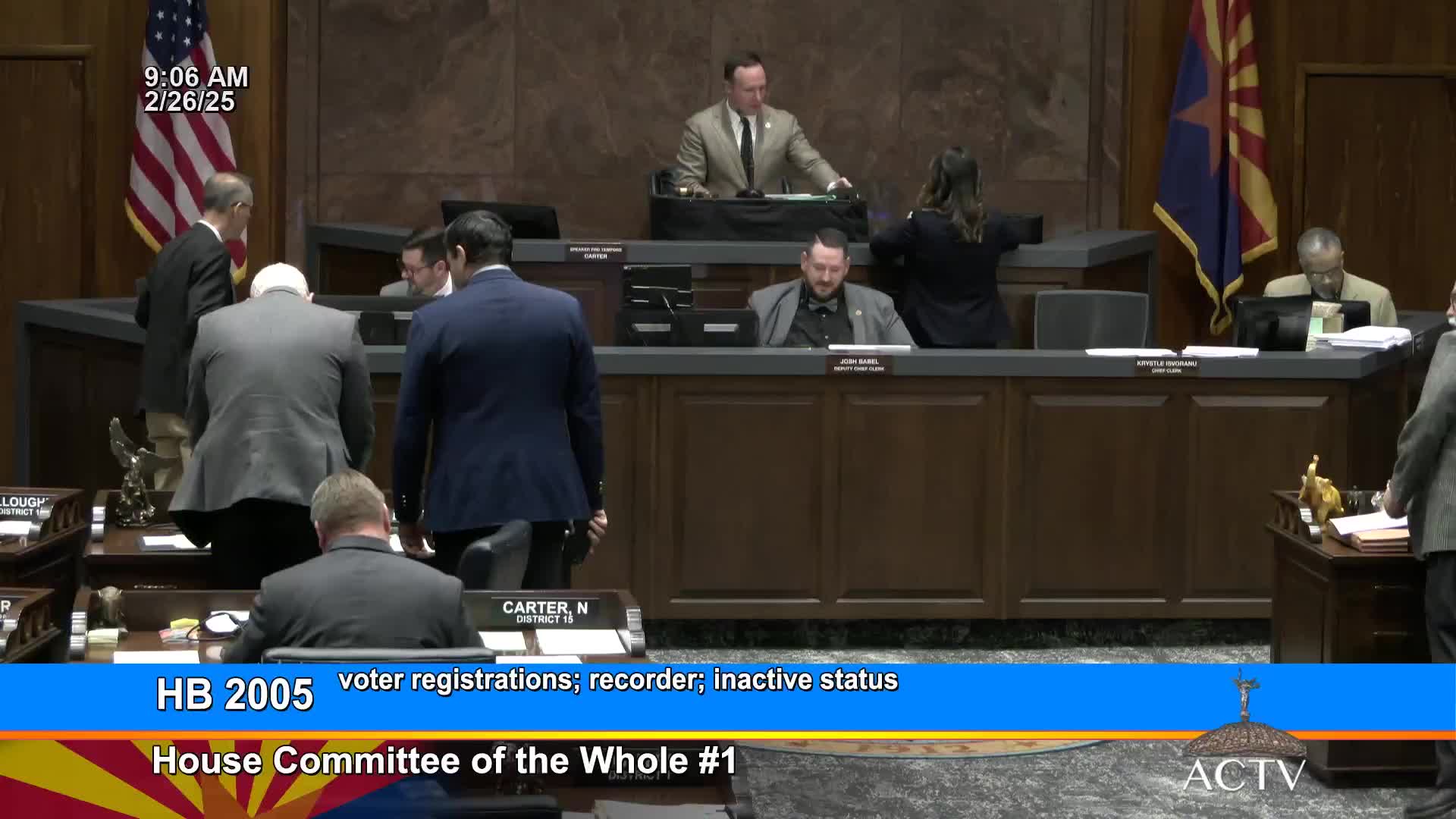
The Arizona House spent a full day in floor session on Feb. 26, 2025, moving dozens of bills and several concurrent resolutions. Major items included tax and budget measures, water and groundwater bills, veteran benefits and criminal-justice changes. Several measures generated sharp debate; many passed on party-line or near party-line votes.
The Arizona House of Representatives conducted an extended floor session Feb. 26, 2025, taking up a long calendar of bills and concurrent resolutions and passing a broad, mostly bipartisan set of measures that lawmakers and staff said are intended to address priorities ranging from tax relief to water policy, veteran benefits and public-safety tools.
Lawmakers passed dozens of bills in successive roll-call votes after several hours of debate and committee-of-the-whole consideration earlier in the day. Many votes were close and several measures prompted extended floor discussion about procedural choices and policy trade-offs. Bills that advanced included measures touching taxes, housing, groundwater and groundwater district process, veterans’ benefits and several public-safety and election-related items.
“Some of these items were long-considered; other items were late additions,” Majority Leader Ben Carbone said on the floor as the House worked through committee reports. He moved multiple committee-of-the-whole reports and framed the day as a heavy voting day in a short legislative calendar.
Representative David Collin, who filed a number of measures and amendments during the day, described the session as the House taking up both policy and fiscal questions. “We had bills on water, public safety and constitutional questions. These are the kinds of choices that matter to Arizonans,” Collin said during a brief floor exchange.
Debate highlights - Water and groundwater: Several bills and concurrent resolutions related to groundwater, assured water-supply reviews and special elections for water districts were debated and sent forward. Rep. Patty Contreras and others warned against proposals that they said could obscure scientific drivers of Colorado River declines; supporters argued the measures respond to local management and legal complexities facing the state’s water planners.
- Taxes and fiscal policy: The House advanced a package of tax-related measures intended to reduce the tax burden for residents and to clarify local and state tax administration. Sponsors argued the bills would return revenue to taxpayers or improve transparency; opponents said some measures’ fiscal impacts were not yet fully quantified and raised concerns about future cuts to services.
- Veterans and benefits: Members approved bills that expand or clarify benefits and exemptions for veterans, including measures to adjust property-tax exemptions and to fund pilot programs focused on veterans’ health needs.
- Public safety and law enforcement: The chamber moved bills that change or expand law-enforcement tools used at and near the border (including language on countering unmanned aerial systems) and other policing measures. These prompted vigorous floor debate about civil liberties and operational effectiveness.
- Elections and government oversight: The House advanced bills and resolutions on election administration, along with concurrent resolutions focused on state sovereignty and federal-state relations.
Votes at a glance (selected measures) - Tax and revenue measures: multiple bills on the calendar received final passage; sponsors said they are intended to reduce tax burdens or clarify tax administration. (Passed; roll-call tallies recorded on the floor.)
- Groundwater and water management (multiple bills and concurrent resolutions): Several bills setting procedures for assured water-supply reviews, special elections for water districts and related clarifying language passed or were sent to further consideration. (Passed/advanced in committee-of-the-whole; several recorded roll-call outcomes.)
- Veterans assistance and exemptions (selected bills): Measures to expand veteran exemptions or create pilot funding for veteran health programs were approved. (Passed.)
- Public-safety bills (including measures on countering drones and narcotics response): The chamber passed multiple public-safety items after debate on civil-liberties trade-offs and operational details. (Passed.)
- Election-related measures and resolutions: The House considered and passed resolutions and bills addressing election administration and related federal-state issues; some prompted floor warnings about likely litigation. (Passed or advanced; debate recorded.)
Process and next steps Floor leadership repeatedly noted the session’s long calendar and urged members to be present for roll calls. The House adopted committee-of-the-whole reports and, after final roll-call votes, referred passed bills to the Senate for consideration or, when required, for engrossing. Several measures were flagged as requiring additional appropriations or technical fixes in the Senate.
Representative Alma Hernandez and others urged careful review of bills touching on public-school policy and civil-rights implications; Representative Neil Olsen and other sponsors highlighted elements meant to provide transparency and taxpayer relief.
The House adjourned after a full day of business and set a reconvening time for 10 a.m. the next day. Bills that passed on Feb. 26 will next be transmitted to the Arizona Senate for consideration; several measures may face amendments or technical changes there.
Ending While members praised work on common priorities such as veteran services and local infrastructure, floor exchanges showed the chamber remains divided on higher-profile policy choices — especially on taxes, water management and public-safety trade-offs. The session set an intensive pace for the remainder of the legislative schedule as cross-chamber negotiations and technical adjustments begin.