Get Full Government Meeting Transcripts, Videos, & Alerts Forever!
Get email alerts on the Homeowners Associations topic
No spam. Unsubscribe anytime.
Georgia committee advances bill to cap HOA closing-letter fees, require dispute process before liens
Summary
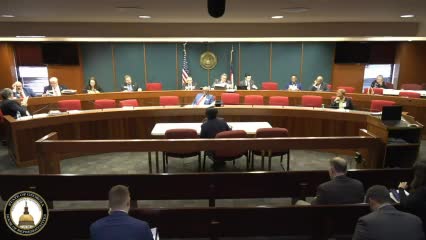
Representative Lewis Ward told the committee that House Bill 512 would give homeowners “peace and assurance that the HOA's are not their enemies,” and would require associations to offer alternate dispute-resolution procedures before placing liens on property.
Representative Lewis Ward told the committee that House Bill 512 would give homeowners “peace and assurance that the HOA's are not their enemies,” and would require associations to offer alternate dispute-resolution procedures before placing liens on property. She told members the bill also limits charges for closing letters.
The bill would cap the fee for a standard closing-letter statement at $250 if the letter is needed within 10 days, and allow an additional $50 for an expedited three‑day letter. “These invoices have been $400, $500. There's no cap on it,” Lewis Ward said, explaining the cap responds to complaints from homeowners and closing attorneys.
A key provision requires associations, when assessments are paid, to provide a statement showing those payments within 45 days at no cost to the owner. Vice Chairman Washburn described that change as increasing transparency and preventing surprises for sellers and mortgage lenders.
Supporters said the bill keeps foreclosure authority unchanged while creating a process to resolve disputes before a lien is imposed. “This bill … shows that an HOA is willing to work with [homeowners] through mitigation, before placing a lien on their property,” Lewis Ward said. Several committee members expressed broad support and said the measure balances homeowner protections with HOA operation.
Committee discussion referenced a prior, similar measure that Gov. Brian Kemp vetoed in 2018; lawmakers said they altered the dollar cap after that veto and added more procedural detail. Committee members noted the bill preserves local association control over the exact dispute-resolution procedures but requires that a process exist before a lien is placed.
The committee took a voice vote to advance the measure to the next stage; no roll-call tally was recorded in the transcript.
The bill now moves toward further committee or floor consideration, where opponents or supporters may propose additional changes.