Get email alerts on the Medical Regulation topic
No spam. Unsubscribe anytime.
Medical board opposes one-year complaint deadline bill; committee holds measure for now
Summary
The Arizona Medical Board told a legislative committee it respectfully opposes Senate Bill 1072, a measure that would require final action on certain complaints within one year or deem the complaints administratively closed.
Senate Bill 1072, which would require the Arizona Medical Board and the Board of Osteopathic Examiners in Medicine and Surgery to take final action on complaints unrelated to protecting public health and safety within one year or have the complaints deemed administratively closed, drew opposition from board staff and was held by the committee.
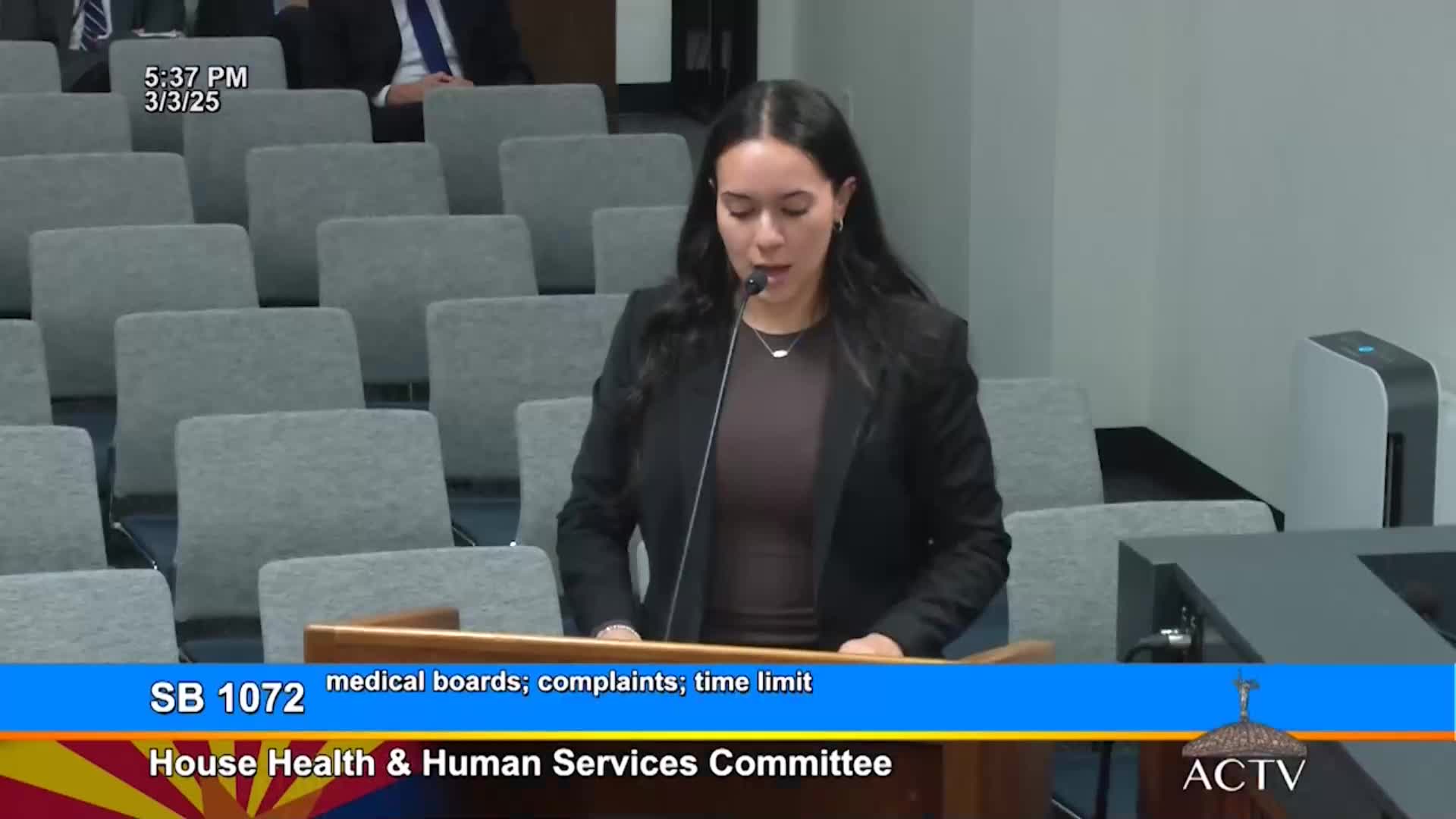
Raquel Rivera, deputy director for the Arizona Medical Board and the Arizona Regulatory Board of Physician Assistants, said the boards spoke in respectful opposition. Rivera said the boards limit investigations to alleged violations of the Arizona Medical Practice Act, which are intended to protect public health and safety, and expressed concern about imposing a one-year deadline that could be affected by factors outside the board’s control, including delays in obtaining records, retaining expert reviewers, attorney scheduling and other litigation-related timing issues.
Rivera provided board workload figures: she said there are 31,721 licensed allopathic physicians in the state and that in fiscal year 2024 the board opened 1,301 cases and closed 1,111, with an average of 264 days to complete an investigation. She told the committee the board currently has about 1,166 open investigations across stages and that staffing constraints — the board reported it requested four investigators for FY2025 but was granted two — affect timeliness.
Rivera also said the board is unclear which complaints the bill is intended to target; she said the board does not investigate complaints that do not fall within the Medical Practice Act (for example, bedside-manner comments, complaints without a physician–patient relationship, or allegations older than four years). The executive director had contacted the bill sponsor for clarification about the bill’s intent, Rivera said.
Committee action: With no supporters present to testify at the hearing, the committee held SB 1072 for now. Members asked the board for clarification about resource needs and the provenance of the bill’s request; the deputy director suggested the sponsor had raised billing complaints as an origin of the proposal but said the board’s authority to investigate billing allegations is limited and often tied to clinical concerns.
Details and next steps: Rivera urged caution about imposing a statutory deadline given the investigative and legal complexity of many cases and recommended further discussion about scope and resourcing before moving the bill forward.