Lifetime Citizen Portal Access — AI Briefings, Alerts & Unlimited Follows
Bernalillo County holds public forum on proposed tax-increment district for State Fairgrounds; vote set for March 11
Loading...
Summary
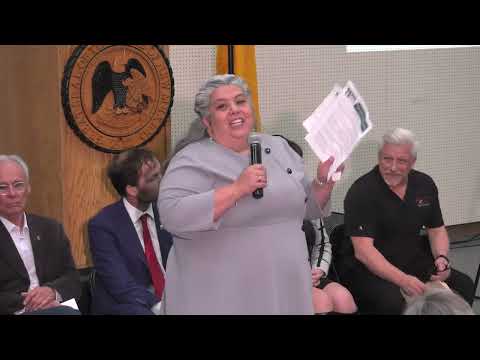
Bernalillo County officials and state representatives outlined a proposal to form a tax increment development district, or TID, for the New Mexico State Fairgrounds at an informational meeting at Expo New Mexico on the evening of March 1.
Bernalillo County officials and state representatives outlined a proposal to form a tax increment development district, or TID, for the New Mexico State Fairgrounds at an informational meeting at Expo New Mexico on the evening of March 1. County staff said the TID, if formed and later authorized by the state, would capture a portion of new gross receipts and property tax revenue inside a defined boundary to pay for public infrastructure.
The proposal is at an early stage: the county commission introduced the TID and a formal county vote is scheduled for March 11, after which the Legislature would need to authorize bonding authority. "There is 0 decision about the state fair yet," Commissioner Adrienne, Bernalillo County commissioner for District 3, told the crowd, adding the meeting was intended to gather public input before the commission’s March 11 vote.
Marcos Gonzalez, executive development officer for Bernalillo County, described how the financing would work: a base year would be set (county staff identified 2023/2024 as the comparison baseline) and up to about 75% of the increment above that base could be used to repay bonds for public infrastructure. "The increments that are gonna be used in this is up to 75% of the base," Gonzalez said. County staff said the TID would finance on-site public infrastructure and could be designed to fund some off-site improvements along streets such as Central and San Pedro.
County and state speakers emphasized that casino and gaming revenue would not be part of the TID. "State law does not allow gaming revenue to be part of the tax development district," Gonzalez told the meeting; staff said the racino and racetrack on the fairgrounds would be excluded and would not receive TID-funded infrastructure.
Marty Chavez, speaking on behalf of the governor’s office, told attendees that state leaders consider the current social and economic trends in the area "not sustainable" and that a master planning process and economic analysis are planned to evaluate options for the site. "The current trend is not sustainable," Chavez said. He and others described multiple outcomes as possible: keeping the fair in place, reinvesting in existing facilities, or relocating the fair, but they repeatedly said no final decision has been made.
Officials described next steps for planning and oversight. County staff said a master plan consultant will be hired through a new request for proposals to be run by the General Services Department; the county estimated the master planning process at roughly six to eight months. County staff and the secretary of General Services, Anna Silva, said additional approvals would be required at the state level, including bonding authorization by the Legislature and administrative reviews by the New Mexico Finance Authority, the State Board of Finance and Legislative Finance Council.
Residents and community leaders voiced a mix of questions and concerns during a lengthy public comment period. Speakers asked how a TID would affect homelessness, neighborhood safety, small businesses and vendors who rely on the fair. Paul Chavez, founder of State of the Heart Recovery, said providers working in the area wanted clarity on how the proposal connects to services for people experiencing homelessness. Derek Matthews, founder of the Gathering of Nations, said major events at the fairgrounds support vendors and regional tourism.
Some commenters urged caution and more detail about who would benefit. Vanessa Alexander, who identified herself as an investigator with ties to the horse-racing industry, alleged problems with racing-commission oversight and suggested scrutiny of racino interests; those claims were presented as public comment and not verified at the meeting. Several residents recommended a broad, public master-planning process and asked for timely public notices and opportunities to review RFP language and developer proposals.
County staff said one RFP for planning that had been posted by Expo New Mexico was canceled and will be resolicited through the General Services Department. County officials also circulated a public survey and invited written comment; Commissioner Adrienne and Councilor Nicole Rogers pointed people to a District 6 webpage and an online survey to gather input during the 30-day notice period before the commission’s March 11 vote.
What happens after March 11 will depend on several documents and approvals. If the county commission approves its portion of a joint state–county TID inducement, legislation would still be required at the state level to authorize bonding and create the formal governance structure. Speakers cited two bills currently in the state Legislature that relate to governance of a potential TID. Officials said the master plan and subsequent governance decisions would guide whether public dollars are invested in on-site fairground improvements, neighborhood infrastructure, schools or other public benefits.