Get AI Briefings, Transcripts & Alerts on Local & National Government Meetings — Forever.
Committee backs bill to limit midyear PBM formulary switches, require 60-day notice
Loading...
Summary
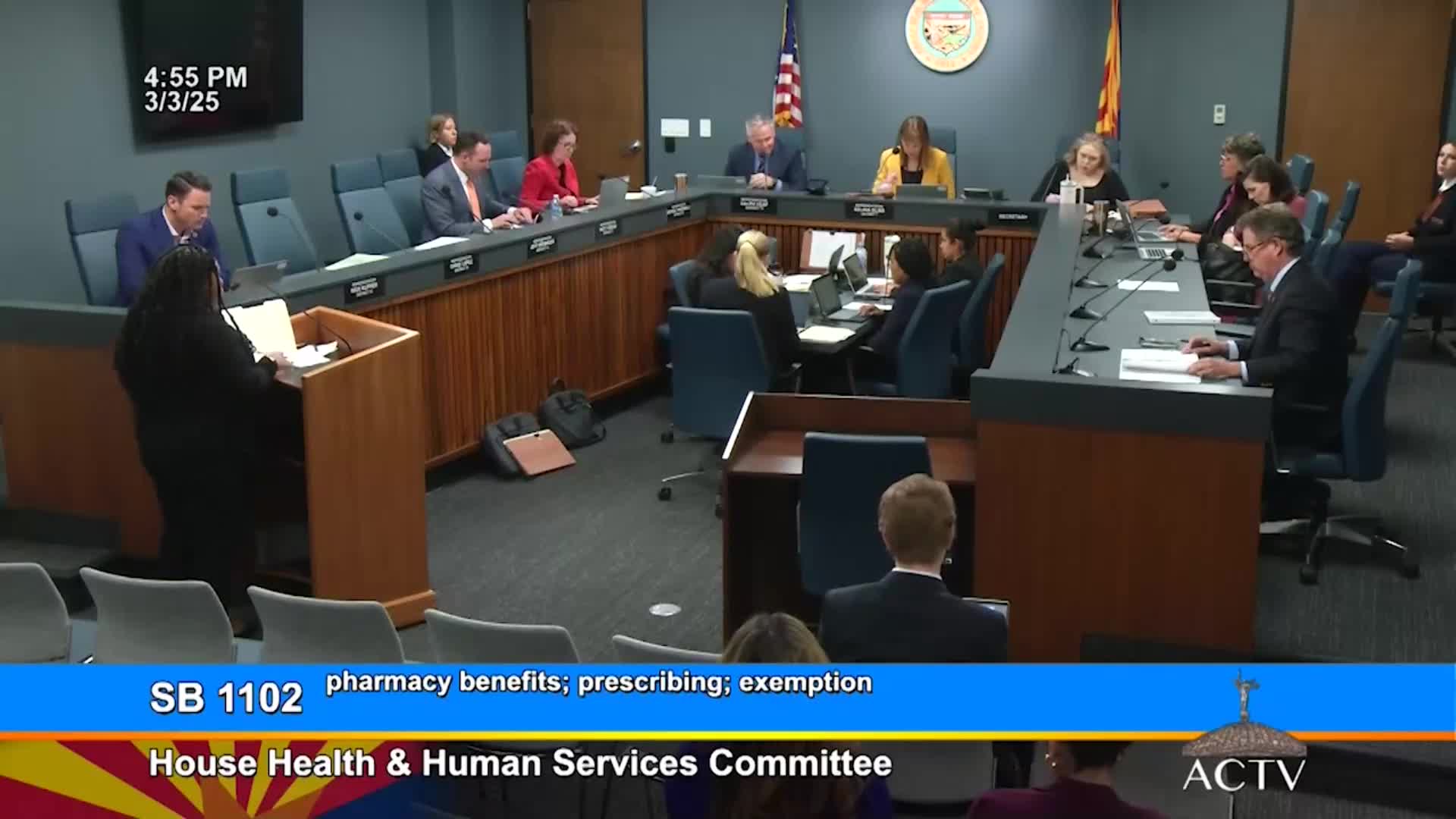
The Arizona House Committee on Health and Human Services on a unanimous vote recommended passage of Senate Bill 1102, which would limit midplan-year formulary exclusions by pharmacy benefit managers and require 60 days' notice to affected patients and prescribers.
The Arizona House Committee on Health and Human Services on a unanimous vote recommended passage of Senate Bill 1102, a measure that would restrict pharmacy benefit managers (PBMs) and insurers from limiting or excluding coverage of prescription drugs for covered individuals midplan year and would require at least 60 days’ written or electronic notice to affected patients and prescribing providers before such a formulary change.
The bill also establishes a formulary exception process and an exception route for covered individuals in future plan years under specified criteria.
Why it matters: Supporters said the measure addresses clinical disruptions when health plans or PBMs switch a patient’s biologic or specialty medication in the middle of a plan year. Helena Entfeld, a nurse practitioner specializing in gastroenterology, described severe outcomes she has seen in inflammatory bowel disease patients when their therapy is interrupted. “A flaring IBD patient might have 10 to 15 bowel movements per day, rapid weight loss, nutritional deficiencies, and if sick enough, require hospitalization, and even emergency surgery,” Entfeld told the committee, and said nonmedical switching can cause lapses in therapy and downstream harm.
Diane McAllister, representing the Independent Pharmacy Coalition and the Arizona Pharmacy Association, said the bill would keep “decisions between the health care provider and their patient when in the middle of the plan year” and prevent forced midyear switches when a drug was previously approved. McAllister cited stakeholder data she said shows switching is frequently harmful: “When the patients are forced to switch, 68 percent of the time they’re switched to a less effective drug. 60 percent of the time patients are leading to complications, which means hospitalizations, more testing, more doctors appointments,” she said.
Kelsey Lundy of Compass Strategies spoke in a neutral capacity on behalf of the Pharmaceutical Care Management Association. Lundy said stakeholders negotiated changes to reduce fiscal and operational impacts and argued that plans do not change formularies “willy nilly,” noting reasons such as manufacturer price changes and the availability of biosimilars. She told the committee that earlier fiscal estimates for the state health plan were reduced after stakeholder work.
Patient testimony came from Mara Crosson, a resident and multiple sclerosis patient, who said midyear formulary changes delayed her care and led to additional illness and health complications.
Committee action: After public testimony, Vice Chair Heap moved that the committee return SB 1102 with a due-pass recommendation. The roll call recorded 12 ayes, 0 nays; the committee gave the bill a due-pass recommendation.
Details and next steps: The bill text requires notice to patients and prescribers at least 60 days prior to a formulary change that limits or excludes coverage, creates an exception process, and contains limited criteria for maintaining a prior-authorized drug into a subsequent plan year through an exception. The committee did not adopt additional amendments on the record during the hearing.