Get Full Government Meeting Transcripts, Videos, & Alerts Forever!
Get email alerts on the Housing Zoning topic
No spam. Unsubscribe anytime.
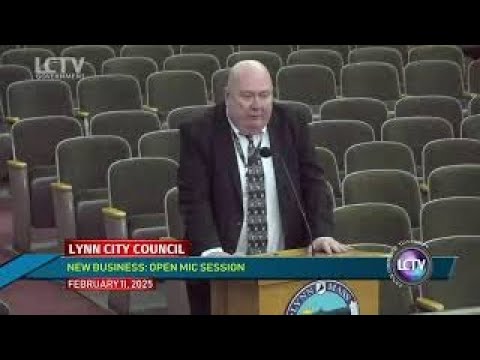
Lynn City Council adopts state-aligned accessory dwelling unit (ADU) zoning amendments
Summary
The Lynn City Council voted to adopt local zoning amendments to implement newly enacted state rules on accessory dwelling units, allowing ADUs by right in many residential districts while imposing local dimensional, parking and documentation requirements.
Lynn City Council on Feb. 11 approved a zoning amendment to implement recent state rules protecting accessory dwelling units (ADUs), allowing ADUs by right across most single‑family residential districts and adding local standards on size, setbacks, parking and documentation.
The amendment follows new state legislation and regulations that, according to city planning staff, make ADUs a protected use in many residential areas. "An accessory dwelling unit or an ADU is a residential unit that is added to an existing building," Lauren Drago, associate planner, told the council during the public hearing. She said the state law "went into effect about a week and a half ago," and the draft local rules are intended to comply while preserving limited local controls.
Why it matters: The change removes discretionary barriers to creating small, permanent housing units that planners and some councilors said can expand housing options, help older homeowners stay on their property, and support gentle density. Opponents raised parking and neighborhood impacts during public comment.
Council staff described the key local elements the city adopted. The proposed local amendment: permits one ADU by right in properties where single‑family homes are allowed (across R1–R5 and some business districts where single‑family homes can be built); limits ADU size to 900 square feet or 50% of the principal structure (whichever is smaller); requires building- and sanitary-code compliance; requires submittal of a plot plan and supporting documentation; and prohibits short‑term rentals of either the ADU or the primary unit for stays under 28 days. As Drago described it, "ADUs are now protected like it's a religious use in certain residential districts," meaning municipalities have limited ability to block them but can adopt narrow, reasonable restrictions.
Public speakers generally supported the concept but flagged details. Calvin Anderson of 12 Concord Street said he was "in favor of this because...somebody might be able to stay in their property, in their home as they age and can, actually live in the smaller unit." Nathaniel Dewhurst, a homeowner, asked about the consequences if the city did not adopt local regulations; Drago replied that the state rules would apply regardless and that the local amendment was intended to preserve as much local discretion as allowed.
Councilors asked for clarifications before voting. Questions addressed which transit locations qualify for a parking waiver (Drago said the map uses commuter rail and certain busway/end‑of‑route stops rather than every bus stop), how parking existing on driveways would be treated, and whether inspectional services will enforce building and sanitary code requirements (Drago said ISD would handle permits and inspections and had helped draft the amendment). Several councilors requested a one‑page guide for residents; city planning staff offered to produce a cheat sheet and pointed to lnnyincommon.com/zoning for more materials.
The council carried the amendment by roll call vote. The official roll call recorded a majority in favor with the motion carrying at the end of the session.
Looking ahead: Planning staff said they expect roughly a small number of ADU applications annually and that ISD will track units so the city can report impacts to the state and reconsider policies if needed.