Get Full Government Meeting Transcripts, Videos, & Alerts Forever!
Get email alerts on the Roads Backlog And Maintenance topic
No spam. Unsubscribe anytime.
Council hears stark backlog figures for residential and rural roads; task force recommends $54.1 million annually
Summary
Committee staff highlighted the Infrastructure Maintenance Task Force's estimate of a $780 million backlog for residential and rural roads and an optimal annual investment of $54.1 million; current CIP levels fund roughly $22 million over the program and members cautioned residents about realistic expectations
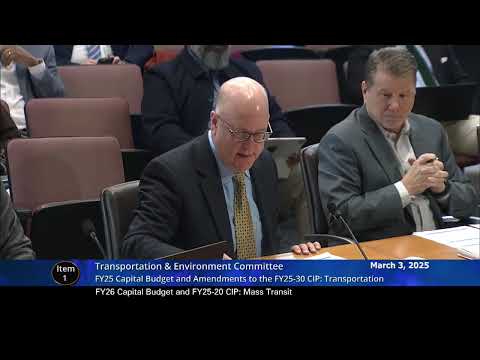
Montgomery County Council members heard a reminder on March 3 about the county’s large backlog for residential and rural road repairs and the funding gap identified by the Infrastructure Maintenance Task Force.
Committee staff told members the task force recommends an optimal annual investment of $54.1 million for residential and rural road rehabilitation and resurfacing to address a documented maintenance backlog estimated at $780 million. By comparison, the CIP as amended programs roughly $22 million for these road programs over the current plan period, a shortfall staff said reflects fiscal capacity constraints.
Committee members stressed the communication challenge. Councilmember Balcom (District 2) thanked Department of Transportation staff for their work and urged setting realistic expectations with constituents about what can and cannot be done given limited resources. Director Conklin said staff currently optimizes repair strategies to get the most benefit from available funding and offered to brief community groups on the county’s prioritization methodology.
Fiscal context: Gary Malvin of OMB told the committee the CIP shows lower anticipated impact-tax revenues compared with last year's approved CIP (on the order of $70 million across the six-year window) and noted that recent local policy changes (Bill 16‑24) reduced impact tax revenues by a further $13 million over the period, factors that contribute to constrained capacity for maintenance investments.
Next steps: Council staff recommended continued monitoring of the backlog and greater community outreach on prioritization. The county will continue to advance targeted maintenance projects within available funding and to report on ways to optimize investment decisions.