Get Full Government Meeting Transcripts, Videos, & Alerts Forever!
Get email alerts on the Courthouse Inspection topic
No spam. Unsubscribe anytime.
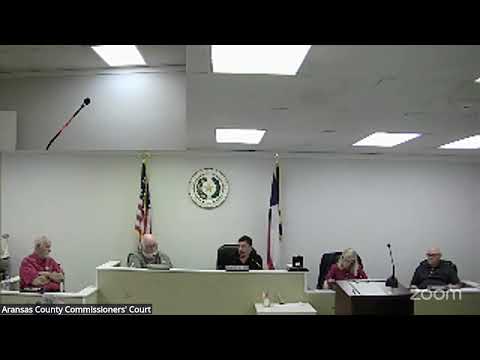
Aransas County disapproves hiring independent courthouse inspectors after heated debate
Summary
Aransas County Commissioners Court voted unanimously to disapprove hiring independent inspection consultants for the new courthouse project, following public comments and testimony from Teal Construction arguing inspections already performed and litigation risk.
Aransas County Commissioners Court voted unanimously to disapprove hiring independent inspection consultants under section 13.4.2 of the county's contract with Teal Construction Company, saying the county should first complete targeted repairs and pursue inspections later in the closeout process.
The decision came after residents, contractors and company representatives disputed whether additional outside inspections would help resolve the courthouse's outstanding issues or only increase costs and the risk of litigation.
The vote was introduced as a motion to disapprove hiring independent inspectors and to direct the architect to take action identified in inspection 13.4.0.2; the motion passed on a roll call with all members voting aye.
In public comment, Mikaela Alston, a Rockport resident, said the county had been “misled and misdirected by key individuals and firms” at the project's inception and urged the court to stop spending taxpayer funds on additional inspectors without addressing root decisions made early in the project. Jeff Hutt, also a resident, supported hiring outside reviewers in general but warned that local ties between contractors and the community can complicate decision-making: “When members of the community come up and push you towards a certain decision ... it makes it very difficult for y’all.”
A letter from John Murray, identified in the transcript as CEO of Teal Construction, was read into the record. The letter said Teal was not opposed to an independent inspector but that any consultant should be defensible, not litigation-driven. Murray wrote that prior consulting firms had produced “large damage models that were totally unfounded” and warned that engaging certain consultants “will lead to expensive and time consuming lawsuits.” The letter noted that manufacturer inspections and two mold tests — dated April 8, 2024, and August 5, 2024 — had passed and that Teal had spent $23,000 on building-envelope consultants to address window water intrusion.
Michael Miller of Teal Construction spoke to the court and told commissioners that additional outside consultants often trigger litigation, saying, “Hiring consultants like these pretty much guarantees it.” He offered to provide the court a binder or link containing warranties, inspection reports and manufacturer approvals to show the work performed and inspections already completed.
Several commissioners said they wanted the courthouse finished and usable as soon as practical. Some favored directing Teal to complete specific corrective work first — notably window repairs and elevator certification — and reserving an independent inspection or construction auditor for final acceptance, not midstream. One commissioner said the architect (PGAL) had recommended directing Teal to correct nonconforming window conditions and requested that item be placed on a future agenda for action.
The court recorded that it would pursue the window repairs and substantial-completion steps before any independent inspector would be formally engaged. Commissioners also confirmed they would revisit the topic at their next regular meeting, with timing a point of contention: some called for an inspector now, others said it was premature until the contractor has completed the work necessary for final punch-list review.
The court adjourned after completing the vote; commissioners encouraged the contractor to finish outstanding items and agreed to return to inspection timing and substantial-completion scheduling at a future meeting.