
Cabarrus board unanimously adopts K–8 ELA curriculum, approves $2.34 million purchase
Get AI-powered insights, summaries, and transcripts
Sign Up Free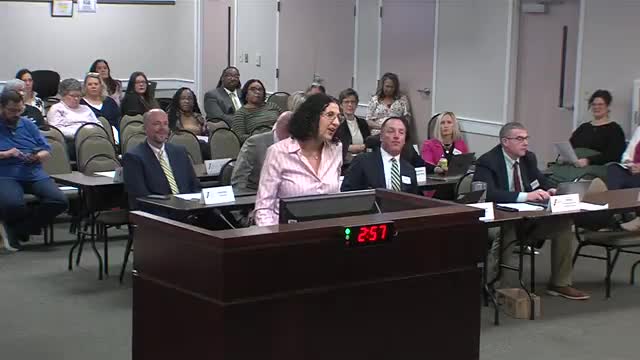
Summary
The Cabarrus County Board of Education voted 7–0 to adopt the Arts and Letters K–8 English language arts curriculum and approved a $2,340,185.87 purchase after months of review and extensive teacher testimony in favor of printed texts and coherent materials.
The Cabarrus County Board of Education voted unanimously on March 3 to adopt a K–8 English language arts curriculum from Arts and Letters, approving a $2,340,185.87 purchase to provide printed student texts, teacher manuals and associated materials for the district's roughly 1,100 ELA teachers.
The board’s decision followed presentations from district curriculum staff and more than a dozen principals, instructional coaches and classroom teachers who described spending hours each week sourcing and vetting disparate materials and urged a coherent, standards-aligned program. "A comprehensive reading curriculum provides the necessary blueprints, guiding teachers in constructing a strong foundation for literacy," said an instructional coach at the meeting.
Why it matters: The package aims to put consistent books and workbooks in students' hands across Cabarrus County Schools and to standardize K–8 instruction so teachers can spend less time curating materials and more time on differentiated instruction, interventions and enrichment. District staff told the board the recommended purchase comes in about $460,000 under the local fund balance appropriation the board approved in November and that annual consumable workbook costs will be built into the state-funded budget going forward.
District staff described a multi-stage selection process: outreach to the North Carolina Department of Public Instruction, review of nationally used comprehensive programs, an educator needs assessment, an in-person vendor preview fair and a virtual preview that reached roughly 97% of district educators. Two vendors emerged as finalists; Arts and Letters was the recommended provider after staff and teachers reviewed sample modules, materials and price options. Curriculum staff said Arts and Letters would provide printed student workbooks and teacher manuals, replace unreliable online-only resources, and include five years of online software at no additional district cost.
Teachers and principals who spoke to the board gave practical examples of what they saw as the problem and the promise of a consistent curriculum. "Without a solid plan, you may struggle with the foundation," said an eighth-grade ELA teacher who described spending large amounts of out-of-class time building lessons. A Rocky River Elementary principal cited Opportunity Makers research on coherence and consistency in schools, saying those elements produced lasting gains in the study’s schools.
District budget staff said roughly 75% of the one-time purchase is for student texts and workbooks; 12% was allocated to early-reader decodables and 10% for teacher materials. Professional development equaled about 3% of the proposed price and district staff indicated that initial training would be folded into the state budget for ongoing onboarding and new hires.
Board action and procedure: Board member Sam Treadaway moved adoption of the curriculum; Pamela Escobar seconded. The board approved the motion by voice vote; the chair recorded the result as unanimous (7–0). The board also discussed implementation timelines and assessment plans: daily formative checks, end-of-module summatives, and performance tasks built into modules. Staff said they aim to get materials into teachers' hands before the 2025–26 school year and to offer professional development as soon as possible, ideally before summer break.
Implementation questions raised by board members included how grammar instruction is incorporated (teacher workbooks and module lessons), whether consumables would be reusable (most teacher materials are reusable; student workbooks are consumables), and how the new materials would align with existing phonics and phonemic-awareness programs such as Heggerty and Letterland (those programs will continue alongside the new curriculum).
What comes next: District staff said they will begin logistics and vendor coordination immediately after the vote to ensure teacher materials arrive and training is scheduled ahead of the new school year. Officials emphasized that the adopted curriculum is the district’s “floor, not the ceiling” and will be monitored with both qualitative classroom evidence and district benchmark and foundational-skill assessments.
Ending: The board’s vote moves the district from a largely teacher-curated collection of ELA resources to a districtwide, standards-aligned K–8 program that district leaders said will increase consistency across schools and grades and reduce planning burdens on teachers.