Get Full Government Meeting Transcripts, Videos, & Alerts Forever!
Get email alerts on the Ddot Code Of Conduct topic
No spam. Unsubscribe anytime.
Council adopts DDOT code-of-conduct ordinance allowing agency to set removal rules for problem riders
Summary
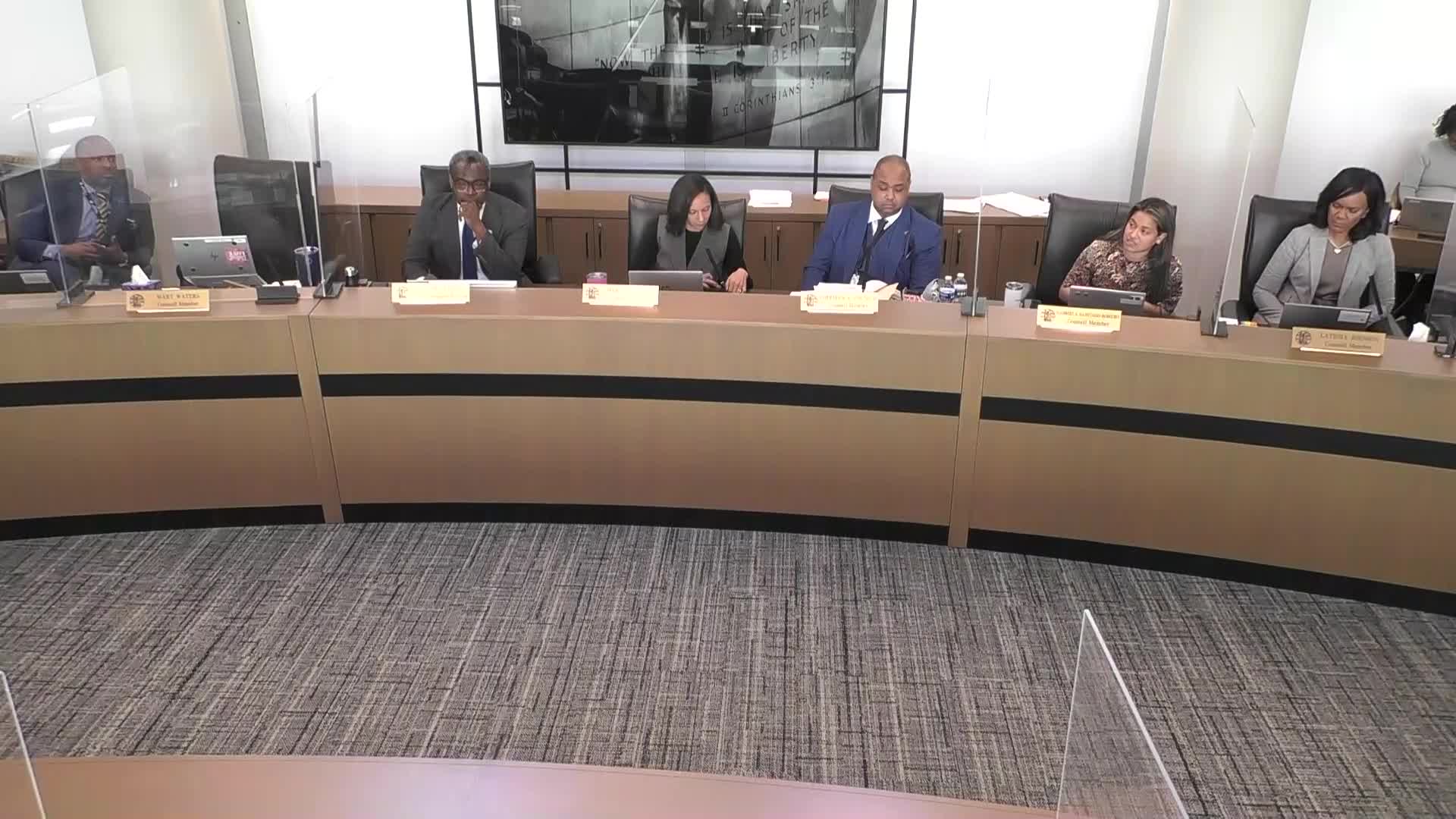
Detroit City Council on March 4 approved an ordinance authorizing DDOT to write non‑criminal rules that define prohibited conduct on buses and to use a tiered administrative process to remove or restrict riders who threaten safety or disrupt service.
The Detroit City Council passed an ordinance on March 4 that adds a city code section enabling the Detroit Department of Transportation (DDOT) to promulgate rules describing prohibited conduct on city buses and a tiered administrative process for removing or restricting riders who engage in disruptive or dangerous behavior.
Councilmember Scott Benson, who sponsored the ordinance, said it is intended to make buses safer and more comfortable for riders and operators. The ordinance does not create new criminal penalties; instead it authorizes DDOT to develop non‑criminal rules and a graduated system of administrative steps, including temporary or permanent exclusion from the transit system for repeated or egregious violations. The ordinance also requires a public notice and hearing process before rules take effect.
Councilmembers and DDOT officials discussed real‑world edge cases at length. Councilmember Leticia Johnson noted that some people use buses and transit centers for warmth or shelter and raised concerns about how a code would treat people experiencing homelessness or having a mental‑health crisis. DDOT and the city law department said operators are not expected to act as social‑service clinicians and that the ordinance is a tool for the agency; the department also said the plan includes coordination with police and outreach partners and a public rulemaking process with a comment period and hearings.
Adam Saxby and other law department attorneys told council the provisions are designed to be non‑criminal and to avoid creating misdemeanors while providing DDOT a clear administrative path to address conduct that threatens other riders or staff. DDOT said it would provide an implementation and education plan and that rules would be published with a public comment period.
On a roll‑call vote the ordinance passed 6‑1. Councilmember Leticia Johnson cast the lone “no” vote. The council and the administration agreed to follow up with additional outreach and cross‑departmental planning, and to hold the public rule hearings required before DDOT’s final rules are adopted and enforced.
The ordinance was debated for about an hour in committee and again at full council; DDOT officials said the measure fills an enforcement gap but pledged outreach to community groups and advocates before rules are finalized.