Get Full Government Meeting Transcripts, Videos, & Alerts Forever!
Get email alerts on the Public Transit Code Of Conduct topic
No spam. Unsubscribe anytime.
Council committee advances DDOT code-of-conduct ordinance after public hearing; department to draft enforcement rules
Summary
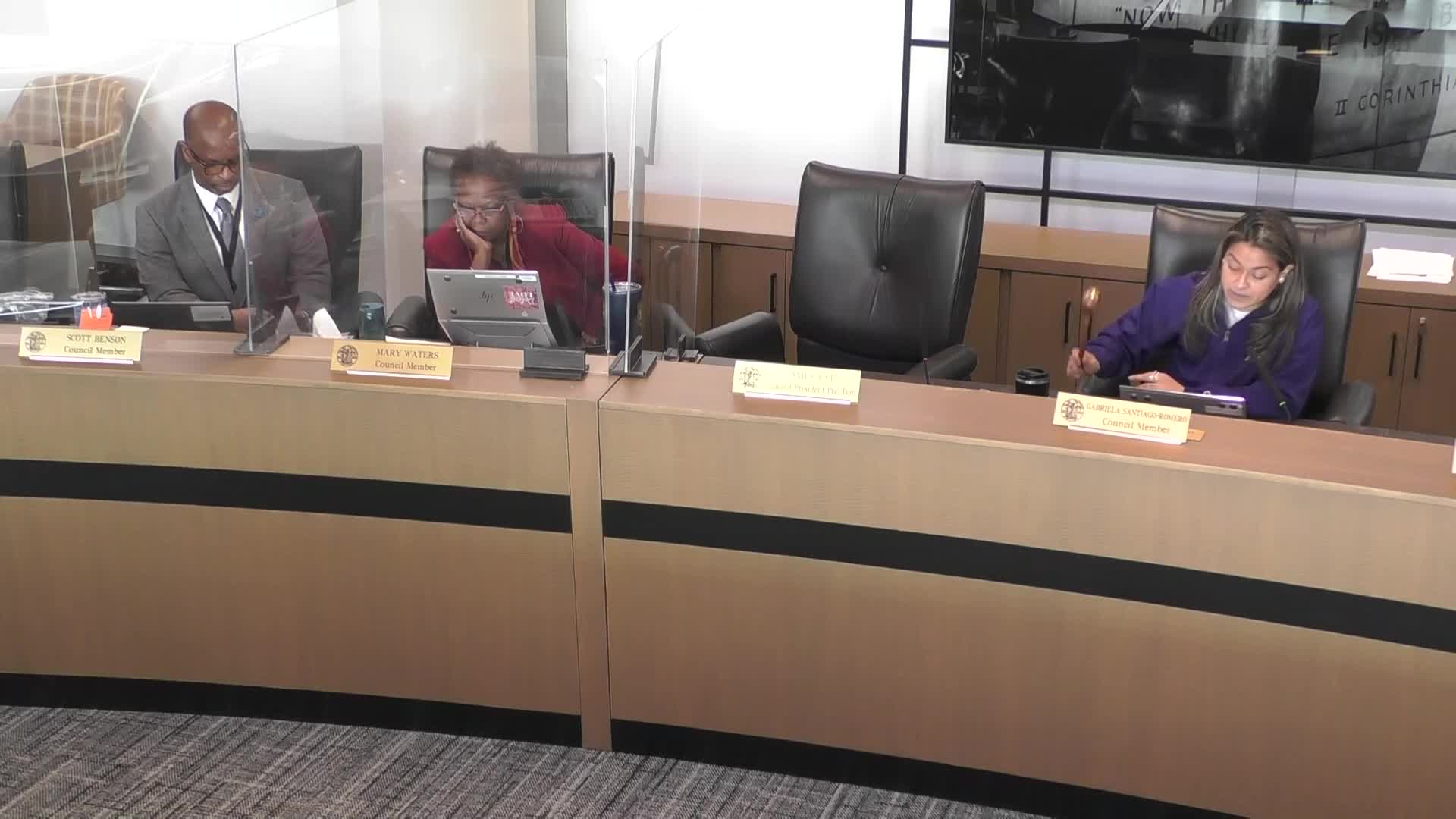
Detroit City Council members and DDOT officials on Wednesday advanced an ordinance to set prohibited conduct on city buses and directed DDOT to develop rules and an outreach plan for enforcement.
Detroit City Council members and DDOT officials on Wednesday advanced an ordinance to define prohibited conduct on city buses and authorize DDOT to adopt procedural rules for enforcement.
The ordinance amends Chapter 47 (Transportation for Hire) to add a “prohibited conduct subject to removal” policy for city buses. Sponsor Council member Scott Benson said the measure lists items “that shouldn’t be a question,” including lighting incendiary devices, using counterfeit fare media and intentionally depositing bodily discharges on a bus. DDOT Deputy Director Jenny Whitfield said the draft originally included 28 items but that one line—distribution of materials—was removed after public feedback, leaving 27 prohibited items.
The law department told the committee the ordinance would set substantive prohibitions and possible penalties and that DDOT would follow Detroit Charter section 2-111 if it is granted authority to promulgate procedural rules. Those rules, the law department said, would be posted and require an additional DDOT public hearing and opportunity for comment before they take effect.
Public commenters and transit advocates urged several specific changes and clarifications: Transportation Riders United and other callers asked that closed beverages be allowed, requested an exception for a 17-year-old escorting a 5-year-old, and warned against criminalizing riders with invisible disabilities. Speakers also pressed for robust outreach to riders, permanent postings on every bus, nonpaper options such as QR codes, and an appeals process.
Committee members pressed DDOT on implementation details. DDOT committed to community input meetings, marketing outreach to its 16,000-email list, insert cards and permanent posters with QR codes on buses, and to additional training for TEOs and transit ambassadors. DDOT said it will work with the Office of Disabilities and community advocates to design accessible outreach and will develop a tiered enforcement approach with warnings and progressive steps for lower-level offenses.
On the question of appeals and oversight, DDOT said appeals would be documented in writing and reviewed by a panel that will include community advocates and a council designee, not solely DDOT staff. The department said police would be a last-resort partner when incidents require law enforcement and that partnerships with mental-health resources would be used for individuals in crisis.
Committee members set a timeline for DDOT to draft the removal policy and associated procedural rules and signaled a target to complete community review and rollout by the end of the fiscal cycle (members discussed a target roughly in the next several months). After discussion and public comment, a motion was made and the committee unanimously sent the ordinance to new business as amended with a recommendation to approve.
The ordinance stage before the council will set the prohibited activities and penalties; the department must then hold the required public rulemaking steps under the charter before any enforcement procedures take effect.
Votes at a glance: The committee voted to send the DDOT ordinance (amended to remove distribution-of-materials language) to new business with a recommendation to approve (no objections recorded).