Get Full Government Meeting Transcripts, Videos, & Alerts Forever!
Get email alerts on the Tax Policy topic
No spam. Unsubscribe anytime.
Burke County staff proposes standardized audits, present-use reviews and foreclosure thresholds for tax administration
Summary
Tax administrator and county staff presented proposed standard operating procedures covering business personal-property audits, present-use value reviews and tax-foreclosure thresholds; board directed staff to return with formal policy for consideration at the regular meeting.
Burke County tax officials on Monday outlined proposed standard operating procedures to tighten and standardize business personal-property audits, reviews of present-use (deferred) property valuations and the county’s tax-foreclosure practices.
Tax Administrator John Bridges and County Manager Brian Mann presented recommendations modeled on the North Carolina Machinery Act (Chapter 105) and other state guidance. Bridges said the county’s total tax base is about $10.8 billion and that business personal property and motor-vehicle accounts represent a meaningful share of that base. He recommended an audit cadence and materiality threshold intended to improve equity in taxation and reduce ad-hoc enforcement.
Under the proposed business personal-property policy, staff would perform a third-party–assisted review of accounts with listing values above a $50,000 materiality threshold on an eight‑year rotating schedule (roughly 1/8 of qualified accounts per year). Mann and Bridges said the $50,000 threshold was chosen because the resulting annual tax impact at the county’s tax rate would be modest (under $300/year), while focusing limited audit resources on higher-value accounts where mislisting has the biggest fiscal effect.
On present-use value — the tax deferment for qualifying agricultural, horticultural and forestry land — staff recommended formalizing periodic property inspections. Bridges said state law and guidance require reviews to ensure properties receiving present-use valuation meet active‑use requirements; the county has been conducting reviews more frequently and proposed adopting a formal eight‑year schedule to align with statutory review intervals and local workload.
The third recommendation would formalize the county’s approach to tax-foreclosure cases, establishing a minimum threshold of one year delinquent and at least $500 owed before initiating foreclosure, and encouraging a stepped collection ladder that prioritizes wage garnishment, debt setoff and liens before foreclosure. Bridges and Mann said those steps would reduce unnecessary foreclosure litigation and legal costs while preserving collection options. Mann also noted that the county’s outside tax-attorney fees are statutorily assignable to taxpayers and that legal work does not always require county cash outlay.
Commissioners asked several clarifying questions. Commissioner Stroud expressed concern about aggressive pursuit of small-dollar accounts and cited constituent letters; Bridges said the formal policy is intended to create consistent treatment and avoid arbitrary or inconsistent outcomes. Commissioners also asked whether new businesses could be reviewed earlier than an eight‑year cycle; staff said they would return with data on how many accounts would meet the $50,000 threshold and with proposals for triggers tied to new commercial real-property permits.
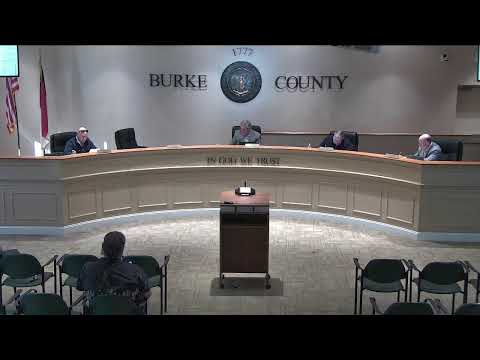
Mann and Bridges asked the board to authorize staff to return to the regular meeting with formal policy language for consideration and possible adoption; the board agreed to have the items returned for action at the next regular meeting. No formal vote was recorded at the pre-agenda meeting.
If adopted in its current form, the proposals would: (1) audit business personal-property accounts >$50,000 on an eight‑year rotation with third‑party assistance; (2) formalize eight‑year present‑use reviews to confirm active production and apply the state’s valuation tables; and (3) set minimum thresholds and an escalation ladder (notice, payment plan, wage garnishment, debt setoff, liens) before foreclosure. Staff said they would provide data in advance of the board’s consideration, including account counts impacted and estimated administrative costs of implementing the program.