Get Full Government Meeting Transcripts, Videos, & Alerts Forever!
Get email alerts on the Planning Zoning topic
No spam. Unsubscribe anytime.
Council approves first reading of updated land development code after extended public hearing
Summary
After a lengthy public hearing with dozens of speakers, council approved the first reading of a comprehensive rewrite of Chapter 34 (Land Development Code) and scheduled a second reading for March 17, 2025. The update drew sustained public comment on setbacks, digital sign rules, enforcement and implementation timing.
Jacksonville Beach City Council on March 3 approved the first reading of a comprehensive update to the city’s land development code (Chapter 34) and set a second reading for March 17, 2025.
Senior planner Christian Popoli summarized the project history and staff recommendations, noting the rewrite had been underway since April 2022 and that staff had revised the draft to reflect planning-commission recommendations and public input. Popoli said staff changed the proposed duration for changeable digital message signs back to 24 hours in response to comments, carried forward existing language on accessory dwelling units and residential setbacks, and adjusted minimum lot-size and setback language to better match conditions on the ground.
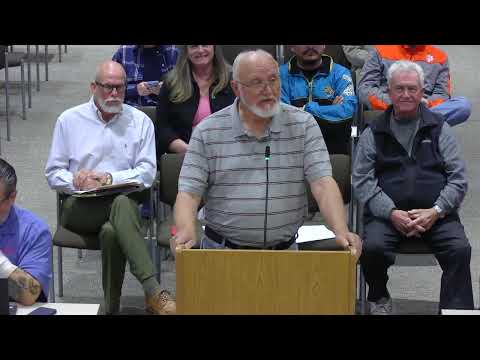
The council then opened a public hearing that drew multiple speakers who raised concerns and suggestions including: restricting variances to preserve neighborhood character; requiring homestead occupancy for certain variances (speakers noted constitutional equal-protection limitations to that approach); stronger code enforcement and weekend coverage; daylight and stormwater impacts from reduced side setbacks; blinding or distracting digital signage and recommended lumen/brightness limits; and a request to delay adoption to allow more technical review. Several residents praised staff for the long-term effort to update the code and asked for ongoing communication about the code as a “living” document.
Council discussion covered training for boards (planning and board of adjustment), the moratorium on certain permits and how quickly applicants could apply under the new code. Staff said routine building permits (for example, a swimming pool that does not change the regulated lot coverage) could be submitted the day after final adoption; if a variance were required the process would take longer. Council members noted the code must comply with state law and that some suggestions raised by residents would be difficult to implement because of state preemption.
Council member Wouters moved an amendment to retain 10-foot side-yard setbacks rather than the draft’s 5-foot setback in some residential categories; the amendment failed for lack of a second. On the final first-reading vote, the council recorded a majority approval and scheduled the ordinance’s second reading for March 17, 2025. Roll-call results in the meeting showed one recorded no vote on the first reading; staff and council emphasized the document will be treated as a “breathing” code with opportunities for future changes and training for boards and staff prior to broader enforcement.
Speakers at the public hearing included Casey Braun, John Tipton, Terry Deloach, Brian Blanchard, Fernando Mesa, Matt Bierschweid and Kathleen Lewis. Staff presenters included Christian Popoli (senior planner) and city legal/staff advisors. Council thanked staff for the multi-year effort and asked staff to prepare training and a public-communication plan ahead of final adoption and implementation.