Get Full Government Meeting Transcripts, Videos, & Alerts Forever!
Get email alerts on the Landcare Ordinance topic
No spam. Unsubscribe anytime.
Portland council debates amendment to Landcare ordinance after Cheverus requests synthetic grub treatment; council retains stricter rules and sends additional—w
Summary
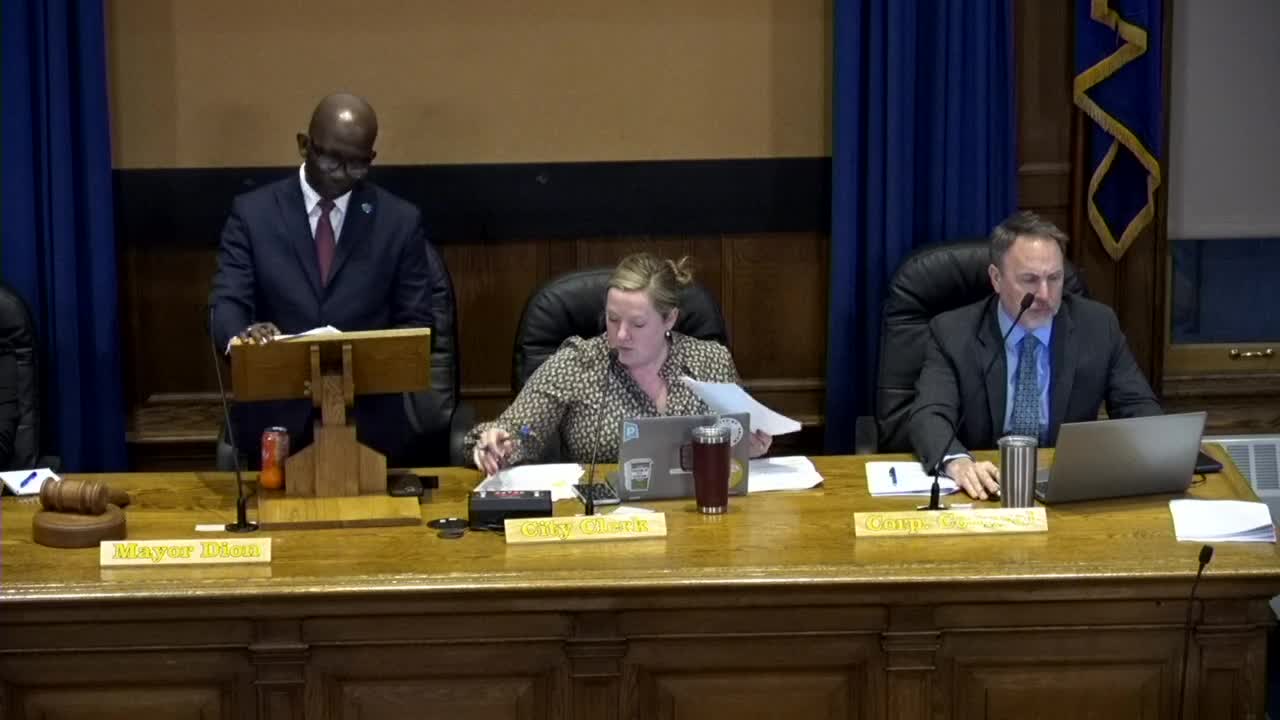
The Portland City Council took extended public testimony and debated an amendment to the city’s Landcare ordinance (Chapter 34) after Cheverus High School sought an exception to allow a synthetic grub treatment on its athletic field.
The Portland City Council took extended public testimony and debated an amendment to the city’s Landcare ordinance (Chapter 34) after Cheverus High School sought an exception to allow a synthetic grub treatment on its athletic field.
Cheverus representatives said the infestation had compromised about 20% of the school’s stadium turf and posed injury risks to athletes. “We are requesting equitable treatment with both the city’s Riverside Golf Courses and Hadlock Field,” said Michael Komich, senior vice president for finance and operations for Cheverus High School, referring to venues that are exempt from the ordinance. He said the school’s approved plan for an artificial turf replacement expires in November 2025 and that the first two weeks of May are the optimal treatment window for the product Acelepryn.
Speakers opposed to the change included residents, environmental advocates and medical professionals who cited risks to pollinators, marine life and long-term environmental persistence. “All pesticides are toxic,” said Avery Ale Camilla, a member of the Landcare Management Advisory Committee (ELMAC) and co‑founder of Portland Protectors. Medical concerns were voiced by Priscilla Scarry, a naturopathic doctor, who said even “less dangerous” pesticides can have cumulative effects on children.
The substance at issue, chlorantraniliprole (marketed in some products as Acelepryn or GrubEx), is described in the meeting backup as a reduced‑risk product by the EPA label. Advocates for allowing limited use argued the product has a low acute toxicity profile when applied by professionals and would be deployed only as a last resort.
Council action and amendments: Councilor Regina Phillips introduced the amendment to change Chapter 34 to allow the synthetic product in narrowly defined circumstances. Councilor Celia Sykes moved an amendment to retain the ordinance’s existing restrictions (including the existing prohibition on broadcast application waivers) and to reverse the substantive additions that would have added the chemical as exempt. The Sykes amendment passed by roll call vote.
Councilor Phillips moved a narrower amendment to allow a waiver for broadcast application of chlorantraniliprole for performance turf; that amendment did not carry. After additional debate, the council voted on the main ordinance motion as amended (including the changes retained by Sykes) and approved it. Councilors also agreed to send four additional substantive amendments proposed by Councilor Sykes—on buffer protections near water, public notification and appeals for waivers, reform of committee composition, and applicator reporting requirements—to the Sustainability & Transportation Committee for committee review, public notice and further public comment before any ordinance changes.
Why it matters: Testimony showed a sharp split between institutions and professional applicators arguing for a narrowly limited rescue treatment to protect athletes, and residents, environmental groups and medical professionals who warned about broader ecological and health harms if the ordinance were weakened. The council’s action preserved the stronger default protections in Chapter 34 while opening a pathway for committee review of targeted, public-noticed ordinance changes.
Clarifying details from the meeting: Cheverus reported an estimated 20% of its field compromised, said the optimal fenestration for treatment is the first two weeks of May, and said it will continue pursuing longer-term replacement of the field but lacked funds to start construction before the current planning approval expires November 30, 2025. Speakers identified the Landcare Management Advisory Committee (LMAAC/ELMAC) as the body to weigh waiver requests; an attendee who chairs that committee said the panel has granted roughly two waivers since the ordinance passed in 2018.
Ending: The council preserved the ordinance’s prohibitions for now, approved the main motion as amended, and directed additional ordinance-change proposals to committee for public review and a clear process before any further changes are adopted.