Get Full Government Meeting Transcripts, Videos, & Alerts Forever!
Get email alerts on the Pedestrian Safety topic
No spam. Unsubscribe anytime.
Portland council hears calls for Vision Zero after string of pedestrian deaths; council adopts resolution for immediate steps
Summary
Portland City Councilors and city staff heard more than a dozen public comments pressing for swift action after another pedestrian was killed on a city street, and the council adopted a resolution urging immediate steps to reduce traffic deaths.
Portland City Councilors and city staff heard more than a dozen public comments pressing for swift action after another pedestrian was killed on a city street, and the council adopted a resolution urging immediate steps to reduce traffic deaths.
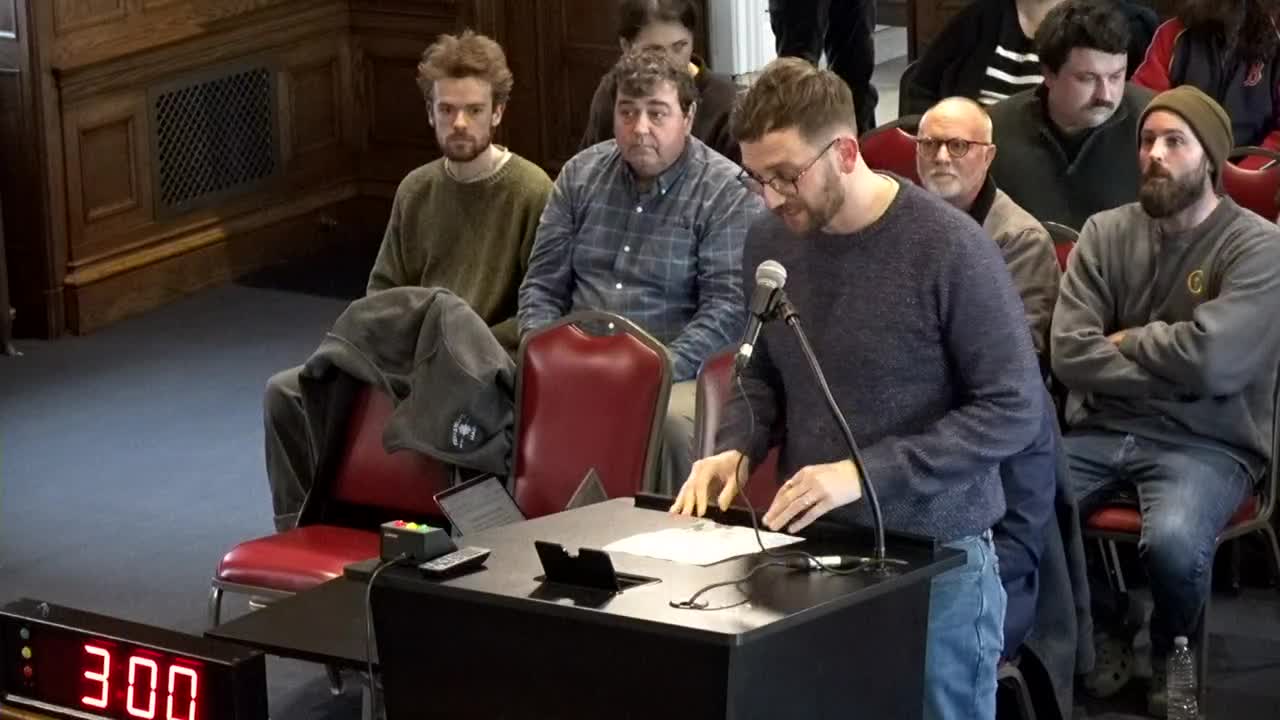
Advocates called on the council to adopt Vision Zero — a policy framework that treats traffic deaths as preventable — and to pursue low-cost, fast interventions alongside longer-term redesign work. “These are violent. They are preventable and they are unacceptable,” said Andrew Zaro, executive director of the Bicycle Coalition of Maine, noting four pedestrian deaths in roughly five months. “How many more people are going to have to die before we do something different here in Portland?”
The council’s resolution, approved unanimously by those present, urges the city manager to pursue a set of near-term actions: upgrades to street lighting at high-risk intersections, increased targeted traffic enforcement (including consideration of automated enforcement tools), immediate safety measures in school zones, a public education campaign and distribution of reflective gear, and a report on high-injury locations with recommended calming measures.
Why it matters: Speakers said fast action is necessary because waiting for multi-year planning or police reports leaves people vulnerable. Gordon Platt, chair of the Portland Bicycle and Pedestrian Advisory Committee, and John Cashmar, executive director of Portland Trails, noted wide arterial streets and missing pedestrian infrastructure. “When cars slow down to less than 30 miles an hour, the chance of a fatality is greatly reduced,” Cashmar said.
Public comments detailed local conditions where people walk on plowed-or-impassable sidewalks or cross wide arterials, and urged both infrastructure fixes and stronger enforcement. Residents and advocates also asked the council to prioritize projects in the upcoming capital improvement plan and to ensure snow and ice clearance on sidewalks along major arterials so people are not forced into vehicle lanes.
Council response and next steps: Several councilors described the issue as urgent and said related committees — notably Sustainability and Transportation and Health and Human Services & Public Safety — will prioritize the matter. Councilor Bolas, who chairs HHS and Public Safety, said she is moving the issue “to the top of our agenda.” City staff told councilors they will review the specific recommendations in the resolution and bring analysis and possible budget implications to a committee meeting for follow-up.
The resolution is not a binding order but expresses the council’s collective priorities; staff said they will report back to committee with feasibility, costs and timelines and align immediate steps with the Vision Zero work the Sustainability and Transportation Committee is taking up.
Ending: The council adopted the resolution as amended (to reference public and private schools) and directed staff to return with more detail, timing and cost estimates to committee for implementation consideration.