Get Full Government Meeting Transcripts, Videos, & Alerts Forever!
Get email alerts on the Legislation Committee Reports topic
No spam. Unsubscribe anytime.
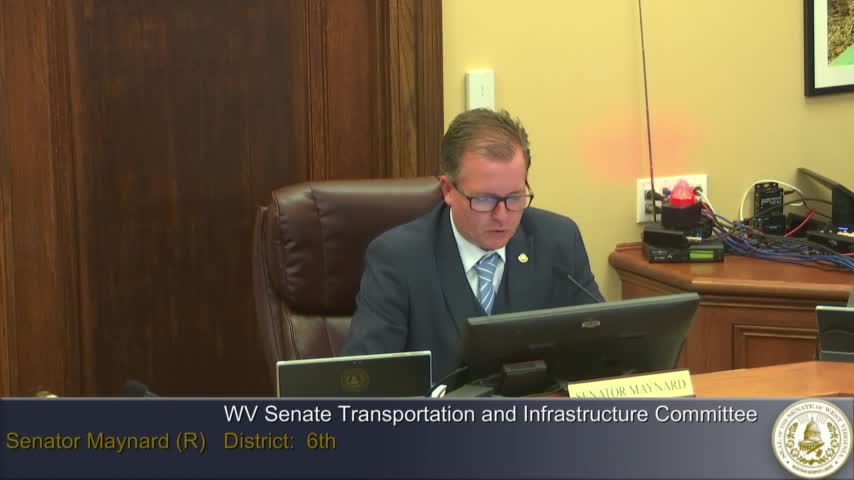
Senate Transportation Committee reports three committee substitutes to full Senate; voice votes advance physicians, CDL and vehicle-power bills
Summary
The Senate Transportation Infrastructure Committee on an unspecified February date approved committee substitutes for three bills—SB 117, SB 267 and SB 573—and reported them to the full Senate with "do pass" recommendations by voice vote.
The Senate Transportation Infrastructure Committee on an unspecified February date approved committee substitutes for three bills and sent them to the full Senate with recommendations they "do pass." The committee approved the minutes of its prior meeting earlier in the session.
Why it matters: The three measures would change state policy on (1) when physicians may operate personal vehicles as authorized emergency vehicles, (2) how long commercial drivers have to reinstate an expired commercial driver's license without retesting, and (3) whether state agencies or political subdivisions may restrict the purchase, sale or use of motor vehicles based on their energy source.
Votes at a glance: - Committee substitute for Senate Bill 117: agreed to by the committee; motion to report to the full Senate with recommendation "do pass" adopted by voice vote. - Committee substitute for Senate Bill 267 (CDL renewal): agreed to by the committee; motion to report to the full Senate with recommendation "do pass" adopted by voice vote. - Committee substitute for Senate Bill 573 (restrictions by vehicle power source): agreed to by the committee; motion to report to the full Senate with recommendation "do pass" adopted by voice vote. - Minutes of the February meeting: approved by voice vote.
Committee action and discussion: Committee counsel identified the principal features of each committee substitute during the meeting. On SB 117, counsel said, "It creates the Physicians Authorized Emergency Vehicle Program and would authorize the West Virginia Board of Medicine and the West Virginia Board of Osteopathic Medicine to enable physicians to drive their personal vehicles as authorized emergency vehicles, when responding to a medical emergency." The committee substitute requires the boards to adopt rules setting eligibility, application procedures, lights/sirens specifications, administrative penalties and permitting application fees that cover program costs.
On the CDL-related substitute (SB 267), counsel said the bill "extends the time during which a person may apply to renew an expired commercial driver's license from the current 6 months to 3 years without having to follow the procedures for an initial issuance of a CDL, including the testing provisions," and that a person downgraded solely for an expired or invalid medical certification may have the CDL restored upon presenting a valid medical certification within 5 years without repeating initial testing.
Counsel told the committee that Federal Department of Transportation rules remain controlling for certain endorsements (for example, HAZMAT), and that any federal limits would take precedence over state changes.
On SB 573, counsel said the substitute "provides that no state agency and no political subdivision may restrict the use, purchase, or sale of motor vehicles based on the energy source used to power the motor vehicle," while preserving an exception for internal policies governing vehicles owned or operated by the agency or subdivision.
Public testimony and fiscal notes: The committee received a virtual witness for SB 573 representing the Specialty Equipment Market Association and Performance Racing Industry who urged support, saying, "I urge the committee to support SB 5 73 to ensure that West Virginia remains a place where automotive businesses can thrive, consumers have real choices, and innovation is encouraged today and in the future." Counsel noted that boards or agencies may impose application and renewal fees designed to cover program costs and that fiscal notes or estimates were available on members' computers for some bills.
Formal outcomes: Each committee substitute was agreed to and then reported to the full Senate with the recommendation that it do pass; those recommendations will be considered by the full Senate at a later date. The committee took those votes by voice; no roll-call tallies were recorded in the transcript.
What’s next: The committee reported the three committee substitutes to the full Senate; the bills will proceed through the Senate calendar and any subsequent House or conference processes as required.