Get Full Government Meeting Transcripts, Videos, & Alerts Forever!
Get email alerts on the Short Term Rentals topic
No spam. Unsubscribe anytime.
Planning staff propose new nightly‑rental rules tied to platform licensing and a per‑booking fee
Summary
Planning director and compliance coordinator presented data showing hundreds of unlicensed nightly rentals in the unincorporated county and proposed regulating booking platforms or creating a per‑booking fee to improve compliance and recoup revenue.
Okanogan County planning staff presented preliminary research on nightly rentals and recommended updating the county code to regulate nightly‑rental platforms and increase compliance.
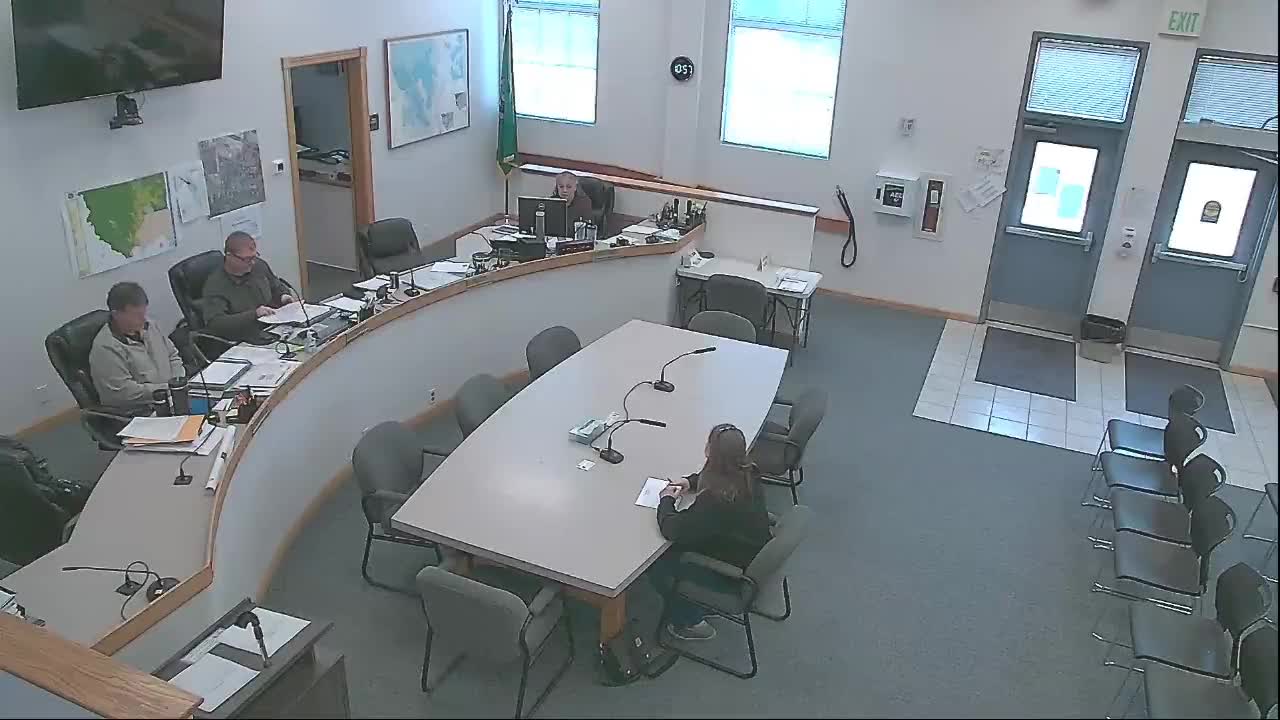
Pete Palmer, director of planning, introduced the briefing and asked the board for direction after Josh Hickman, compliance coordinator, presented data gathered from a third‑party analytics review. The presentation cited a preliminary scan that identified 452 unique nightly‑rental listings in unincorporated Okanogan County and noted that only 76 nightly‑rental licenses had been issued to date for 2025. Staff said analytics providers give wide market estimates — one provider estimated about $2 million in gross revenue countywide, another $10 million and a third as high as $18 million — and that a local reservation operator reported $3.1 million in gross bookings from 98 properties it manages.
Hickman proposed two regulatory approaches the county could adopt: require platform licensing or charge a per‑booking fee similar to Seattle’s $4 per booked night. He described how other jurisdictions use third‑party compliance vendors and automated web crawlers to match platform listings to local license and tax records. Examples offered included Port Angeles, which requires platform reporting and an annual platform license, and Seattle, which charges a per‑booking fee and requires reporting. Staff noted other Washington counties use third‑party compliance services and that costs for those services ranged in the counties reviewed from about $15,000 to $40,000 annually.
Staff said an enforcement package would typically include automated web crawling to find listings, cross‑referencing with county licensing and assessor records, written notices to property owners and, if necessary, enforcement steps for unlicensed operations. Hickman told commissioners the county’s GIS staff believed a similar program could be developed in‑house to identify listings, which might reduce the need for a costly vendor.
Why it matters: staff said unlicensed nightly rentals produce lost license revenue, potentially leave lodging taxes and business taxes uncollected, and present public‑safety and permitting concerns when properties operate without required permits.
What’s next: staff will provide draft sample ordinances used by other jurisdictions and follow up with assessor and GIS staff about technical feasibility and costs. Commissioners asked for copies of Port Angeles and Seattle ordinances and requested a feasibility and cost estimate from GIS and assessor staff before any ordinance is drafted.
Quote: "Okanogan County supports a multimillion‑dollar nightly‑rental market," said Josh Hickman, the department’s compliance coordinator. "Implementing platform reporting or a modest booking fee would materially improve compliance and recapture revenue for county services."