Get Full Government Meeting Transcripts, Videos, & Alerts Forever!
Get email alerts on the Court Staff Pay Scales topic
No spam. Unsubscribe anytime.
Committee approves bill to let Supreme Court set pay scales for magistrate and family-court staff, sends measure to Finance
Summary
Committee substitute for Senate Bill 622, which would move statutory salaries for several magistrate and family-court staff positions to pay scales set by the administrative director of the Supreme Court of Appeals, was adopted and referred to the Finance Committee. Counsel and the court's administrative director said pay-scale authority is meant
A Senate committee adopted a committee substitute for Senate Bill 622 and voted to report the measure to the full Senate with a recommendation that it pass, under its original double reference to the Senate Finance Committee.
The substitute would remove fixed statutory salaries for certain magistrate and family-court staff positions and allow their pay to be set by a pay scale established by the administrative director of the West Virginia Supreme Court of Appeals. Committee counsel and the court's administrative director told senators the change is intended to address internal pay equity and reduce repeated statutory updates for routine staff-pay adjustments.
Why it matters: The bill affects magistrate court clerks, magistrate assistants, magistrate deputy clerks, family court secretary-clerks and family case coordinators. Senators debated the tradeoff between granting administrative flexibility to the court and preserving the Legislatures appropriation authority and oversight.
Key provisions
- Positions affected: The substitute makes the following positions subject to a court-established pay scale: magistrate court clerks, magistrate assistants, magistrate deputy clerks, the secretary-clerk of the family court and family case coordinators.
- Pay-scale approach: Under the substitute, the administrative director of the Supreme Court would establish a pay scale for each position rather than leaving a single statutory salary amount in code. Counsel and the administrative director said the court proposes that any pay-scale increases would be presented through the normal budget and appropriation process to the Legislature.
Testimony and debate
Keith Hoover, administrative director of the Supreme Court, testified that the court seeks pay scales to address internal equity issues such as longevity and professional development and to avoid repeated piecemeal statutory changes for routine staffing adjustments. Hoover said since he joined the court in 2019, the court has amended pay scales only after securing legislative approval through the budget process.
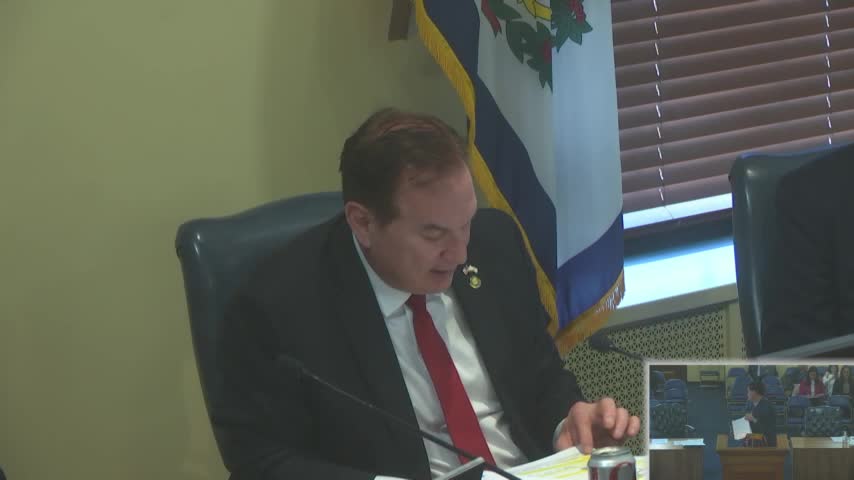
But several senators, including the senior senator from the fourth, said the committee should ensure the Legislature retains appropriation authority and oversight. The senior senator proposed restoring statutory salary language in the bill to avoid yielding that authority; that amendment failed on a recorded voice vote after debate. Members discussed alternative language such as a legislative cap or "subject to annual legislative approval" but did not adopt a final cap or annual-approval provision in committee.
Committee action and next steps
The committee approved the committee substitute for SB 622 and voted to report it to the full Senate with a recommendation that it pass, but under its original double reference that it first be referred to the Finance Committee for budget review. The Finance Committee will consider any fiscal impacts and could propose further amendments in its committee stage.
Ending note
Committee members signaled continuing concern about legislative oversight; the measure moves next to Finance, where senators said the budget process will provide an opportunity to examine pay-scale specifics and any ceilings or safeguards the Legislature deems necessary.